
Dust Collector for CNC Router Guide: Compatibility, Setup, and Upgrade Options
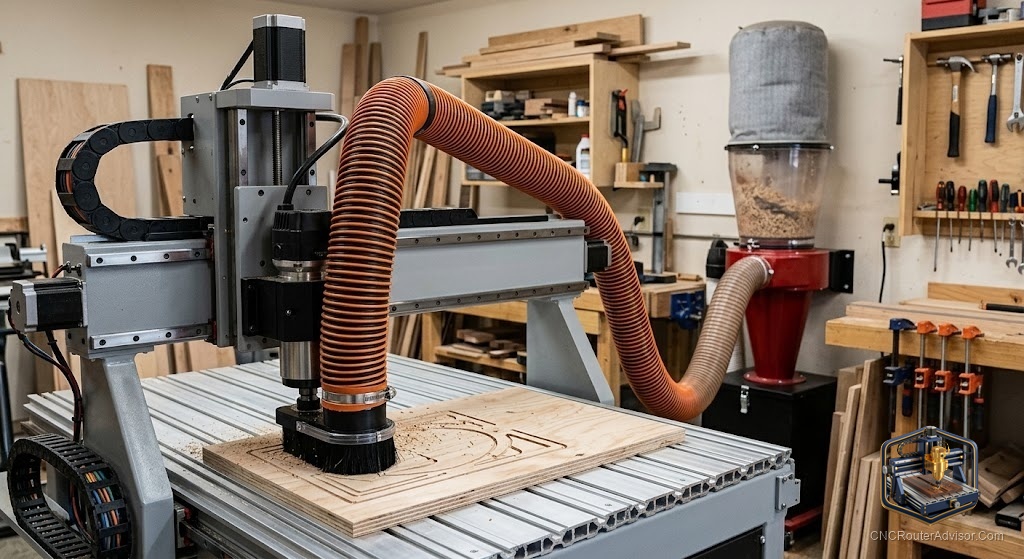
Run a CNC router for an hour without dust collection and you will understand instantly why it matters. Fine dust coats the shop, hangs in the air, and buries the cut so you cannot see what the machine is doing. A dust collector solves all of that. It keeps the air clean, protects your lungs, clears the cut, and turns a messy process into a tidy one. Choosing and setting up the right dust collection is one of the most worthwhile things you can do for your machine and your health.
Why dust collection is not optional
Wood dust is more than a nuisance. The finest particles are a genuine respiratory hazard, and in enough concentration fine dust is even a fire risk. Beyond health, dust that piles up on the machine works into rails and screws, and dust in the cut interferes with chip evacuation, hurting tool life and finish. A dust collector addresses all of these at once by capturing debris at the source before it can spread.
Shop vacuum versus dust collector
The first decision is what provides the suction. A shop vacuum moves air at high pressure through a small hose and suits smaller machines and lighter cutting. A dedicated dust collector moves a much larger volume of air and suits larger machines and heavier work. As a rough guide, a compact desktop machine is well served by a good shop vacuum, while a large machine cutting full sheets benefits from a proper dust collector. Matching the airflow to the machine is what makes collection actually work.
The dust shoe
Whatever provides the suction, the dust shoe is the piece that makes collection effective. It is a brush-rimmed shroud around the spindle that captures dust right at the cutter, which is far more effective than trying to clean up dust after it spreads. A good dust shoe positioned so its brush skirt rides just above the material captures the great majority of debris at the source. It is the single most important part of the system.
Compatibility to check
A collection setup only works if the pieces fit together and fit your machine. Confirm that the dust shoe suits your spindle mount and diameter, that the hose fitting matches your vacuum or collector, and that the dust shoe leaves enough clearance for your Z travel so it does not limit cutting depth. On smaller machines, make sure the added bulk and weight do not interfere with the gantry. Checking these details up front avoids a frustrating hunt for adapters later.
Setting it up well
Good dust collection comes from a few practical habits. Position the dust shoe brush just above the material, close enough to capture dust but not dragging. Keep the hose path as short and smooth as you can to preserve suction. Size the suction source to the machine, since an undersized vacuum simply cannot keep up on a large machine. And empty the collector regularly, because a full unit loses suction quickly.
Upgrade options
As your work grows, dust collection can grow with it. A cyclone separator placed before the vacuum or collector captures most debris before it reaches the filter, which keeps suction strong and cuts down on cleaning. Moving from a shop vacuum to a dedicated collector suits bigger machines and heavier cutting. A better-sealed or adjustable dust shoe improves capture on contoured work. And automating the collector to start with the spindle is a small upgrade you will appreciate every session.
Worth it from day one
Dust collection is the upgrade people most often wish they had set up sooner. It protects your health, keeps the shop clean, improves your cuts, and lets you actually see the machine work. Start with a dust shoe and a suction source sized to your machine, keep the airflow path short, and build from there. Clean dust collection is not a luxury, it is what makes CNC routing a pleasure instead of a chore.