
CNC Router Vacuum Guide: Compatibility, Setup, and Upgrade Options
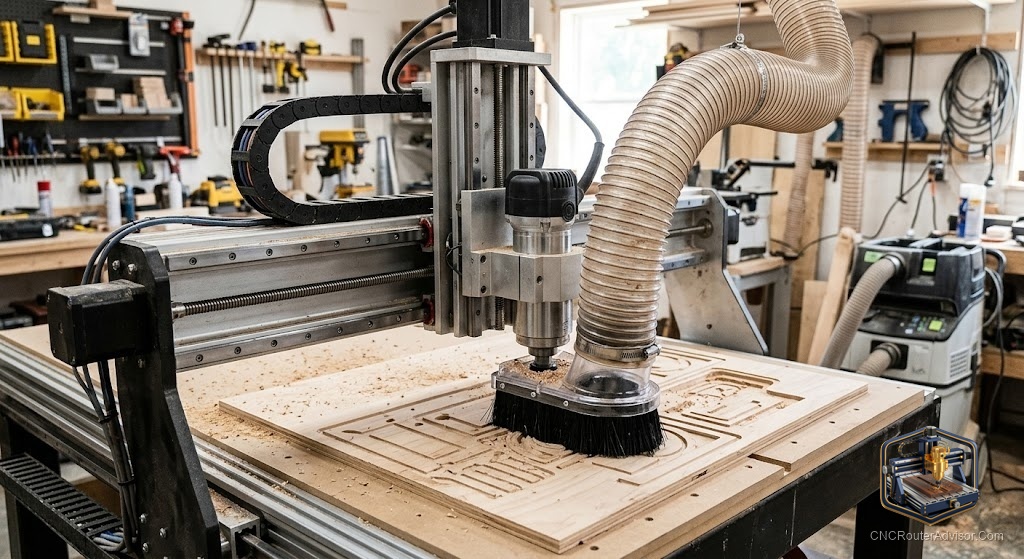
The first time you run a CNC router without dust control, you understand instantly why it matters. Fine wood dust coats everything, fills the air, and buries the cut so you cannot see what the machine is doing. A vacuum setup solves all of that at once. It keeps the cut clear, protects your lungs, and turns a messy hobby into a clean one. Getting the vacuum side of your machine right is one of the most satisfying upgrades you can make.
Two jobs a vacuum does
A CNC router vacuum setup handles two related tasks. The first is dust extraction, pulling chips and fine dust away from the cut as it happens. The second is keeping the air clean, since the finest dust is the most hazardous to breathe and the hardest to see. A good setup does both, capturing debris at the source before it can spread. As a bonus, clearing chips from the cut improves chip evacuation, which protects your tools and improves finish quality.
The main pieces
Most setups are built from a few components working together:
- A dust shoe, a brush-rimmed shroud around the spindle that captures dust right at the cutter.
- A shop vacuum or dust collector, which provides the suction. A shop vacuum suits smaller machines, while a dust collector moves more air for larger ones.
- Hose and fittings that connect the dust shoe to the vacuum without kinking or blocking airflow.
The dust shoe is the heart of the system, because capturing dust at the source is far more effective than trying to clean it up after it spreads.
Compatibility to check
A vacuum setup only works if the pieces fit together and fit your machine. Confirm that the dust shoe suits your spindle mount and diameter, that the hose fitting matches your vacuum, and that the dust shoe leaves enough clearance for your Z travel so it does not limit cutting depth. On smaller machines, make sure the added weight and bulk of the dust shoe do not interfere with the gantry. Matching these details up front avoids a frustrating afternoon of adapters.
Setting it up well
Good dust collection comes from attention to a few details. Position the dust shoe so its brush skirt rides just above the material, close enough to capture dust but not so low it drags. Use the shortest, smoothest hose path you can to preserve suction. Size your vacuum to the machine, since a small vacuum on a large machine simply cannot keep up. And empty the collector or vacuum regularly, because a full unit loses suction fast.
Upgrade options
As your work grows, the vacuum side can grow with it. A larger dust collector replaces a shop vacuum when you move to bigger machines and heavier cutting. A cyclone separator placed before the vacuum captures most debris before it reaches the filter, which keeps suction strong and reduces cleaning. A better-sealed or adjustable dust shoe improves capture, especially on contoured work. And automating the vacuum to start with the spindle is a small quality-of-life upgrade that you will appreciate every session.
Worth doing from the start
Dust control is one of those upgrades people wish they had done sooner. It protects your health, keeps your shop clean, improves your cuts, and lets you actually see what the machine is doing. Start with a dust shoe and a vacuum sized to your machine, keep the airflow path short, and build from there. A clean cutting area is not a luxury, it is what makes CNC routing a pleasure rather than a chore.