
How to Set Up a Safe CNC Router Work Area
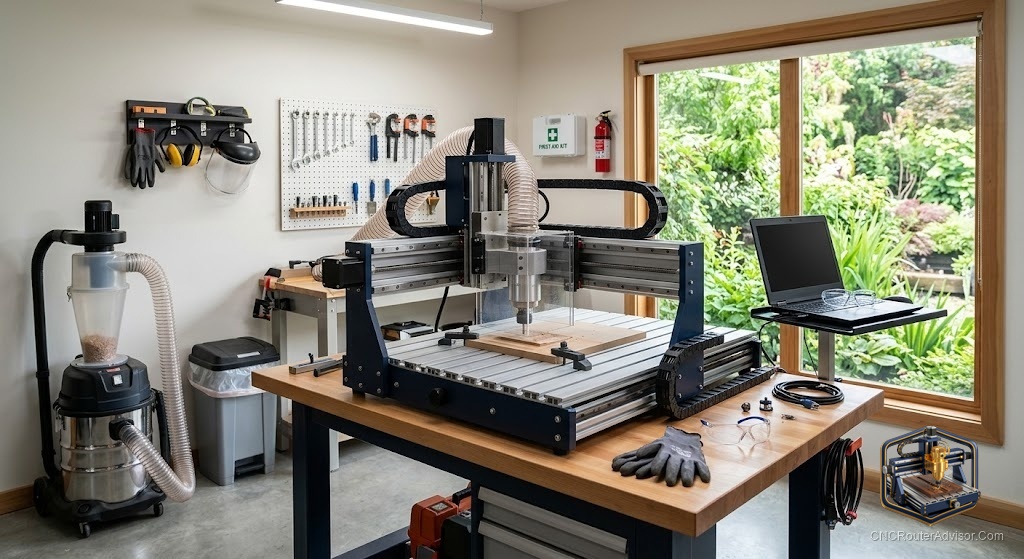
Most people think about CNC router safety only after a near miss. A tool that pulled loose, a workpiece that shifted, a cloud of fine dust that lingered too long. The better approach is to build safety into your setup from the start, so those near misses never happen. This guide focuses on the precautions and habits that keep a workshop running smoothly, session after session.
The mindset that prevents accidents
A CNC router does exactly what it is told, with no judgment and no hesitation. That reliability is its strength and its risk. The machine will drive the cutter through whatever is in its path, so your job is to make sure the only thing in its path is the material. Every precaution below flows from that single idea.
Layout precautions
A safe setup begins with how the machine sits in the room:
- Leave clear space on every side so you never have to reach across the cutting area.
- Position the emergency stop where your hand naturally falls, not somewhere you have to hunt for it.
- Keep cords, offcuts, and clutter off the floor around the machine.
- Light the work area well enough to see the cut clearly at all times.
A tidy, well-planned layout is not just pleasant. It removes the small hazards that cause most workshop injuries.
Dust and air quality precautions
Fine wood dust is a lung hazard and, in enough concentration, a fire risk. Treat dust control as a core safety system, not an afterthought. Run dust collection or extraction at the cut, wear respiratory protection when working close to the machine, and clean up settled dust regularly so it does not accumulate. Good extraction also keeps the cutting path clear, which reduces the chance of a chip-packed cut ruining a job.
Precautions before every job
The minutes before you press start are where safety is won or lost. Build a short pre-flight routine and follow it every time:
- Confirm the tool is fully seated and the collet is tight.
- Check that the material is clamped firmly and cannot shift or lift.
- Verify the toolpath and starting position so the machine does not lunge somewhere unexpected.
- Make sure your hands, cords, and clothing are clear of the gantry.
- Keep the emergency stop within reach before the spindle spins up.
This routine takes under a minute and prevents the majority of serious problems.
Precautions while the machine runs
Once the job starts, keep your hands out of the work area entirely. If you need to clear a chip, adjust something, or take a closer look, stop the spindle first. Stay nearby during the opening minutes of a new job, since that is when a workholding or toolpath problem tends to reveal itself. Wear safety glasses the whole time, and use hearing protection during longer runs.
Electrical precautions
Proper grounding and tidy wiring are safety features, not just neatness. Make sure the spindle and control box are grounded, route cables away from moving parts, and inspect wiring periodically since vibration can loosen connections. Never run a machine with visibly damaged cabling.
Turning precautions into second nature
The goal is not to memorize a list but to build habits you follow without thinking. Clear space, controlled dust, secure material, protective gear, and a consistent pre-start check add up to a workshop where the machine can run and you can trust it. Do these things every time, and safety stops being something you worry about and becomes simply the way you work.