
How to Set Up a Safe CNC Router Work Area
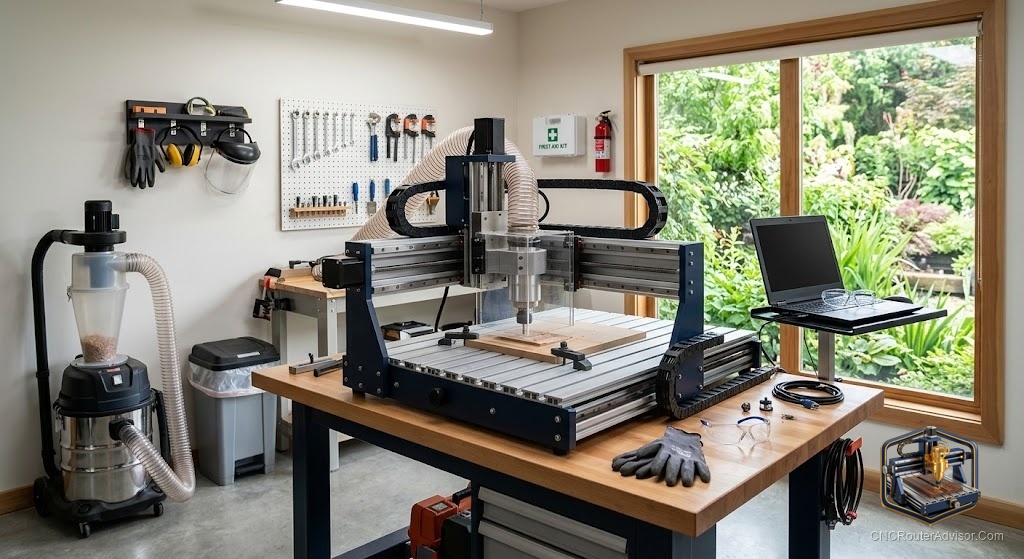
A CNC router runs on its own once the job starts, and that is exactly what makes safety planning matter. The machine will happily follow its instructions whether or not your hand is in the way, whether or not the dust is under control, and whether or not the material is clamped down. Setting up a safe work area is not about fear. It is about building an environment where the machine can do its job and you can walk away confident that nothing will go wrong.
Start with the space around the machine
Before you think about the router itself, look at the room. Give the machine clearance on all sides so you can reach the emergency stop, load material, and move around without leaning over the cutting area. Keep the floor clear of cords and clutter, because tripping near a running spindle is a genuine hazard. Make sure the emergency stop is within easy reach from where you normally stand, not buried behind the gantry.
Lighting matters more than people expect. A well-lit work area lets you see the cut, spot a problem early, and stop the job before a small issue becomes a broken tool or worse.
Control the dust before it controls you
Wood dust is not just messy, it is a respiratory hazard and, in fine concentrations, a fire risk. A dust collection setup pulls chips and dust away from the cut and out of the air. Pair that with respiratory protection when you are working close to the machine. Dust extraction also keeps the cut clear, which improves both safety and finish quality, so it earns its place twice.
Personal protective equipment
The basics are non-negotiable. Safety glasses protect against thrown chips and the occasional broken bit. Hearing protection matters during longer sessions, since a spindle running for an hour takes a toll you do not notice until later. Keep loose clothing, long sleeves, jewelry, and long hair well away from the moving gantry and spinning tool. The machine does not know the difference between material and a sleeve.
Secure the material every single time
Most dramatic CNC failures trace back to a workpiece that moved. If the material shifts or lifts during a cut, the tool can break, the part can become a projectile, and the job is ruined. Clamp the workpiece firmly, use a wasteboard and hold-down method suited to the material, and never trust a cut to a loose or half-hearted hold. Take the extra minute here, every time, without exception.
Respect the machine while it runs
Never reach into the work area while the spindle is turning. If you need to clear a chip or check something, stop the machine first. Stay with the machine during the first few minutes of a new job, when problems are most likely to show up, and keep the emergency stop within reach. Confirm the tool is properly seated in the collet and the collet is tight before you start, because a tool that pulls loose mid-cut is dangerous.
Electrical and grounding basics
A CNC router is an electrical machine, so treat the wiring with respect. Make sure the control box and spindle are properly grounded, keep cables tidy and away from moving parts, and avoid running a machine with damaged wiring. Vibration loosens connections over time, so a periodic check of your wiring is part of good safety housekeeping.
Build the habit, not just the setup
A safe work area is partly physical and partly routine. The physical part is clearance, dust control, protective gear, and secure workholding. The routine part is doing the same checks every time you start a job. Once these become second nature, safety stops feeling like a chore and simply becomes how you run the machine. That is when you get the real payoff: the freedom to let the router work while you focus on the next project.