
CNC Router Dust Shoe Guide: Compatibility, Setup, and Upgrade Options
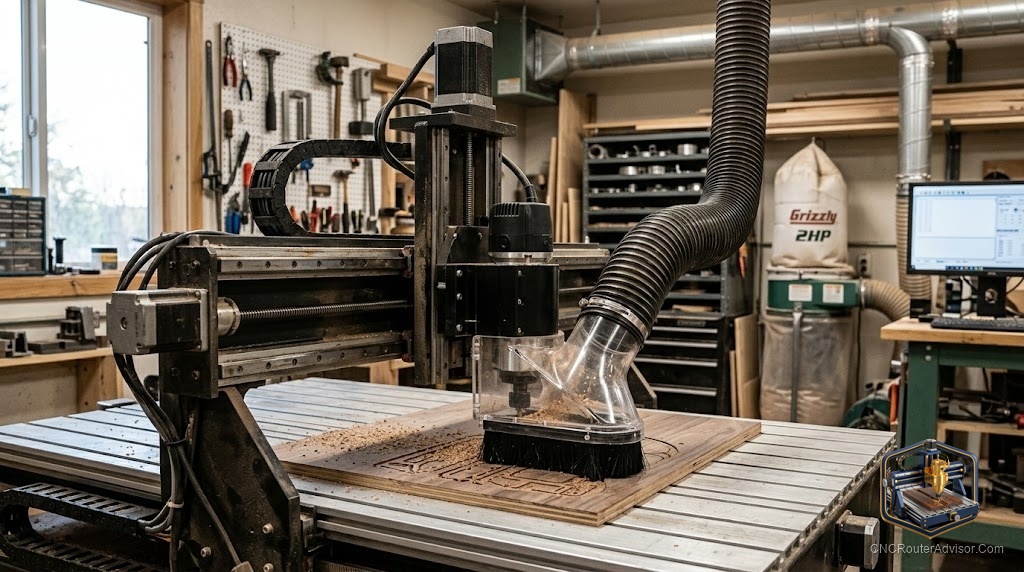
A dust shoe and a dust boot are terms used almost interchangeably in the CNC world, and the distinction is minor enough that it rarely matters when you are buying. Both describe a shroud that surrounds the cutting tool area, seals against the workpiece surface, and connects to a vacuum that pulls chips and dust away at the source. The name you find depends on the manufacturer; the job is the same.
A CNC router dust shoe is a low-profile shroud mounted close to the cutting tool that forms a sealed enclosure between the tool area and a vacuum port. Chips and fine dust are pulled away as they are created, before they can disperse across the machine or the shop.
Short answer: choose the design (fixed or floating, bristle or skirt) based on your spindle clearance, typical cut depth, and how often you change material thickness. Floating designs that self-adjust to the workpiece surface are the most practical for general use, and real suction behind the shoe matters as much as the shoe itself.
Dust shoe versus dust boot: which name, and does it matter?
In common usage, a dust shoe is often the flatter, lower-profile version that sits close to the workpiece, while a boot is taller and wraps more of the spindle body. But the boundary is blurry and many products are sold under both names. Focus on the design rather than the name: profile height, adjustability, bristle type, and vacuum port size are the practical specs.
Setup: getting the seal right
The seal is everything. If the shoe sits too high off the workpiece, air leaks in around the edges and suction drops. If it drags too hard, it can shift the workpiece or catch on clamps. The correct position: bristles or skirt just lightly touching the material surface, vacuum hose creating a steady draw.
To set up for the first time: lower the shoe until the bristles barely touch, tighten the mount, and test. Run a short pass and watch where chips go. If they escape at the trailing edge, raise the suction or lower the shoe slightly.
Upgrade options and what to look for
For most hobby and prosumer machines, manufacturer-specific and third-party shoes are available. Good upgrade features: a floating or spring-loaded mechanism for self-adjustment across uneven material, replaceable bristles, a polycarbonate or acrylic view window, and a hose fitting that matches your vacuum. Magnetic quick-release mounts are genuinely useful if you swap tooling often.
The dust collection side
A shoe is passive without suction. A standard shop vacuum works for intermittent use; a dust collector with a cyclone pre-separator maintains suction and protects the filter during longer runs. The shoe creates the enclosure; the collector does the work.
The verdict
A dust shoe is a high-value, low-drama upgrade for any CNC router doing real work. Get a floating design with replaceable bristles, confirm it fits your spindle diameter and Z-plate, and connect it to real suction. Setup takes minutes; the payoff starts on the first run.
Three things to remember:
- Boot and shoe are used interchangeably; judge by design (adjustability, bristle type, profile height), not by name.
- The seal is the whole job: bristles should just touch the workpiece surface with real suction behind the shoe.
- A floating, self-adjusting shoe beats a fixed one for general use across varying material heights.
FAQ
What is the difference between a dust boot and a dust shoe? The terms are used interchangeably. A shoe tends to be flatter and lower-profile; a boot encases more of the spindle. The job is the same: seal the cut zone and capture dust at source.
How do I set up a dust shoe? Lower until bristles just touch the material, tighten the mount, check that the vacuum pulls chips into the hose rather than letting them escape the seal.
What suction do I need? A shop vacuum is the minimum. A dedicated dust collector with a cyclone pre-separator maintains suction and filter life during longer sessions.
Why does my dust shoe miss chips? Usually a sealing or suction problem: shoe too high, bristles worn, or vacuum too weak. Check bristle height first, then suction.
How long do bristles last? They wear over time and can be cut on shallow passes. Choose a shoe with replaceable brush strips to extend life cheaply.
Can I use a dust shoe on a trim router spindle? Yes, as long as the spindle diameter and Z-plate mount are compatible. Check specs before buying.
Does a dust shoe work for metal cutting? A shoe captures metal chips, but fine metal swarf can wear brushes faster than wood chips. Check that the bristle material suits your work.
References
- Avid CNC, Dust Boot and Dust Foot Options: https://www.avidcnc.com/accessories/dust-collection/
- CNC Router Info, How to Choose a CNC Router: https://cncrouterinfo.com/guides/how-to-choose-a-cnc-router/