
Best Vacuum Pump for CNC Router: Features to Compare Before You Buy
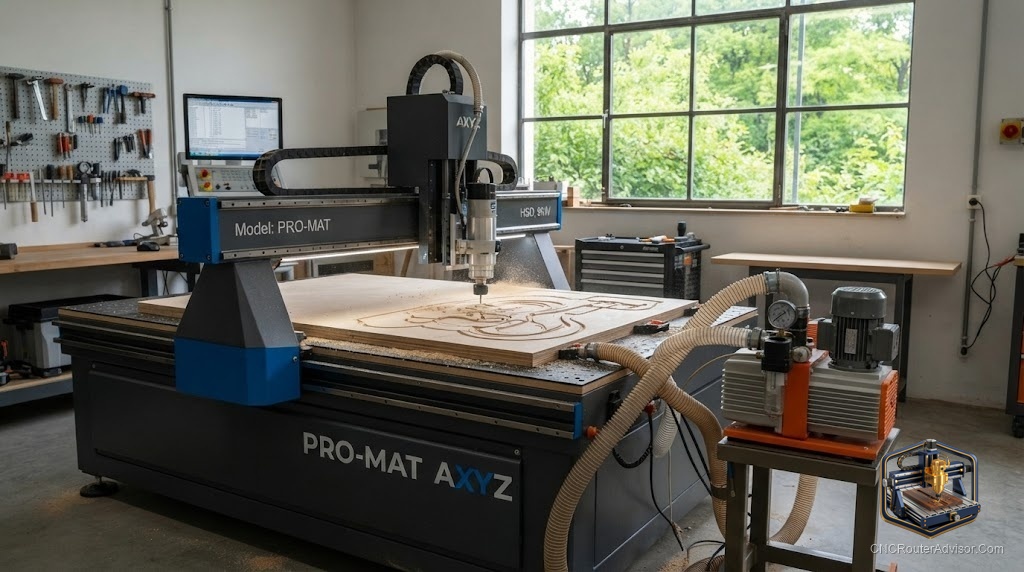
A vacuum table is the fastest, cleanest way to hold flat sheet material on a CNC router, and the vacuum pump is its heart. Choose the right pump and sheets stay locked down while you cut all day without clamps getting in the way; choose the wrong one and parts shift, lift, or fly, ruining cuts and risking safety. The best vacuum pump for your router depends on your table, your materials, and your work area, so rather than a single answer, this guide compares the features that decide which pump suits you.
Vacuum hold-down is a system, and the pump must match the table and materials, so the useful approach is to compare pump types and specifications against your setup rather than chase one recommendation.
The best vacuum pump for a CNC router is the one matched to your table type, material, and work area, and the key features to compare are pump type (rotary vane pumps pull a high vacuum for non-porous materials and MDF spoilboard tables, while regenerative blowers move high air volume for porous materials and grid tables), airflow versus vacuum level (porous materials need high flow, non-porous need high vacuum), capacity matched to your table size, noise, maintenance (oil-lubricated versus oil-free), and cost. Match the pump to how your table works: high-vacuum rotary vane for sealed or gasketed setups and dense materials, high-flow regenerative blower for porous materials cut through a spoilboard. Sizing the pump to your table and material is what determines reliable hold-down.
Match airflow and vacuum level to your material and table: high vacuum for non-porous, high airflow for porous; that match decides reliable hold-down.
The key distinction: airflow versus vacuum
Almost every pump choice comes down to this trade-off:
- High vacuum, lower airflow (rotary vane pumps): pull a strong vacuum but move less air. Ideal for non-porous materials (like acrylic, metal, and sealed surfaces) and for MDF-spoilboard tables where the material seals against the surface. They hold small and non-porous parts strongly.
- High airflow, lower vacuum (regenerative blowers / side-channel blowers): move large volumes of air at a lower vacuum level. Ideal for porous materials (like MDF and many woods) cut on a grid or plenum table, where air is constantly pulled through the porous material and the pump must replace the leaking air.
Getting this match right is the single most important decision, because a high-vacuum pump starves on a porous material and a high-flow blower cannot hold a sealed part as strongly.
Pump types compared
Rotary vane pumps. High vacuum, moderate flow. Excellent for non-porous materials and sealed or gasketed fixtures. Oil-lubricated versions need oil maintenance; oil-free versions are lower maintenance but may pull slightly less vacuum. Often used with dedicated vacuum fixtures.
Regenerative blowers (side-channel blowers). High flow, lower vacuum. The common choice for production woodworking on grid tables cutting porous sheet goods, since they replace the air leaking through the material. Generally low maintenance (no oil) but can be noisy and draw significant power.
Other options. Some small setups use shop-vacuum-based or venturi (compressed-air) systems for light or small-part hold-down; these suit hobby use but lack the capacity for large production tables.
Features to compare
Capacity matched to table size. The pump must supply enough vacuum or airflow for your table’s area and the number of zones. An undersized pump cannot hold a large sheet; size the pump to the table.
Airflow and vacuum ratings. Compare the pump’s airflow (for porous work) and vacuum level (for non-porous work) against your materials, using the airflow-versus-vacuum distinction above.
Noise. Regenerative blowers in particular can be loud; consider placement, mufflers, or enclosures, especially in a shared or home space.
Maintenance. Oil-lubricated rotary vane pumps need oil changes; oil-free and blower types are lower maintenance. Factor upkeep into the choice.
Power and installation. Larger pumps draw significant power and may need dedicated circuits. Confirm your electrical supply and plan placement and ducting.
The verdict
The best vacuum pump for a CNC router is the one matched to your table type, material, and work area, not a single universal model. The decisive feature is the airflow-versus-vacuum trade-off: choose a high-vacuum rotary vane pump for non-porous materials and sealed or spoilboard setups, and a high-airflow regenerative blower for porous materials cut on a grid table, where the pump must replace air leaking through the material. Then compare capacity matched to your table size, noise, maintenance, and power needs. Size the pump to your table and material, and your hold-down will be fast, clean, and reliable.
Three things to take with you:
- The key decision is airflow versus vacuum: high vacuum (rotary vane) for non-porous materials and sealed setups, high airflow (regenerative blower) for porous materials on grid tables.
- Size the pump’s capacity to your table area and zones, since an undersized pump cannot hold a large sheet.
- Also compare noise, maintenance (oil-lubricated versus oil-free), and power and installation needs, and match the whole system to how your table works.
FAQ
What kind of vacuum pump do I need for a CNC router? It depends on your material and table. Use a high-vacuum rotary vane pump for non-porous materials and sealed or spoilboard setups, and a high-airflow regenerative blower for porous materials like MDF and wood cut on a grid table. The airflow-versus-vacuum match is the key decision.
What is the difference between a rotary vane pump and a regenerative blower? A rotary vane pump pulls a high vacuum with lower airflow, ideal for non-porous materials and sealed fixtures. A regenerative blower moves high airflow at lower vacuum, ideal for porous materials where air constantly leaks through the material and must be replaced. Match the type to your material.
Why won’t my vacuum table hold porous wood? Because porous materials leak air, so a high-vacuum, low-flow pump starves and cannot maintain hold-down. Porous materials need a high-airflow pump (a regenerative blower) that replaces the leaking air, along with a suitable grid or plenum table. Match the pump to the material.
How big a vacuum pump do I need? One sized to your table area and number of zones, with enough airflow (for porous work) or vacuum (for non-porous work) to hold your material reliably. An undersized pump cannot hold a large sheet, so size the pump to the table rather than buying the smallest that seems to work.
Are vacuum pumps for CNC routers loud? Regenerative blowers in particular can be noisy, and larger pumps draw significant power. Consider placement, mufflers, or an enclosure, especially in a home or shared space, and confirm your electrical supply can handle the pump, planning any dedicated circuit.
Can I use a shop vacuum for CNC hold-down? For light or small-part hold-down on a hobby setup, a shop-vacuum-based or venturi system can work. However, these lack the capacity for large production tables, where a properly sized rotary vane pump or regenerative blower is needed for reliable hold-down across a full sheet.
References
- Wikipedia, vacuum pump overview: https://en.wikipedia.org/wiki/Vacuum_pump
- CNC Cookbook, vacuum table hold-down guidance: https://www.cnccookbook.com