CNC Router Use Cases: What You Can Make and Which Industries Rely on Them
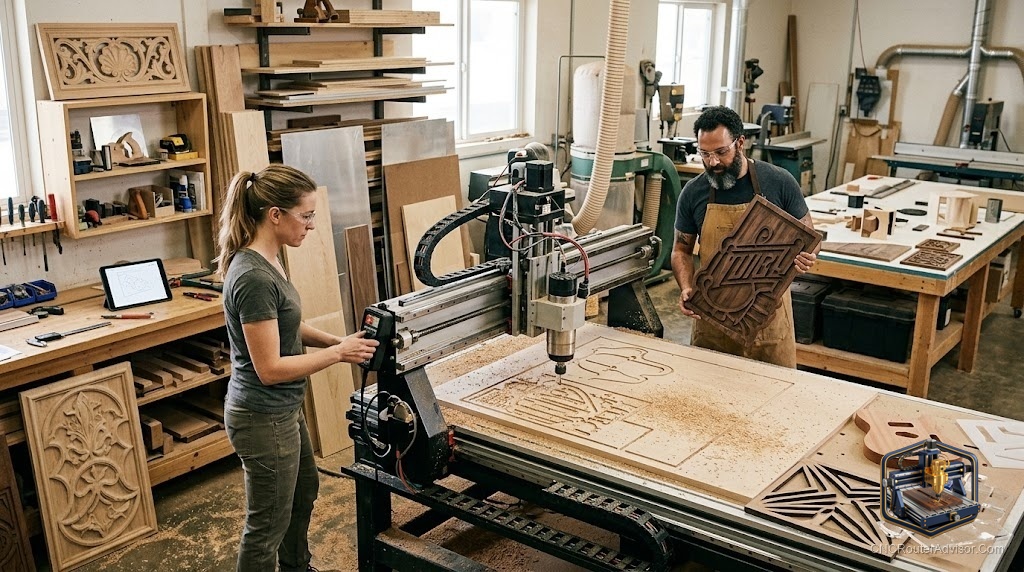
One of the most striking things about a CNC router is its versatility, the same fundamental machine that a hobbyist uses to carve a house sign is, scaled up, what a cabinet shop uses to nest a full sheet of plywood or a sign company uses to cut dimensional letters. Understanding the full range of CNC router use cases, across hobby, business, and industry, helps you see what’s possible, decide whether a router fits your goals, and choose the right machine for the work you actually want to do. This guide surveys CNC router use cases from the workshop to the factory floor.
CNC router use cases span hobby, small-business, professional, and industrial applications, including sign making, woodworking and furniture, cabinetry, art and decor, prototyping, and production of parts in wood, plastics, composites, foam, and non-ferrous metals. The router’s versatility across materials and scales makes it valuable from the home workshop to the manufacturing floor.
The short answer on use cases: a CNC router excels wherever you need to cut, carve, or engrave sheet and slab materials, wood, plastics, composites, foam, and soft metals, with precision and repeatability, from one-off signs and art to full-sheet cabinetry nesting and production runs. What defines the right machine is which of these use cases you’ll actually pursue, at what scale.
Hobby and maker use cases
- Sign making: house and family signs, decorative and business signs, V-carved lettering.
- Art and decor: wall art, mandalas, 3D relief carvings, inlays, coasters, and ornaments.
- Personalized gifts: engraved boards, name puzzles, keepsakes, and custom items.
- Small projects and repairs: brackets, jigs, fixtures, model parts, and replacement pieces.
- Learning and experimentation: exploring design, materials, and digital fabrication.
Small-business use cases
- Custom signage business: dimensional signs and lettering for local businesses and events.
- Etsy/craft products: personalized boards, decor, ornaments, and gifts (high perceived value from cheap materials).
- Furniture and home goods: small-batch furniture parts, organizers, and decor.
- Local job shop: cutting parts and prototypes for other businesses and makers.
- Awards and promotional products: plaques, trophies, and branded items.
Professional and industrial use cases
- Cabinetry and millwork: nesting full sheets for cabinet parts, panels, and architectural millwork (often with ATC and nesting software), a major industrial use.
- Signage production: high-volume dimensional letters, displays, and signage.
- Furniture manufacturing: production of furniture components at scale.
- Aerospace/automotive/marine: patterns, molds, tooling, foam cores, and non-ferrous parts.
- Prototyping and product development: rapid prototypes and short runs for design firms.
- Composite and foam machining: tooling foam, molds, and composite parts (near-zero cutting force lets even light machines handle foam).
- Entertainment and architecture: props, set pieces, scenic elements, and architectural features.
Use cases by material
- Wood and plywood: the core use, signs, furniture, cabinetry, art.
- MDF: painted signs, cabinet parts, molds, and templates.
- Plastics/acrylic: signage, displays, enclosures, and parts.
- Foam (EPS/XPS, tooling foam): patterns, molds, props, packaging, and toolbox inserts, a distinctive strength since foam needs little rigidity.
- Composites: carbon fiber and fiberglass parts (with appropriate tooling and dust/health controls).
- Non-ferrous metals (aluminum, brass, copper): parts, plates, and engraving on rigid machines, not steel.
Choosing a machine by use case
- Hobby/personal use cases: a desktop or capable benchtop machine.
- Small-business use cases: a capable benchtop or entry full-size machine for reliability and throughput.
- Professional/industrial use cases: full-size or industrial machines with ATC, vacuum tables, and dust extraction for production.
- Material-driven choices: rigidity for aluminum; large work area and vacuum hold-down for cabinetry; big, simpler machines for foam.
The verdict
The CNC router’s defining quality is versatility, the same core machine, scaled and configured, serves everything from a hobbyist’s house sign to a cabinet shop’s full-sheet nesting to an aerospace supplier’s foam patterns. Its use cases span hobby (signs, art, gifts), small business (signage, Etsy products, job-shop work), and industry (cabinetry, signage production, furniture manufacturing, prototyping, composites, and foam), across wood, plastics, composites, foam, and non-ferrous metals. The practical lesson: identify which use cases you’ll actually pursue and at what scale, then choose a machine sized and built for that work, a desktop or benchtop for hobby and small business, a full-size or industrial machine for production. Match the machine to your use cases and the router’s versatility becomes real, usable capability.
Three takeaways: CNC routers are remarkably versatile, spanning hobby (signs, art, gifts), small-business (signage, products, job-shop work), and industrial (cabinetry, production, prototyping, composites, foam) use cases; they cut wood, plastics, composites, foam, and non-ferrous metals, with foam a distinctive strength since it needs little rigidity; and choose a machine by the use cases you’ll actually pursue and their scale, desktop/benchtop for hobby and small business, full-size/industrial for production.
FAQ
What are the main use cases for a CNC router? Sign making, woodworking and furniture, cabinetry and millwork, art and decor, personalized gifts, prototyping, and production of parts, spanning hobby, small-business, professional, and industrial applications across many materials.
What industries use CNC routers? Woodworking and furniture, cabinetry and millwork, signage, aerospace/automotive/marine (patterns, molds, foam cores, non-ferrous parts), product design and prototyping, composites manufacturing, and entertainment and architecture (props, sets, features).
What materials can a CNC router work with? Wood and plywood, MDF, plastics and acrylic, foam (EPS/XPS and tooling foam), composites (carbon fiber, fiberglass), and non-ferrous metals (aluminum, brass, copper). It is not for cutting steel, that’s a job for mills and other machines.
Can a CNC router be used for a business? Yes. Common business use cases include custom signage, Etsy/craft products (personalized boards, decor, gifts), small-batch furniture, local job-shop cutting, and awards/promotional products, many turning cheap materials into high-value personalized goods.
What’s a distinctive CNC router use case? Foam machining, patterns, molds, props, packaging, and toolbox inserts, is a standout, because foam requires almost no cutting force, so even lighter machines handle it well. Cabinetry nesting of full sheets is a major industrial use case.
How do I choose a CNC router for my use cases? Identify which use cases you’ll actually pursue and at what scale, then match the machine: desktop or benchtop for hobby and small business; full-size or industrial (ATC, vacuum tables, dust extraction) for production. Let materials guide rigidity and size needs.
Can one CNC router handle many use cases? Yes, to a point, a capable benchtop machine handles signs, art, small parts, and light aluminum. But scale and specialization matter: full-sheet cabinetry or continuous production need a full-size or industrial machine. Match the machine to your primary use cases.
References
- CNCRouterInfo, CNC Router Uses and Applications: https://cncrouterinfo.com/
- Simply Technologies, Benchtop CNC Router Uses: https://simplytechnologies.xyz/benchtop-cnc-router-buyers-guide-uses-and-how-simply-technologies-fits-in/
- ShopBot Tools, Applications and Industries Served: https://shopbottools.com/
- Techno CNC, CNC Router Applications by Industry: https://www.technocnc.com/
- 731 Woodworks, CNC for Woodworking and Small Business: https://www.731woodworks.com/731-blog