
CNC Router Dust Collection: The System That Keeps Your Shop and Lungs Clean
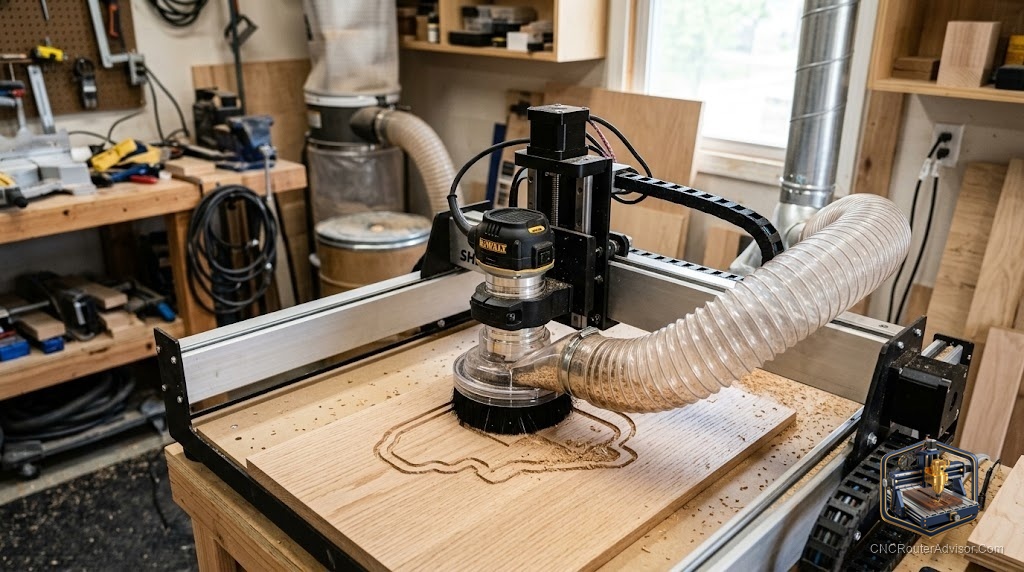
The first time you run a CNC router without dust collection, you understand why everyone nags about it. Fine dust gets everywhere, coats every surface, drifts into the machine’s rails and electronics, and hangs in the air you are breathing. It is a mess and a genuine health hazard, and it is completely avoidable. A good dust collection setup is not a luxury add-on, it is part of the machine, and building it right makes CNC work cleaner, safer, and honestly more enjoyable.
CNC router dust collection is the system that captures and removes the chips and fine dust a router produces, typically combining a dust shoe (dust boot) at the spindle with a hose and a vacuum or dust extractor. Its purpose is to protect your health, keep the machine and shop clean, and improve visibility and cut quality.
The direct answer before the detail: an effective setup has three parts, a dust shoe sized to your spindle at the cutting point, a hose routed to follow the gantry, and a vacuum or extractor with enough suction and a fine-dust filter. Verified dust shoes are below. Match the shoe to your spindle diameter, size the suction to your machine, and treat fine-dust filtration as non-negotiable for your lungs. The sections below cover each part and how they work together.
The dust shoe: capture at the source
The dust shoe is the heart of the system, a brush-skirted cover around the spindle that captures chips right where they are made and channels them into the hose. Fit matters most: the shoe must match your spindle or router diameter and sit at the right height so the brush sweeps the surface without limiting plunge depth. A transparent, split, or magnetic design helps you see the cut and swap bits easily. Get the shoe right and you capture the majority of debris before it ever escapes.
Verified dust shoes worth owning
Match the shoe to your spindle. For 65mm and 69mm spindles and compact routers, the Genmitsu 65mm and 69mm CNC dust shoe adapts between both sizes with a gasket and suits many 300W to 500W spindles. For 3018-class machines with a 42mm spindle, the Genmitsu CNC dust shoe for the 3018 series fits the smaller motor and includes a nylon brush. For a larger, high-suction option with a wide vacuum port, the Daedalus 80mm CNC dust shoe suits bigger spindles and hoses. The honest caveat: confirm your exact spindle diameter and hose size before buying, because a shoe that does not fit the spindle or the hose leaves gaps that leak dust.
Hose, suction, and filtration
The shoe is only as good as what pulls through it. Route the hose so it follows the gantry without snagging or adding drag, and use a hose sized to the shoe’s port. For suction, a shop vacuum works on smaller machines, while larger machines and full-sheet work benefit from a proper dust extractor with more airflow. Crucially, use fine-dust filtration, a fine filter or a cyclone separator ahead of the vacuum, because the invisible fine particles are the real health hazard, not the chips you can see. Filtration is the part people skimp on and the part their lungs care about most.
For keeping work secure while you cut cleanly, pair dust collection with our guide to CNC router clamps.
Who needs to prioritize this most
Anyone cutting MDF or sheet goods should treat dust collection as essential, since MDF produces enormous volumes of fine, hazardous dust. Enclosed shops and home garages need it for air quality, and any machine with exposed rails and electronics benefits from keeping debris out. The only people who can go light are those making rare, small cuts in the open air, and even they breathe easier with a basic shoe and vacuum.
Final verdict
CNC router dust collection is part of the machine, not an accessory, and a good system pays you back in health, cleanliness, and better cuts. Build it in three parts: a dust shoe matched to your spindle, a hose routed along the gantry, and a vacuum or extractor with real fine-dust filtration. Confirm the shoe fits your spindle and hose before buying, size the suction to your machine, and never skip filtration. Do that and the shop stays clean and the air stays safe. Skip it, and you pay in dust, downtime, and the health cost you cannot see.
FAQ
What are the parts of a CNC dust collection system? A dust shoe (dust boot) at the spindle, a hose routed along the gantry, and a vacuum or dust extractor with fine-dust filtration. The three work together to capture debris at the source.
What does a dust shoe do? It is a brush-skirted cover around the spindle that captures chips and dust right where they are made and channels them into the vacuum hose, before they escape into the shop.
How do I choose the right dust shoe? Match it to your spindle or router diameter and hose size, and make sure the brush height sweeps the surface without limiting plunge depth. Split or magnetic designs ease bit changes.
Do I need a special vacuum? A shop vacuum works for smaller machines, but larger machines benefit from a dust extractor with more airflow. Either way, use fine-dust filtration or a cyclone separator.
Why is fine-dust filtration so important? The invisible fine particles, especially from MDF, are the real health hazard. A fine filter or cyclone protects your lungs far more than capturing only the visible chips.
Is dust collection necessary for wood? Yes, especially for MDF and sheet goods, which produce large volumes of hazardous fine dust. It also keeps the machine’s rails and electronics clean and improves cut visibility.
References
- SainSmart Genmitsu, dust shoe specifications and compatibility: https://www.sainsmart.com
- V1 Engineering, dust collection setup guidance: https://docs.v1e.com
- U.S. Occupational Safety and Health Administration, wood dust hazard information: https://www.osha.gov