
Industrial CNC Router Guide: What Makes a Machine Industrial and Buying Considerations
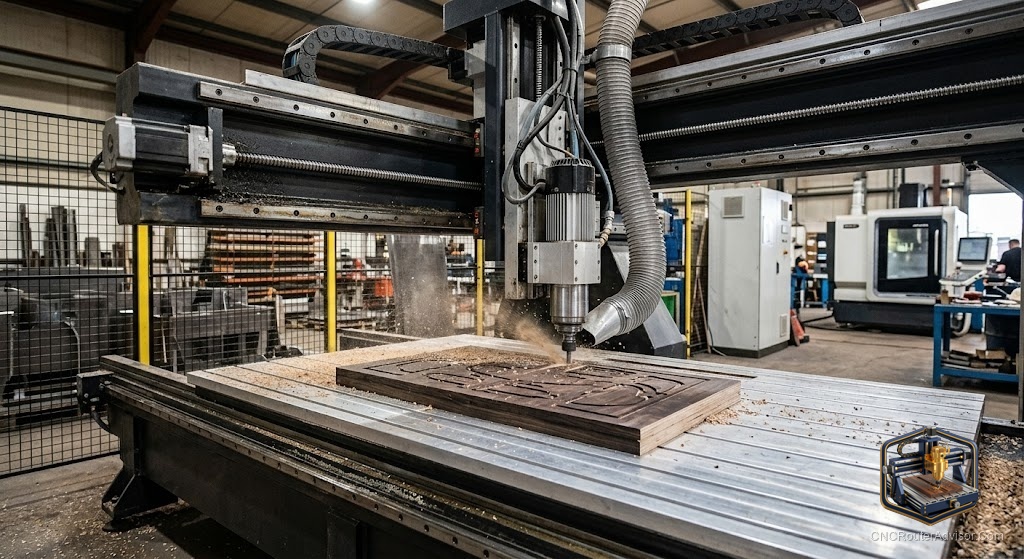
The word industrial on a CNC router listing means different things at different price points, and that ambiguity costs buyers money. A consumer machine sold with industrial in the description is usually borrowing the word for marketing purposes. A genuinely industrial router is a different category: a production machine built to run shifts, hold tolerances under sustained load, and be serviced by a trained technician rather than a forum post. Understanding what genuine industrial capability actually requires is the clearest path to buying the right machine when your work genuinely needs it.
This guide defines what makes a CNC router industrial, the specifications and infrastructure it requires, and the buying considerations for shops evaluating the industrial tier.
What makes a CNC router genuinely industrial
A genuine industrial CNC router combines several characteristics that distinguish it from prosumer and consumer machines. The frame is heavy, often steel, designed to absorb the cutting forces and vibration of sustained production work without flexing. The drive system - typically rack and pinion on quality rack and servos - handles high feed rates and long duty cycles. The spindle is an industrial VFD unit rated for continuous operation, with options for ATC. The control system runs on proven industrial controllers rather than GRBL-class hobby electronics. And the whole machine is backed by installation, training, and a service infrastructure from the manufacturer.
These machines are not bought from a product listing. They are specified through a sales process, installed by the manufacturer or a certified dealer, and maintained under service agreements.
The short answer
Buy an industrial CNC router when your production volume requires the throughput, uptime, and material range that prosumer machines cannot deliver, and when your operation can support the cost, infrastructure, and service relationship the purchase involves. The defining factors are duty cycle and uptime requirements: a machine that must run full shifts daily, hold tolerances under continuous load, and be repaired quickly when it stops is an industrial machine’s job. Below that threshold, a prosumer machine from Avid, ShopBot, or Laguna handles the work at a lower entry point with more accessible support.
What industrial machines run
Industrial routers handle the same primary materials as prosumer machines - wood, MDF, plastics, composites, and aluminum - but they do so at production rates and duty cycles that prosumer machines cannot sustain indefinitely. Sign shops, cabinet manufacturers, display fabricators, and industrial panel processors run industrial machines because they need to cut many sheets per shift, not just many sheets per week.
The additional accessories common at this level reflect that intensity. Vacuum tables for fast, consistent workholding. ATC spindles to eliminate manual tool changes. Automatic nesting software that maximizes material yield across runs. Material handling automation that loads and removes sheets without manual effort on high-volume lines.
Infrastructure requirements
An industrial router requires proper infrastructure before installation. Heavy power, often three-phase, must be available and sized to the machine’s specifications. Floor space must accommodate the machine footprint plus working clearance and material handling. Dust collection must match the production volume, which typically means a dedicated high-capacity system rather than a shop vacuum. The floor must support the machine mass.
Plan all of this before the purchase conversation, not after. A machine quoted without an infrastructure audit will often require significant shop work that adds to the true cost of the installation.
The buying process
An industrial CNC router purchase is a sales relationship, not a checkout page. You start with a conversation about your production requirements, material range, work area needs, and throughput targets. The manufacturer or dealer proposes a configuration. You evaluate through demonstrations, often at a showroom or reference customer site. You negotiate pricing, service terms, training, and installation support as a package. The purchase includes all of that, not just the machine.
For shops new to industrial purchasing, this process can feel unfamiliar, but it exists because a machine that costs this much and runs this hard needs a relationship behind it. Evaluate the support infrastructure as carefully as the machine specs.
Who should skip the industrial tier
Skip industrial if you are not yet running at production rates that require it. A prosumer machine from a maker like ShopBot, Laguna, or Avid handles a very significant production workload at a lower entry cost with more accessible support. The upgrade to industrial makes sense when a prosumer machine is genuinely the bottleneck. Skip it too if your infrastructure is not ready, because an industrial machine in a shop without the right power, space, and dust handling runs at a fraction of its capability and wears faster.
Comparison: prosumer vs industrial tier
| Factor | Prosumer | Industrial |
| Frame | Heavy but lighter than industrial | Steel, production-grade |
| Duty cycle | Regular use, not shift-intensive | Full shift, daily production |
| Control system | GRBL class or proprietary mid-grade | Industrial controllers |
| Purchase process | Direct online or dealer | Sales relationship, install, training |
| Right buyer | Serious small shops, prosumers | High-volume production operations |
For the prosumer tier: Avid CNC (avidcnc.com), ShopBot (shopbottools.com), and Laguna (lagunatools.com/cnc/). For genuine industrial machines, established makers include Multicam, AXYZ, ShopBot full-range, Thermwood, and region-specific industrial CNC makers. Evaluate all through direct contact and demonstrations.
The verdict
An industrial CNC router is defined by sustained production capability, uptime reliability, and a service infrastructure that keeps a working machine working. It is not a consumer machine with better marketing. The purchase involves a real relationship with the manufacturer or dealer, proper infrastructure preparation, and a production workload that justifies the investment. Buy industrial when volume and uptime requirements genuinely call for it. Until then, a well-specified prosumer machine is the smarter buy: capable, lower entry cost, and accessible to maintain.
Frequently asked questions
What is the difference between an industrial and a prosumer CNC router? An industrial machine is built for sustained shift production with a heavier frame, industrial control system, and a full service infrastructure. A prosumer machine handles serious work at lower duty cycles with more accessible support.
Do I need three-phase power for an industrial CNC router? Many industrial machines require three-phase power. Confirm the electrical requirements with the manufacturer and plan the installation before the purchase conversation.
How do I buy an industrial CNC router? Through direct contact with the manufacturer or a certified dealer. The process involves a sales conversation, demonstration, and negotiation of pricing, service, training, and installation as a package.
What vacuum table setup does an industrial router need? A high-capacity vacuum system sized to the machine’s work area and the production rate. Industrial operations typically use a dedicated vacuum pump rather than a shop vacuum.
Who makes industrial CNC routers? Multicam, AXYZ, Thermwood, ShopBot, Laguna, and other manufacturers depending on your region and application. Evaluate through direct contact and reference site visits rather than listings.
Can a prosumer machine work for small production? Yes. Many small shops run prosumer machines like Avid, ShopBot desktop, and mid-size Laguna successfully for real production work. The upgrade to industrial is justified only when those machines become the throughput bottleneck.
References
- WorkshopCalc, Best CNC Routers guide: https://workshopcalc.com/guides/best-cnc-routers
- Laguna Tools, CNC machines: https://lagunatools.com/cnc/