
CNC Router Safety Precautions: Ventilation, Dust Collection, PPE, and Workshop Setup
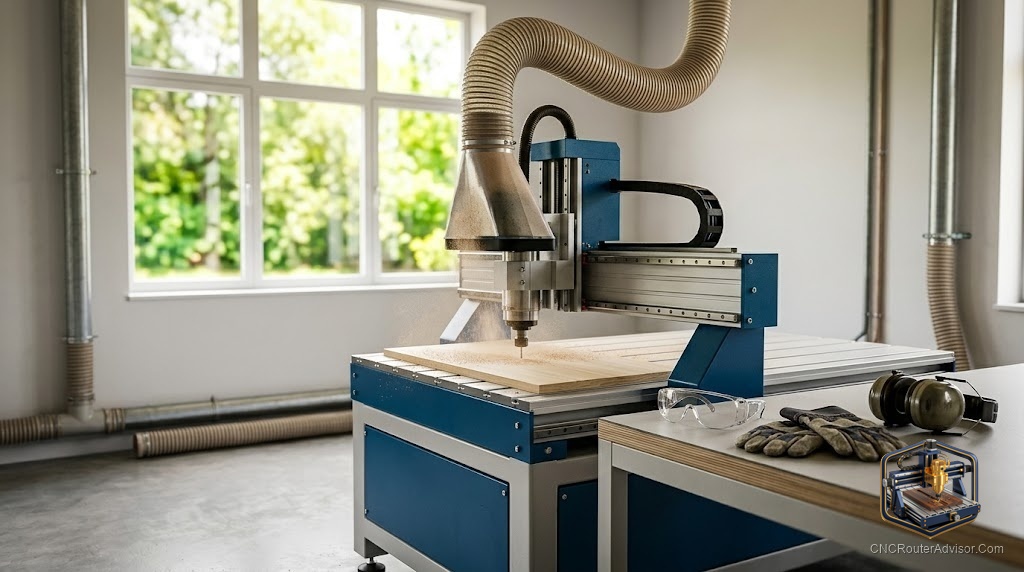
The first time a router bit grabs a poorly clamped board and flings it across the shop, you stop treating safety as paperwork. A CNC router runs unattended in ways a handheld tool never does, and that changes what can go wrong. The spindle keeps cutting whether or not you are paying attention, so the safety work happens before you press start, not during the cut.
This guide walks through the safety habits that actually matter for a hobby or small shop machine: controlling dust, moving air, holding your material down, and protecting your body. None of it is complicated. All of it is the difference between a clean afternoon of cutting and a trip to urgent care.
What CNC router safety actually covers
Safety on a CNC router breaks into four areas that overlap. The first is respiratory and air quality, which means dust collection and workshop ventilation. The second is workholding, meaning clamps, a wasteboard, and material hold-down that keep the part from moving. The third is personal protective equipment, or PPE, covering your eyes, ears, and lungs. The fourth is machine setup and awareness, including a touch probe or Z-probe for accurate zeroing, tidy cabling, and knowing where your stop button is.
Fine wood dust is the hazard people underrate most. It is not just messy. The fine fraction stays airborne for hours and reaches deep into your lungs, and repeated exposure is linked to real long term harm. A router throws far more of it than a hand sander because the cutter spins fast and clears chips continuously.
The short answer
If you want the safe setup in one paragraph: fit a dust shoe over the spindle and connect it to a shop vacuum or dust collector, add a wasteboard or spoilboard with a proper clamping kit so nothing can shift, wear safety glasses and hearing protection every time, add a respirator when you sand or cut dense material, and zero your Z height with a touch probe rather than eyeballing it. Do those five things and you have handled the large majority of what hurts people.
Dust collection: the dust shoe and vacuum pairing
A dust shoe is a brush skirt that surrounds the cutter and connects to suction. It captures chips at the source, which is far more effective than a room air filter working after the fact. Pair it with a shop vacuum for small desktop machines, or a proper dust collector once your work area grows and you are cutting sheet goods.
The common failure is undersized suction. A vacuum with a clogged filter or a narrow hose loses pull quickly, and the shoe stops collecting. Clean or empty it often, keep the hose runs short, and check that the brush skirt still touches the surface. A dust shoe riding a few millimeters too high leaks fine dust straight into the room.
Who should skip a dust collector: if you cut small hobby parts a few times a month, a good shop vacuum with a cyclone separator is enough, and a standalone collector is more machine than you need. Buy the collector when you are cutting full sheets weekly.
Workshop ventilation
Dust collection at the tool handles chips. Ventilation handles the fine particulate and any fumes from cutting plastics like acrylic or HDPE. Cross ventilation with a window fan moving air out of the shop is the simple baseline. An air cleaner mounted overhead helps catch what escapes the dust shoe, but treat it as backup, not your primary defense. Never rely on ventilation alone to make a dusty cut safe.
Workholding: clamps, wasteboard, and hold-down
A part that moves mid cut is dangerous and ruins the work. Your wasteboard or spoilboard is the sacrificial surface you cut into, and it gives you a flat, drillable base for clamps. A clamping kit with low profile clamps holds most stock. For thin sheets, painter’s tape and cyanoacrylate glue creates a surprisingly strong bond, and a vacuum table is the upgrade once you cut a lot of flat panels.
The rule is simple: if you are not certain the material cannot move, add another clamp. Plan tool paths so the cutter never drives into an unclamped edge that can lift.
PPE that belongs at the machine
Safety glasses are non negotiable because a snapped end mill throws fragments at speed. Hearing protection matters more than people expect, since a trim router spindle screams at a pitch that damages hearing over time. Add respiratory protection, meaning a fitted respirator rather than a loose paper mask, whenever you sand, cut MDF, or machine dense hardwood.
Keep long sleeves, gloves, and loose clothing away from the moving gantry. Gloves in particular are a trap around rotating tools because they can catch and pull your hand in. Take them off before the spindle spins.
Machine setup and awareness
Zero your work coordinates carefully. A touch probe or Z-probe sets your Z height accurately so the first plunge does not dive too deep and break the bit or throw the part. Route your cables so the gantry cannot snag them. Keep the area around the machine clear so you are not reaching over a spinning cutter. Know where your emergency stop is before you need it, and stay in the room for the first pass of any new file.
Comparison: dust and safety setups by shop size
| Setup | Best for | Dust control | Main limitation |
| Shop vacuum plus dust shoe | Desktop and hobby machines | Good at the cutter | Small bin fills fast |
| Cyclone separator plus shop vacuum | Frequent hobby use | Very good, less filter clogging | Takes bench space |
| Dust collector plus dust shoe | Sheet goods, small business | Excellent at volume | Needs dedicated space and power |
| Overhead air cleaner alone | Backup only | Weak at the source | Never a primary solution |
The verdict
CNC router safety is not about buying one magic accessory. It is a short checklist you run every session: dust shoe connected and pulling, material clamped so it cannot move, glasses and ear protection on, respirator ready for dusty cuts, and Z zeroed with a probe. Build those into muscle memory and the machine becomes one of the safest tools in the shop, because it keeps its spinning cutter well away from your hands. Skip them and you are trusting luck with a tool that never blinks.
Frequently asked questions
Do I really need a dust shoe, or is a shop vacuum hose enough? A loose hose taped near the cutter catches a fraction of the chips. A dust shoe surrounds the bit and collects at the source, which is far more effective and keeps fine dust out of your lungs. It is the single best dust upgrade you can make.
Is wood dust from a CNC router actually dangerous? Yes. The fine fraction stays airborne and reaches deep into the lungs, and repeated exposure is linked to long term respiratory harm. Hardwoods and MDF are the worst offenders. Collect it at the tool and wear a respirator for dusty work.
What PPE do I need for a hobby CNC router? Safety glasses and hearing protection every time, plus a fitted respirator when sanding or cutting dense material. Skip gloves near the spinning cutter because they can catch and pull your hand in.
Can I run my CNC router in a closed room without ventilation? Not safely for extended cutting, especially with MDF or plastics. Move air out of the room, collect dust at the tool, and add an air cleaner as backup. Ventilation alone does not make a dusty cut safe.
What is a wasteboard and do I need one? A wasteboard, or spoilboard, is a sacrificial flat surface you mount on the machine bed. You cut slightly into it on through cuts, and it gives you a drillable base for clamps. Yes, you need one, and you resurface or replace it as it wears.
Why use a touch probe instead of setting Z by eye? A touch probe sets your Z zero accurately and repeatably, so your first plunge does not dive too deep and snap the bit or throw the part. It removes the most common beginner mistake in a few seconds.
References
- WorkshopCalc, Best CNC Routers guide: https://workshopcalc.com/guides/best-cnc-routers
- CNC Dad, Best CNC Router for Beginners: https://www.cnc-dad.com/blog/best-cnc-router-for-beginners/
- OSHA, Wood dust health information: https://www.osha.gov/wood-dust