
3D CNC Router for Wood Statue Production: What It Takes to Run This Well
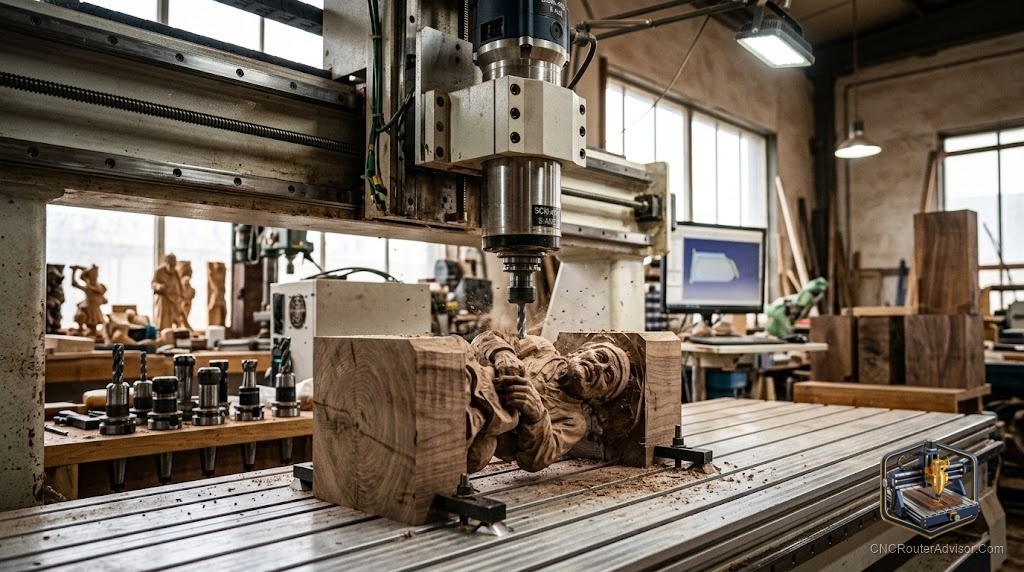
A hand-carved wooden statue takes a skilled carver weeks. A CNC router producing the same geometry from a 3D scan takes 8 to 24 hours of cutting time, depending on size and detail level. The human still handles finishing, sealing, and fine detail work at the end. But the roughing and primary shaping - the part that breaks wrists and destroys chisels over days - the machine handles that completely.
Using a 3D CNC router for wood statue production means using the machine to rough and finish-carve three-dimensional sculptural forms: full figures, busts, decorative statues, and custom art pieces from solid wood. This is a step beyond bas-relief work; it typically requires a 4-axis setup (with a rotary axis for carved-in-the-round forms) or a multi-setup approach using a 3-axis machine from multiple angles.
The direct answer: for accessible entry into CNC wood statue production, a 3-axis machine like the Shapeoko 5.1 Pro or Onefinity Woodworker combined with multi-face setup work is the most practical path. Full carved-in-the-round statue production benefits significantly from a 4-axis rotary setup. Basswood and mahogany are the materials of choice for detail fidelity.
3-Axis vs. 4-Axis for Statue Production
3-axis approach: The machine carves the front face of the statue in one setup, then the workpiece is flipped (rotated) and the back face is carved in a second setup. Registration between the two cuts must be precise (within 0.5mm for invisible seams). This approach works for stylized and semi-abstract forms. For photorealistic full-round figures, the seam management becomes the dominant challenge.
4-axis approach: A rotary axis (A axis) holds the workpiece in a chuck and rotates it continuously while X, Y, and Z move. The machine carves the entire circumference without manual repositioning. This produces seamless cylindrical and rounded forms, which is how production-grade wood statue work is done commercially.
The Sienci LongMill MK2 accepts an optional rotary axis (the Sienci Vortex). The Shapeoko accepts 4th-axis add-ons from third-party suppliers.
Best Wood Species for Statues
Basswood: The primary carving wood for statue production. Tight, consistent grain allows fine detail without tearing. Light color takes paint, stain, or natural finish equally well.
Mahogany: Good for natural-finish statues. Rich color, moderate hardness, good detail fidelity. Grain can vary, causing slight inconsistency on fine features.
Walnut: Best for high-end decorative work. Beautiful grain and color but harder to carve cleanly across grain. Use sharp, freshly sharpened tooling.
Avoid: Pine and other softwoods for fine detail work. The inconsistent hardness between early wood (soft) and late wood (hard) causes the bit to deflect in the soft zones, ruining fine facial features.
Tooling Sequence
Roughing: 6mm or 1/4-inch flat or bull-nose end mill, two-flute. Removes bulk in Z-level layers. Feed rate can be aggressive; finish quality doesn’t matter.
Semi-finishing: 6mm ball-nose, 20% stepover. Removes the stepped texture from roughing, getting within 0.5mm of final surface.
Finishing: 3mm ball-nose, 8 to 10% stepover. Defines the final surface with maximum detail retention. This pass takes the most time.
CAM Software for Statue Production
For 3D statue work, Aspire is the dominant tool for the woodworking market. Fusion 360 handles 4-axis toolpaths if you’re moving into rotary production. Carveco covers the same ground as Aspire at subscription pricing.
Verdict
CNC-produced wood statues are realistic at the hobbyist level with a 3-axis machine and multi-face setups, and at a higher quality level with a 4-axis rotary setup. The material choice (basswood, mahogany) and tooling sequence (rough-semifinish-finish) matter as much as the machine spec.
- 3-axis multi-setup or 4-axis rotary are the two production approaches
- Basswood is the best material for fine-detail statue production
- 3mm ball-nose at 8 to 10% stepover defines the final surface quality
- Aspire or Fusion 360 handles the CAM; Aspire is easier for most wood carvers
FAQ
Can a 3-axis CNC router make a wood statue? Yes, using multiple setups from different angles. A fully carved-in-the-round form is more practical with a 4-axis rotary setup.
What is the best wood for CNC statue carving? Basswood for maximum detail fidelity. Mahogany for natural-finish decorative work.
How long does it take to CNC carve a wood statue? A 200x200x200mm bust at full 3D finishing takes 8 to 20 hours of cutting time depending on detail level and stepover.
What CNC machines handle 4-axis statue production? The Sienci LongMill MK2 with Vortex rotary axis, Shapeoko with 4th-axis add-on, and dedicated 4-axis machines from Axiom and Avid CNC.
References
- Sienci Vortex rotary axis: sienci.com
- Vectric Aspire 4-axis toolpaths: vectric.com