
Woodworking CNC Router for Sale: New vs. Used and What to Check Before Buying
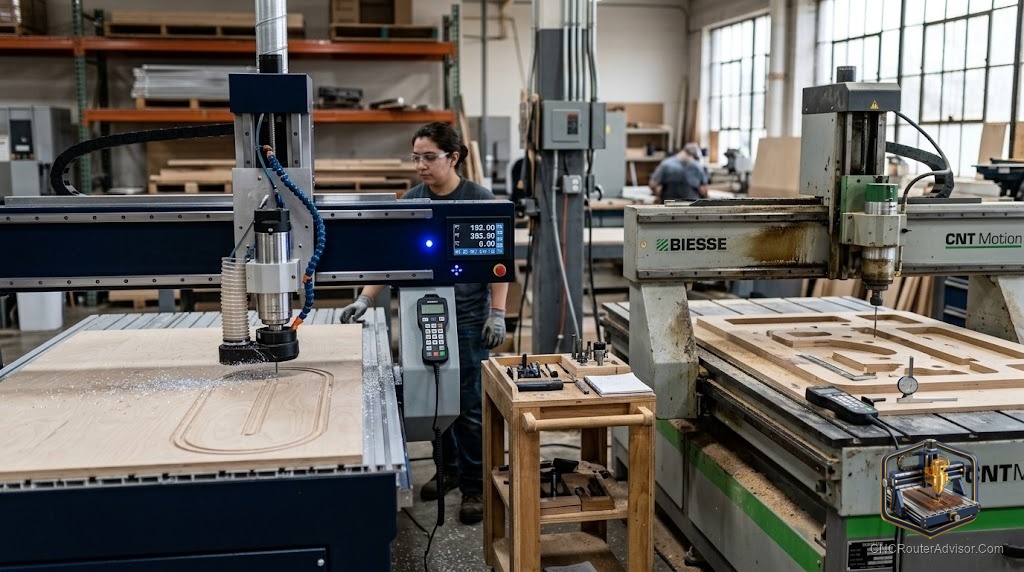
The moment a serious woodworker decides they want a CNC router, the next question is immediate: do I buy new or used, and what does the right machine for woodworking actually look like on a spec sheet? These are good questions, and they have good answers. Woodworking is the most common CNC router application, which means the market, new and used, has more options in this category than any other. The challenge is not finding a woodworking CNC router for sale, it is knowing which spec sheet features actually matter for the work you plan to do, and which are just numbers.
A woodworking CNC router is any CNC router configured and suitable for cutting, carving, profiling, and joinery work in wood, plywood, MDF, and related sheet and solid materials. The term covers machines from desktop hobby routers to full production gantry machines, because woodworking is a broad category that spans carving a small jewelry box and cutting cabinet doors for a full kitchen remodel. The right machine for woodworking depends on the scale, material, and frequency of the work.
The short buying guide: define the largest work piece you will regularly cut (this determines minimum work area), decide whether you need a machine for occasional personal use or regular production (this determines required rigidity and spindle type), and set a budget that includes tooling, software, and spoilboard, not just the machine. Then evaluate new and used options in that specification against each other.
What woodworking actually needs from a CNC router
Woodworking imposes a specific set of requirements. Most woodworking CNC work is on flat sheet stock (plywood, MDF) or dimensioned solid lumber, which means you need:
- Work area matched to your largest typical workpiece. Cutting cabinet doors from plywood means you need at least a 400 by 600 mm work area, and ideally a full 4 by 8 (1220 by 2440 mm) if you are processing sheet goods. Sign carving on smaller blanks can be done on a desktop machine.
- Adequate spindle power for the material. Wood at production depths requires at least 500W for serious cutting. Shallow carving can be done with 300W.
- A spoilboard system. Every woodworking CNC router needs a sacrificial spoilboard layer that you can surface flat and replace when worn.
- Workholding that covers your workflow. T-slot clamps for larger pieces, double-sided tape and CA glue for smaller parts, vacuum table for production sheet work.
- CAM software matched to woodworking tasks. VCarve (Vectric’s line) is the dominant CAM software for woodworking CNC because it handles V-carving, profiling, and toolpath management in a way that woodworkers find intuitive. It is worth budgeting for if your machine does not include it.
New machines: what the market looks like
For hobby and entry woodworking, the strongest new machine options are in the Genmitsu (SainSmart) line and similar Amazon-sold desktop machines. The Genmitsu 3018-PROVer V2 is a well-documented entry machine with limit switches, Z-probe, and a good Amazon seller relationship.
For serious hobby to light commercial woodworking, the prosumer tier offers the Carbide 3D Shapeoko Pro, the Onefinity Woodworker, and the Avid CNC kits. These are sold direct from the manufacturer, are US-supported, and are the machines that experienced hobbyists and small professional woodworking shops use for consistent, regular production.
For small production cabinet and millwork shops, light commercial machines from Laguna, ShopSabre, and CNC Shark’s production line are the territory where the investment is justified by daily throughput.
Used machines: the value opportunity in woodworking
Used woodworking CNC routers at the commercial tier are one of the best values in shop equipment, for the same reason described earlier: production machines hold capability long after they lose resale value. A five-year-old commercial 4 by 8 router from a cabinet shop that upgraded is mechanically identical in most cases to a new one, and it often comes with spoilboard, tooling, and sometimes training materials.
For used machines, the inspection checklist covers spindle, drive system, and controller software, with the additional woodworking-specific check of the spoilboard and vacuum table if equipped. Any commercial woodworking CNC router sold used should be run with a test cut in plywood at the seller’s stated speeds before purchase.
For smaller hobby machines used, the market on eBay and Facebook Marketplace is large. At the entry tier, used machines are low-stakes: the financial risk is limited and the mechanical risk is low. At the prosumer tier, the used market rewards buyers who move quickly, because well-maintained machines at fair prices sell within days.
The tooling and software budget beyond the machine
No woodworking CNC router is complete without bits and software. Budget for:
- A compression spiral bit for plywood and MDF through-cutting
- An upcut spiral for pocketing
- A V-bit for text and decorative carving
- A ball-nose for any 3D carving
- CAM software if the machine does not include it (VCarve Desktop is the standard woodworking recommendation)
- Spoilboard material and a surfacing bit for it
The FoxAlien essential bit kit covers entry-level tooling needs for early woodworking projects.
Our guide on how to choose a CNC router walks through woodworking-specific machine selection in full.
The takeaway: buying a woodworking CNC router for sale is a defined problem with clear criteria. Match work area to your largest project, spindle to your material and depth, and budget for tooling and software. New machines offer simplicity and support; used machines offer value. Both are good paths when you know what you are evaluating.
Frequently asked questions
What size CNC router do I need for woodworking? Depends on your project scale. For signs and small objects, a 300 by 180 mm to 400 by 300 mm desktop machine is enough. For cabinet parts and full sheet work, you need at least a 600 by 600 mm table and ideally 4 by 8 feet for full sheet goods.
What spindle power is enough for woodworking? For occasional carving and engraving, 300W is functional. For regular cutting of plywood and hardwood at production depths, 500W to 800W and above is more appropriate. Commercial production uses 2.2 kW and above.
Is a used woodworking CNC router a good buy? At the commercial tier, often yes, because capability outlasts resale value. At the hobby tier, the used market is large and low-risk. The inspection and due diligence process is the key to buying well.
What software should I use for woodworking CNC? VCarve Desktop (Vectric) is the most common recommendation for woodworking hobbyists and small shops. It handles V-carving, profiling, and toolpath management in a woodworker-friendly interface.
Does a woodworking CNC router need a spoilboard? Yes. A sacrificial MDF layer on the machine table protects the table from through-cut damage and provides a resurfaceable, flat reference surface. Resurface it regularly for accurate Z-reference.
What is the best entry-level woodworking CNC router? The Genmitsu 3018-PROVer V2 is the most consistently recommended entry machine in the hobby CNC woodworking community for its documentation, included features, and Amazon support.
References
- Vectric, VCarve Desktop and Pro for woodworking CAM — https://www.vectric.com/products/vcarvedesktop
- Carbide 3D, Shapeoko CNC Router for woodworking — https://shop.carbide3d.com/
- CNC Router Info, woodworking machine selection guide — https://cncrouterinfo.com/guides/how-to-choose-a-cnc-router/