
CNC Wood Router Machines Guide: Choosing the Right Machine for Your Work
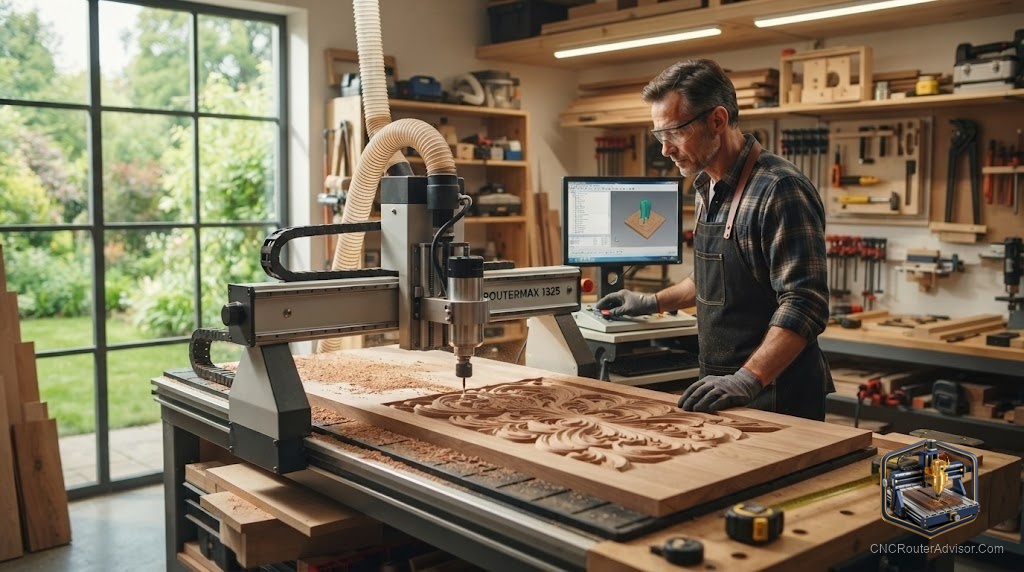
Walk into the world of CNC wood router machines and the choices can feel endless. Tiny desktop units, mid-size workhorses, and full 4x8 machines all promise to turn your designs into finished wood parts, and they span an enormous range of price and capability. The good news is that choosing well comes down to a handful of fundamentals and an honest look at the work you actually plan to do. This guide walks through how to pick the right machine.
Start with the work, not the machine
The single best predictor of a happy purchase is matching the machine to your projects. Someone engraving small signs and making jewelry-scale parts needs a very different machine than someone cutting full sheets for cabinets. Before comparing specs, picture the largest and most demanding project you realistically expect to make, then choose a machine that handles it with a little room to spare. Buying too small frustrates you, and buying far too large wastes money and space.
The fundamentals that matter
Every wood router lives or dies on a few core traits:
- Work area, which sets how large a piece you can cut in one setup.
- Frame rigidity, from a steel frame or heavy aluminum extrusion, which keeps cuts clean and edges crisp.
- Motion system, whether ball screws, lead screws, or timing belts, which shapes precision and speed.
- Spindle power, which decides what woods and depths you can handle.
- Controller and software, ideally a controller you can get help with and software that suits your workflow.
Judge every machine against these, and the marketing noise falls away.
Matching machine classes to needs
Wood router machines roughly sort into three classes. Compact desktop machines suit learning, engraving, and small parts, and they fit tight spaces and modest budgets. The Genmitsu 3018-PRO is a popular machine in this class. Mid-size machines handle real furniture parts, larger signs, and thicker stock, and this is where many serious hobbyists land. The FoxAlien Masuter Pro offers a generous work area here, while the Genmitsu PROVerXL 4030 adds rigidity for harder cutting. For those wanting more capacity, the Twotrees TTC450 Pro provides a larger envelope while staying accessible.
Beyond the machine itself
A wood router is part of a larger system, so factor in what surrounds it. You will need tooling, bits and collets suited to your work, and a spoilboard and workholding to hold material securely. Dust collection is essential, both for clean cuts and for your health. And there is a software workflow to learn. Budgeting for these from the start prevents the common surprise of a capable machine held back by missing support pieces.
Support and community
One of the most underrated factors is the ecosystem around a machine. An active user community and available parts make ownership far easier, since most problems you hit have already been solved and documented by someone else. A slightly less impressive machine with strong support often serves better than an obscure one with none. Weigh this alongside the hardware, especially for your first machine.
Choosing with confidence
The right CNC wood router machine is the one that fits your projects, your space, and your budget, backed by support you can lean on. Picture your real work, judge machines on work area, rigidity, motion system, and spindle, budget for the tooling and dust control around the machine, and favor a strong community. Do that, and instead of being overwhelmed by choice, you end up with a machine that feels made for the work you actually do.