
CNC Router Machining Services for Plastic: Materials, Use Cases, and How to Source
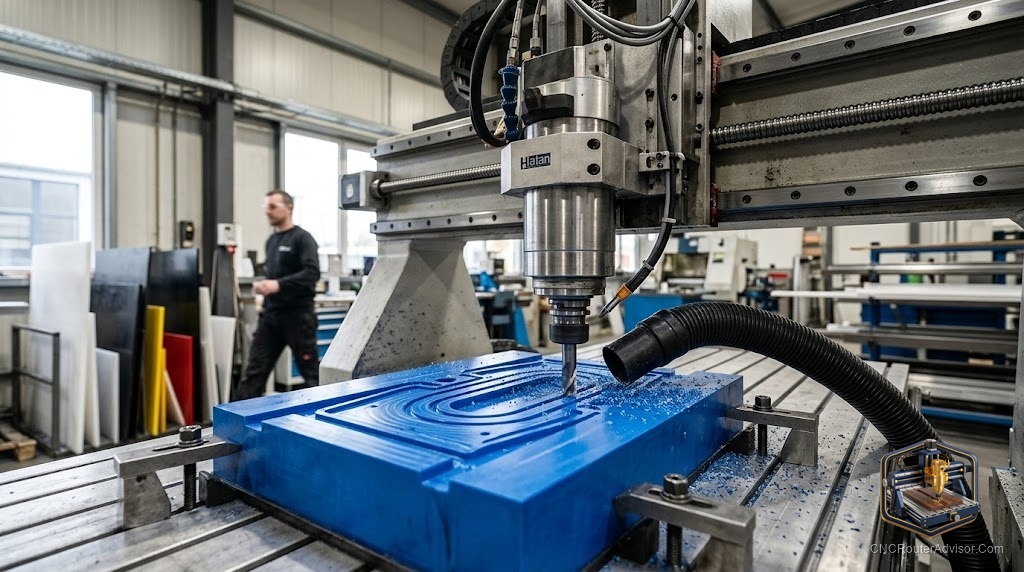
Plastic parts made by CNC routing show up in more places than most people realise. The custom acrylic display case at a trade show, the polycarbonate shield on a piece of industrial equipment, the precision HDPE bearing block in a machine, the PVC lettering on a sign: all of these are plausible CNC router outputs, produced by a service that knows how to match tool, speed, and technique to each material. Sourcing that service, and knowing what to specify when you do, is the practical skill this guide builds.
CNC router machining services for plastic are professional cutting and profiling operations that use computer-controlled routers to produce plastic parts, panels, enclosures, and components from engineering and hobby plastics. Common materials include acrylic (PMMA), polycarbonate (PC), HDPE, PVC, nylon, ABS, PETG, and foam plastics. Applications cover everything from signage and display to industrial components and prototype housings.
Short answer for sourcing: specify the exact plastic, the dimensions and tolerances, and the required finish, because those three inputs determine whether a general CNC shop can handle your job or whether you need a service with specific plastic machining experience. Heat management is the governing challenge in plastic work, and services that know this do it better.
Why plastic machining requires specific knowledge
Most engineering plastics share one critical challenge: low thermal tolerance. Heat generated by a spinning bit melts, smears, or cracks the material before it has a chance to look burnt. Each plastic has a different melting point and a different way of failing under heat. Acrylic chips and crazes; polycarbonate gums; HDPE and nylon are more tolerant but still suffer at high temperature. The correct machining approach matches spindle speed, feed rate, tool geometry, and cooling to the specific material to cut rather than melt.
A service that only machines wood and MDF will not naturally have this dialed in for acrylic or polycarbonate. For parts where edge quality and dimensional accuracy matter, sourcing from a service with plastic machining experience saves cycles of reruns.
Common plastic types and their machining characteristics
Acrylic is the most requested plastic for CNC services. It cuts cleanly with polished, low-friction tooling (O-flute or single-flute carbide) and managed heat. A clean acrylic edge is optically clear; a hot one is white and chipped. Air cooling during the cut is the minimum.
Polycarbonate is tougher and more impact-resistant than acrylic. It needs a higher feed rate than acrylic to prevent gumming, and it benefits from air or light mist cooling.
HDPE is the softest common engineering plastic, easy to cut but difficult to hold because of its slippery surface. Good workholding and a sharp tool are the priorities.
PVC is widely used for signage, panels, and trim. It machines easily but produces chlorine-containing dust that needs ventilation.
Nylon and ABS are used for structural and mechanical parts. Both machine well with standard non-ferrous tooling but generate heat that needs managing on longer cuts.
Use cases for plastic CNC machining services
Signage and display is the largest single use case: acrylic letters and logos, backlit panels, and PVC board routing. Enclosures and housings for electronics and industrial equipment come next, followed by custom mechanical parts in HDPE, nylon, and ABS. Medical and scientific instrument components, where dimensional accuracy and material certification matter, are a specialist end of the market. Prototyping in acrylic or ABS before committing to injection moulding rounds out the list.
What to specify when sourcing
Four things determine whether the quote is accurate and the part is right.
Exact material. Not just “plastic” or “acrylic,” but the specific grade if it matters (optical-grade acrylic for clear displays, food-safe HDPE for food-contact parts, fire-rated PVC for public installations). Different grades have different machining properties and costs.
Finished dimensions and tolerance. Tight-tolerance parts in polycarbonate or acrylic cost more than rough-cut panels. Know what tolerance your application requires.
Edge finish. A sawn edge is the default; a flame-polished or tool-polished edge costs more and looks different. Specify which you need.
Part volume. Setup and toolpath optimisation amortise over volume. A single prototype part costs more per unit than a run of twenty.
Finding the right service
Search for plastic fabricators, acrylic cutting services, or CNC plastic machining in your region. Signmaking and display suppliers often run plastic routing as a core service. General CNC job shops handle the less demanding plastics (PVC, HDPE, ABS) alongside their other materials. For optical-grade acrylic, tight-tolerance engineering plastics, or material certifications, look for services that list plastic as a primary competency.
For smaller or prototype runs, online CNC services accepting plastic jobs are increasingly available. Ask for a sample or test cut when edge quality is critical, because seeing a finished edge before committing to a full run costs little and prevents disappointment.
The verdict
CNC routing is well-suited to a wide range of plastics when the service understands the material’s thermal limits. Specify the exact plastic, the tolerance and finish you need, and the volume clearly. For anything where edge quality matters, acrylic or polycarbonate especially, source from a service with demonstrable plastic experience rather than a general wood and metal shop. The difference shows in every edge.
Three things to remember:
- Each plastic has different thermal limits and failure modes; a service that knows this produces better edges than one that treats plastic like wood.
- Specify exact material, tolerance, and edge finish requirement, not just dimensions, because those drive both cost and process.
- For optical acrylic and tight-tolerance engineering plastics, choose a service that lists plastic as a primary competency.
FAQ
What plastics can be machined by a CNC router service? Acrylic, polycarbonate, HDPE, PVC, nylon, ABS, PETG, and foam plastics are all routinely machined. The specific service and tooling determine which materials they handle well.
Why does my acrylic edge look white and chipped after CNC cutting? That is a heat failure: the bit was too hot or moving too slowly, melting and crazing the edge instead of cutting it. A service using O-flute tooling with air cooling should produce a clear edge.
What finish can I get on a CNC-cut acrylic edge? A machined edge is typically clear to slightly hazy depending on the tool and settings. Flame polishing after machining restores optical clarity. Specify the edge finish you need when requesting a quote.
Is CNC routing or laser cutting better for acrylic? Laser cutting leaves a flame-polished edge with no tooling marks, which suits thin, flat acrylic cuts. CNC routing offers more depth control, larger material capacity, and the ability to machine complex 3D shapes and pockets. The right choice depends on your specific application.
How do I find a plastic CNC machining service? Search for plastic fabricators, acrylic cutting services, or CNC plastic machining. Signmaking suppliers, display fabricators, and plastics distributors often run CNC routing as a core service.
What information do I need for a plastic machining quote? Exact material and grade, 3D or 2D files, finished dimensions, tolerances, edge finish requirement, and quantity. Providing a complete specification upfront produces the most accurate quotes.
Can I CNC rout plastic at home? Yes. Most hobby and prosumer CNC routers handle HDPE, PVC, ABS, and acrylic with single-flute or two-flute carbide tooling and correct feeds and speeds. Ventilation is important for PVC and ABS.
References
- Amana Tool, Acrylic and Plastic Cutting CNC Router Bits: https://www.amanatool.com/products/cnc-router-bits/acrylic-plastic-cutting-cnc-router-bits.html
- PrecisionBits.com, CNC Router Bits for Plastic Machining: https://www.precisionbits.com/plastic-bits/
- CNC Router Info, Best CNC Router Bits (plastic section): https://cncrouterinfo.com/guides/best-cnc-router-bits/