
CNC Router Machine for Woodworking: What the Machine Needs and Which Ones Deliver
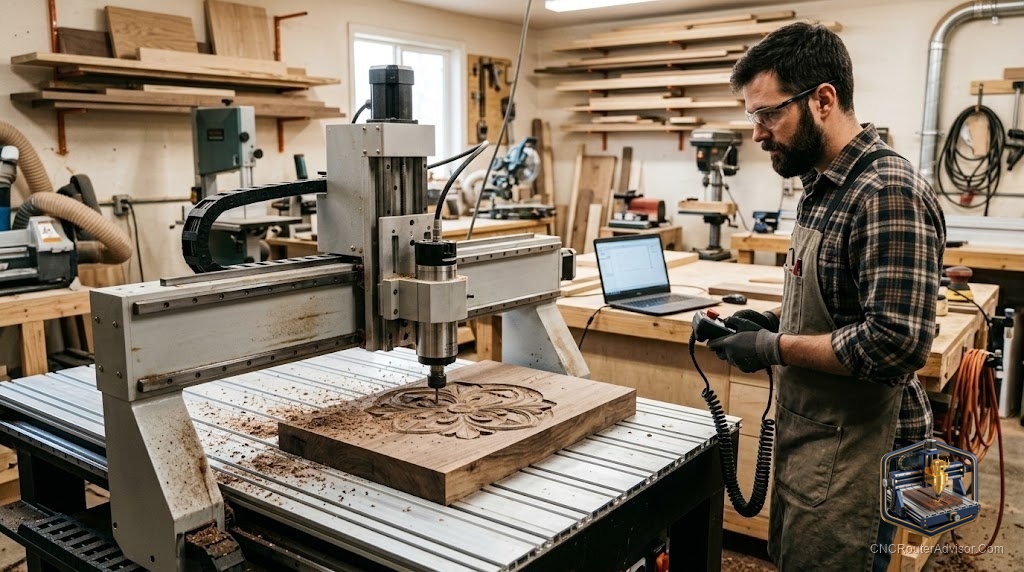
A CNC router machine for woodworking is in many ways the standard use case for the category, but woodworking is broad enough to contain several meaningfully different demands: a machine suited for signs and engravings is not necessarily suited for cabinet doors and hardwood furniture, and a machine that handles light softwood beautifully may chatter badly in dense hardwood. Getting the right machine for your actual woodworking needs means being specific about what you make, not just checking that a machine is labeled for wood.
A CNC router machine for woodworking is a CNC router equipped and configured to cut, carve, profile, pocket, and engrave wood, ranging from soft pine and MDF through hardwoods, plywood, and veneered panels, where the right machine choice depends on the wood species, part sizes, production rate, and finish quality the work requires.
Here is the direct take: for sign work, engravings, and softwood: a mid-size machine with a rigid frame is sufficient; for hardwood furniture parts and production: a sturdier machine with linear rails and a real spindle earns its cost. Two verified picks for the two levels are noted below. The sections cover the machine requirements, the picks, and who each suits.
What woodworking actually requires from a machine
Wood is forgiving enough that a wide range of machines can cut it, but the demands differ significantly by type. Softwood, MDF, and plywood are low-resistance materials that most hobby machines handle; the main requirements are decent rigidity to avoid chatter and a spindle fast enough to cut cleanly. Hardwood is significantly more demanding: it resists the cutter, stresses the frame, and exposes any flex in the motion system. Large furniture parts add the demand for a large, accurate work area. Signs and fine carvings add the demand for precise, well-supported motion at low speed. Know which demands your woodworking places on the machine.
Pick for serious hobby and small-shop hardwood work
The Genmitsu PROVerXL 4030 V2 is a mid-size machine with a 400x300mm bed, linear rails, ball screws on all axes, and a stout frame that handles real hardwood at hobby and small-shop rates. For furniture parts, cabinet work, and hardwood signs, this machine has the rigidity and precision the work demands. Named honest limit: 400x300mm is adequate for most furniture components but not for full-panel work; large furniture panels need a larger machine or a reliable tiling workflow.
Pick for larger parts and small-shop production
The FoxAlien Masuter Pro offers more work area and a sturdy build for shops that need to cut larger wood pieces. It suits small shops producing signs, furniture components, and a range of hardwood and softwood parts. Named honest limit: it uses a wheel-based motion system, which handles wood work well but offers slightly less precision than a full linear-rail build for tight-tolerance joinery.
Tooling for woodworking
The machine is only part of the system. Woodworking on a CNC router requires down-cut or compression bits for clean top surfaces on plywood and veneered panels, sharp ball-nose bits for 3D relief work, and V-groove bits for lettering and decorative carving. Feeds and speeds must be matched to the wood species, and workholding must keep the wood flat throughout the job. The machine determines what is possible; the tooling and settings determine whether it is achieved.
For the complete setup for wood, see our guide to the wood router CNC machine.
Final verdict
A CNC router machine for woodworking performs best when its rigidity, work area, and spindle are matched to the specific demands of the wood you cut. Softwood and MDF are forgiving; hardwood and large panels are not. The PROVerXL 4030 V2 covers the hardwood and small-shop tier with a linear-rail precision build; the FoxAlien Masuter Pro covers the larger-work-area tier for sign and furniture production. Match the machine to the wood, add the right tooling, and woodworking on a CNC router produces results that justify both the machine and the learning investment.
FAQ
What CNC router is best for woodworking? Depends on the wood and the parts. For hardwood and small furniture components, a mid-size machine with linear rails is needed. For softwood and signs, a lighter machine is sufficient. Match the rigidity to the wood.
Can any CNC router cut wood? Most can cut soft wood and MDF. Hardwood requires a stiffer frame and a more capable spindle. Match the machine’s build quality to the hardness of the wood you plan to cut regularly.
What size work area do I need for woodworking? For signs and decorative work, a 300x180mm or 400x300mm bed covers most projects. For furniture panels and cabinet doors, 400x300mm is the practical minimum and larger is often needed.
What bits should I use for woodworking on a CNC router? Down-cut or compression bits for clean surfaces on plywood and veneered panels, ball-nose for 3D relief, and V-groove for lettering. Match geometry to the cut type.
Is a real spindle necessary for woodworking? A trim router is adequate for most hobby wood work. A real spindle is quieter and better for sustained production, but not necessary unless noise and long run times are concerns.
Can a CNC router replace a hand router for woodworking? For repeatable, programmed cuts like profiles, pockets, and signs: yes. For freehand shaping and edge routing on assembled pieces: no. CNC and hand routing complement each other rather than fully replacing one with the other.
References
- SainSmart Genmitsu, woodworking machine documentation: https://www.sainsmart.com/blogs/news
- FoxAlien, woodworking machine reference: https://www.foxalien.com
- Forest Products Laboratory, wood species machining reference: https://www.fpl.fs.usda.gov