
CNC Wood Router Price Guide: Costs, Features, and Buying Factors
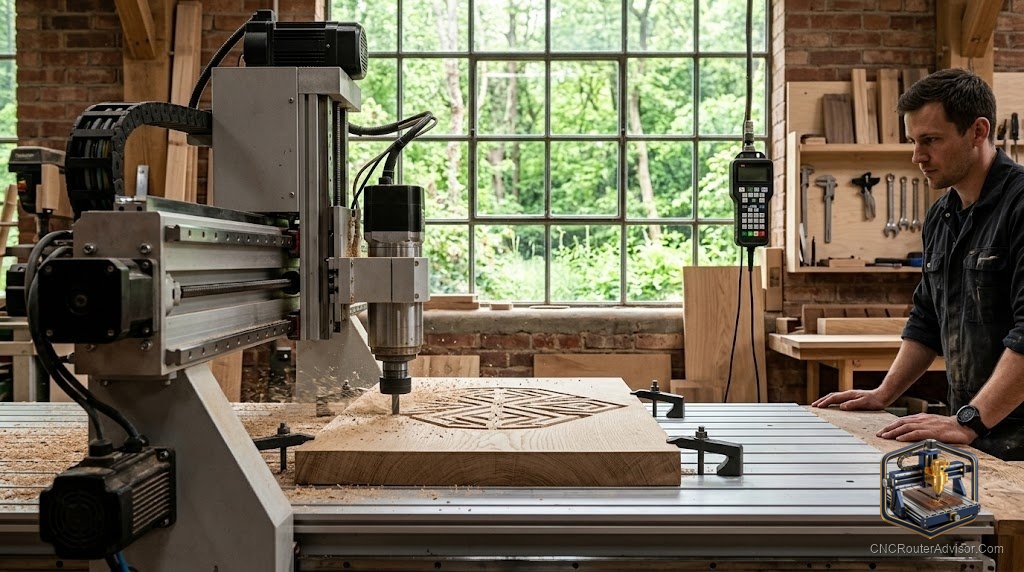
Ask ten woodworkers what a CNC router should cost and you will get ten answers, because they are all picturing different machines. The person carving small signs on a benchtop and the shop nesting cabinet parts from full sheets are shopping in completely different worlds, and the price gap between them is enormous. For a wood-focused buyer, the useful question is not what CNC routers cost in general, but what the right machine for your wood projects costs, and what quietly adds to that number after the machine arrives.
CNC wood router pricing reflects the machine’s work area, frame rigidity, spindle, and drive system, scaled to woodworking needs from small benchtop units to full-sheet production machines. The goal is matching price to the wood work you actually do rather than chasing the lowest sticker. Knowing what drives cost, and the extras a wood shop needs, helps you budget honestly instead of being surprised later.
Short answer: wood router prices scale with cutting area, rigidity, spindle quality, and drive precision, from affordable benchtop machines up to full-sheet production units. Match the tier to your project sizes and volume, prioritize rigidity and a good spindle within that tier, and budget for wood-specific extras like dust collection, bits, and workholding. The cheapest machine that truly handles your wood work is the best value.
What drives a wood router’s price
- Work area. The single biggest factor. A benchtop machine for signs costs far less than a machine that swallows a full 4 by 8 sheet of plywood.
- Frame rigidity. Heavier aluminum and steel frames cost more but cut cleaner and faster, especially in dense hardwoods.
- Spindle. A quiet VFD spindle costs more than a mounted trim router but runs longer and cleaner through long carving sessions.
- Drive system. Ball screws cost more than lead screws, which cost more than belts. More precise drives raise both price and accuracy.
- Motion quality. Linear rails and quality bearings add cost and cutting accuracy.
- Support and build quality. Established brands with warranties cost more than generic imports but reduce risk and downtime.
Price tiers for wood work
- Benchtop and entry machines. Small cutting area, often a trim router. Ideal for signs, plaques, and small parts. The most affordable tier and a fine place to learn.
- Mid-range shop machines. Beds around 2 by 4 feet, more rigidity, often lead or ball screws and sometimes a spindle. Suited to serious hobbyists and small woodworking businesses.
- Full-sheet and production machines. Large beds, rigid frames, real spindles, built for cabinet and furniture production. The top of the wood router price range.
Extras a wood shop must budget
Wood is a dusty, tooling-hungry material, so the machine is only part of the spend:
- Dust collection, close to essential for wood, and usually separate.
- Bits, a recurring cost, from straight and upcut bits to V-bits and ball-nose bits.
- Workholding, clamps, a vacuum table, or fixtures, plus a spoilboard.
- Software, if CAD/CAM is not included.
- A spindle upgrade later, if you start with a trim router.
Matching price to your woodworking
Work backward from the wood you cut:
- Define your projects, the largest piece, the woods, and the volume.
- Find the tier that handles them comfortably.
- Within that tier, favor rigidity, a good spindle, and support over the lowest price.
- Add dust collection, bits, and workholding to see the true total.
Buying under your needs means a frustrating machine and a second purchase; buying far over them wastes money. The cheapest machine that genuinely fits your wood work wins.
The bottom line
CNC wood router prices track capability: cutting area, rigidity, spindle, and drives all move the number, and dust collection, bits, and workholding round out the real spend. Rather than shopping the sticker, size the machine to your wood projects, prioritize rigidity and a quality spindle within that tier, and budget the wood-specific extras up front. Approached this way, price becomes a way to find genuine value instead of a trap for over- or under-buying.
FAQ
How much does a CNC wood router cost? It spans a wide range, from affordable benchtop machines to full-sheet production units. Price tracks cutting area, rigidity, spindle, and drive system.
Why are full-sheet wood routers so expensive? Large beds need far more structure, motion hardware, and a powerful spindle, plus the rigidity to cut cleanly across a big span, all of which add cost.
What extras should a wood shop budget for? Dust collection, bits, workholding and a spoilboard, software if not included, and possibly a spindle upgrade from a starter trim router.
Is a cheap wood router worth it? If it genuinely fits your projects, yes. A benchtop machine is great for signs and small parts; it is a false economy only if your work outgrows it.
Does spindle type change the price much? Yes. A quiet VFD spindle adds cost over a trim router but runs longer and cleaner through the long carving sessions woodworking involves.
How do I avoid overpaying for a wood router? Work backward from your projects to the right tier, prioritize rigidity and support within it, and add the wood-specific extras before comparing totals.
Do wood routers include software? Not always. Some include or bundle CAD/CAM, others sell it separately, so confirm what is included and budget for software if needed.
References
- CNCRouterInfo, how to choose a CNC router: https://cncrouterinfo.com/guides/how-to-choose-a-cnc-router/
- BubbleRelief, CNC router projects for beginners: https://bubblerelief.com/cnc-router-projects-for-beginners/