
Best CNC Router for Woodworking: Features to Compare Before You Buy
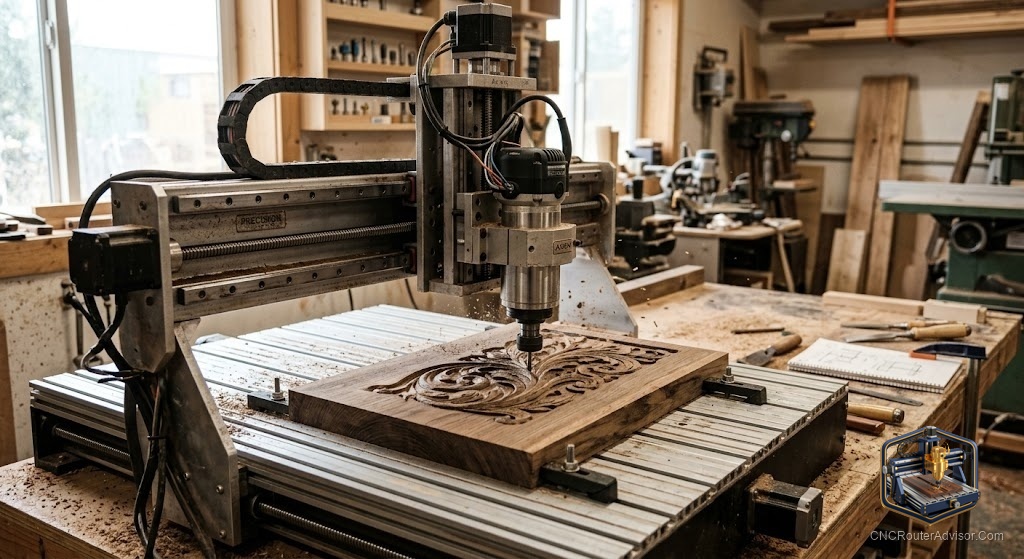
Woodworking asks specific things of a CNC router that a general-purpose buying guide tends to gloss over. Wood produces mountains of dust, benefits from a generous work area, rewards a spindle that can run for hours, and pushes you toward tooling and software built for carving and joinery. Picking the best CNC router for woodworking means comparing machines through a woodworker’s lens, not a generic one.
This guide focuses on the features that matter specifically for cutting and carving wood, from sheet goods and hardwoods to detailed relief work, so you can match a machine to the kind of woodworking you actually do.
Short answer: the best woodworking CNC router matches your material size, whether that is small projects, half sheets, or full sheets, on a rigid frame, with a spindle strong enough for long carving sessions, serious dust collection, and software suited to woodworking. Compare work area, rigidity, spindle, dust management, and CAM software against your projects, and the right machine stands out.
What woodworking demands
Work area sized to sheet goods
Woodworkers think in sheets. Decide whether you cut small project parts, half sheets, or full 4 by 8 sheets, and size the machine accordingly. A 2 by 4 foot bed handles most signs, cabinet doors, and furniture parts while fitting a home shop; full-sheet machines suit cabinet and production shops. Match the bed to your typical stock.
Rigidity for clean cuts and carving
Wood carving, especially 3D relief, runs the machine hard for hours, and any flex shows up in the finish. Favor a stiff frame, linear rails, and a solid drive. Ball screws and lead screws give the precision detailed carving needs; larger machines may use rack and pinion for speed across big panels.
A spindle built for long sessions
This is where woodworking machines earn their keep. A VFD spindle runs quieter, holds torque, and lasts through the long carving jobs woodworkers love, where a trim router would overheat and wear. For serious woodworking, a real spindle is one of the best upgrades you can make.
Dust collection that keeps up
Wood makes enormous amounts of chips and fine dust. A machine with a good dust shoe and strong extraction is not a luxury; it protects your lungs, keeps cuts clear, and saves cleanup. Factor dust management into the buying decision, not as an afterthought.
Woodworking-focused software
Wood work leans on CAM software that handles V-carving, relief carving, joinery, and nesting. Packages like Vectric VCarve and Aspire are woodworking favorites for good reason. Confirm the machine pairs cleanly with software that supports the carving and joinery you want.
Materials woodworkers cut
A good woodworking router should comfortably handle plywood, MDF, hardwoods like oak, maple, and walnut, softwoods like pine and cedar, and poplar, plus plastics like acrylic and HDPE for mixed projects. Chip evacuation and single-flute or upcut tooling keep cuts clean across these materials.
Comparison at a glance
| Need | Look for |
|---|---|
| Sheet goods | Work area matched to your stock |
| Detailed carving | Rigid frame, ball or lead screws |
| Long jobs | VFD spindle over trim router |
| Clean shop and cuts | Effective dust shoe and extraction |
| Carving and joinery | VCarve or Aspire-class CAM |
How to choose
Start with material size, then require the rigidity your carving demands, prioritize a spindle for long runs, insist on real dust collection, and confirm the software supports woodworking toolpaths. A machine that covers all five serves woodworking far better than one that only wins on price or headline size.
The bottom line
The best CNC router for woodworking is the one built around how wood behaves: sized to your sheet goods, rigid enough for hours of carving, fitted with a spindle that lasts, backed by dust collection that keeps up, and paired with carving-capable software. Compare machines on those woodworking-specific terms and the right one becomes clear. A generic spec-sheet winner is not necessarily the best machine for wood.
FAQ
What work area do I need for woodworking? Match it to your stock. A 2 by 4 foot bed covers most signs and cabinet parts; full-sheet machines suit cabinet and production shops.
Do I need a spindle for woodworking? For long carving sessions, yes. A VFD spindle runs quieter, holds torque, and outlasts a trim router on extended jobs.
How important is dust collection? Very. Wood produces heavy chips and fine dust, so a good dust shoe and strong extraction protect your health and keep cuts clean.
What software is best for woodworking? Woodworkers favor Vectric VCarve and Aspire for V-carving, relief, joinery, and nesting. Confirm your machine pairs with capable CAM.
What woods can a CNC router cut? Plywood, MDF, hardwoods, softwoods, and poplar, plus plastics like acrylic and HDPE, with the right tooling and chip clearing.
Ball screw or rack and pinion for wood? Ball or lead screws give the precision carving needs on smaller machines. Rack and pinion favors speed on large panels.
Can one machine do both flat and 3D wood work? Yes. A rigid machine with a good spindle and the right bits handles both flat cutting and 3D relief carving.
References
- CNCRouterInfo, how to choose a CNC router: https://cncrouterinfo.com/guides/how-to-choose-a-cnc-router/
- BubbleRelief, CNC router projects for beginners: https://bubblerelief.com/cnc-router-projects-for-beginners/