
Affordable CNC Wood Router: Budget Options and the Trade-Offs That Matter
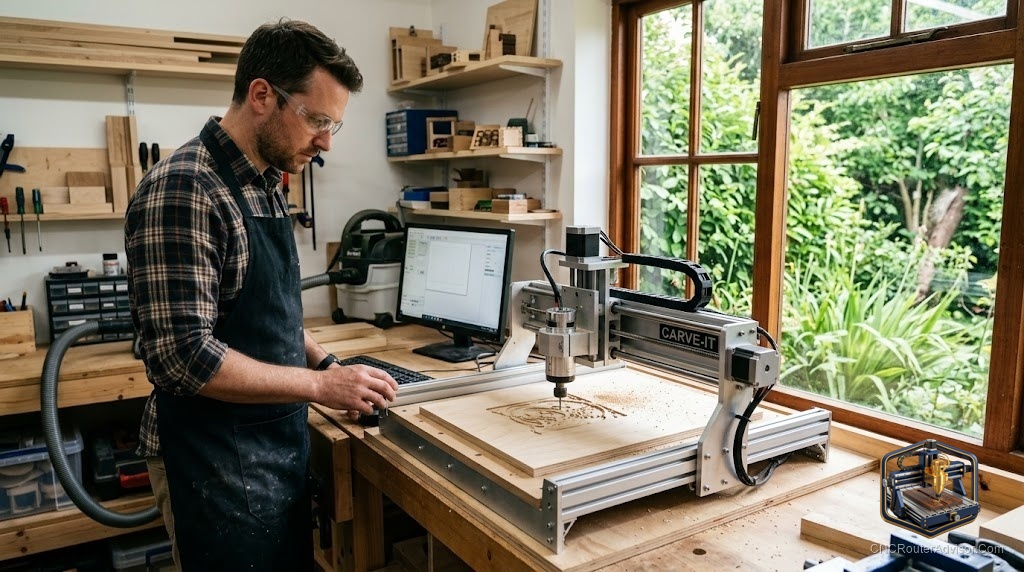
Affordable and cheap are not the same word, and the difference matters enormously when you are buying a CNC wood router on a budget. Affordable means the most capability and reliability for the money, with trade-offs you understand and accept. Cheap means the lowest price with trade-offs you discover after the machine arrives. The good news for wood workers is that the accessible end of the CNC router market has matured to the point where genuinely affordable machines, ones that cut wood well, come with real documentation, and have communities behind them, are widely available. The skill is knowing which trade-offs are acceptable and which are dealbreakers.
This guide covers affordable CNC wood router options, the trade-offs at the budget end, and how to spend a limited budget where it counts.
What affordable means in a wood router
An affordable CNC wood router delivers the capability you actually need, cutting wood accurately and reliably, at the lowest sensible price, with a clear understanding of what you are giving up compared to a more expensive machine. The trade-offs at the budget end typically show up in work area, frame rigidity, spindle power, motion system quality, and included features. The art of buying affordably is accepting the trade-offs that do not affect your work while refusing the ones that do.
For most wood workers on a budget, the acceptable trade-offs are a smaller work area, a trim router instead of a VFD spindle, and lead screws instead of ball screws. The unacceptable trade-offs are a frame too flimsy to cut cleanly, no documentation, no community, and no parts availability.
The short answer
The most affordable path to good wood cutting is a well-supported compact or mid-size machine from an established budget platform, accepting a smaller work area and a trim-router or basic spindle in exchange for a rigid-enough frame and, crucially, strong documentation and community support. Spend your limited budget on frame rigidity and support rather than on a larger work area or feature count. A smaller, rigid, well-supported machine cuts wood well and keeps you cutting; a larger, flimsier, unsupported machine at the same price will frustrate you into abandoning it.
Where to spend and where to save
Spend on frame rigidity. A rigid frame is the difference between clean cuts and chatter, and it is the one thing you cannot easily upgrade later. A machine with a solid metal frame at a budget price is worth more than a larger machine with a flexible one.
Spend on support and community. At the budget end, the documentation and community behind a machine determine whether you succeed or give up. Established platforms with large user bases have answered every beginner question already, which is worth real money in saved frustration.
Save on work area if your projects are modest. A smaller machine costs less and does small wood work perfectly well. Buy the size your projects need, not the largest you can stretch to.
Save on the spindle initially. A trim router cuts wood and plastic capably. A VFD spindle is a worthwhile later upgrade if noise or aluminum capability matters, but it is not required to start cutting wood well.
Save on features you will not use immediately. A touch probe, an enclosure, and fancy accessories can wait. Get the core machine right and add accessories as your work reveals the need.
Materials and what to expect
Affordable wood routers handle the standard wood-router material range: plywood, MDF, hardwood and softwood including pine, cedar, poplar, oak, maple, and walnut, plus plastics like acrylic, HDPE, Delrin, and ABS, and foam. Good chip evacuation with a single-flute end mill in softer or gummy material and basic dust collection keep budget-machine cuts clean. Expect to run more conservative feeds and shallower passes than a premium machine allows, which is a reasonable trade for the price.
Who should skip the budget route
Skip the budget machine if your work genuinely requires a large work area, hardwood production rates, or aluminum capability, because a budget machine forced into work it was not built for produces poor results and wears fast. In that case, save longer and buy the machine the work needs. And skip any machine cheap enough to seem too good to be true if it has no documentation, no community, and no parts availability, because that is cheap rather than affordable, and the hidden cost is your time and frustration.
Comparison: affordable wood machine priorities
| Factor | Spend or save | Reason |
| Frame rigidity | Spend | Cannot upgrade easily, defines cut quality |
| Support and community | Spend | Determines success at the budget end |
| Work area | Save if projects are small | Buy the size you need, not the max |
| Spindle | Save initially | Trim router cuts wood; VFD is a later upgrade |
| Extra features | Save | Add accessories as work reveals the need |
For an affordable, well-supported entry machine with a large community, the Genmitsu 3018 PROVer V2 is at this listing. For a bit more work area at an accessible price, the Genmitsu 3020 PRO MAX is at this listing. For an affordable mid-size machine that covers more serious wood work, the Genmitsu PROVerXL 4030 is at this listing. For a budget alternative platform, the FoxAlien Masuter Pro is at this listing.
The verdict
An affordable CNC wood router is entirely achievable, and the accessible end of the market now offers machines that cut wood well, come documented, and have communities behind them. The key is spending your limited budget where it counts, frame rigidity and support, while accepting the trade-offs that do not affect your work, like a smaller work area or a trim-router spindle. Buy affordable, not cheap: a smaller, rigid, well-supported machine keeps you cutting and satisfied, while the lowest-price machine with no support behind it becomes the expensive mistake you abandon.
Frequently asked questions
What is the most affordable CNC wood router that actually works well? A well-supported compact machine from an established budget platform, such as the Genmitsu 3018 or 3020 family, cuts wood well and comes with the documentation and community that make budget ownership successful. Prioritize a rigid frame and strong support over size.
What is the difference between affordable and cheap? Affordable means the most capability and reliability for the money with trade-offs you understand. Cheap means the lowest price with trade-offs, like no support, a flimsy frame, or no parts, that you discover after buying. Aim for affordable.
Where should I spend my budget on a wood router? On frame rigidity and on support and community. Rigidity defines cut quality and cannot be upgraded easily, and support determines whether you succeed at the budget end. Save on work area, spindle, and extra features if needed.
Can a budget CNC router cut hardwood? Yes, with conservative feeds, shallow passes, sharp tooling, and good chip evacuation. A budget machine cuts oak, maple, and walnut successfully; it just works more slowly and conservatively than a premium machine.
Do I need a VFD spindle on an affordable wood router? No. A trim router cuts wood and plastic capably and keeps the entry price down. A VFD spindle is a worthwhile later upgrade if noise reduction or soft aluminum capability becomes important, but it is not required to start.
What should I avoid in a cheap CNC router? Avoid machines with no documentation, no community, no parts availability, or a frame too flimsy to cut cleanly. Those are cheap rather than affordable, and the hidden cost in time and frustration outweighs the low price.
References
- CNC Router Info, How to Choose a CNC Router: https://cncrouterinfo.com/guides/how-to-choose-a-cnc-router/
- Bubble Relief, CNC Router Projects for Beginners: https://bubblerelief.com/cnc-router-projects-for-beginners/