
Used CNC Wood Router Buying Guide: What to Inspect for Wood Shop Fitness
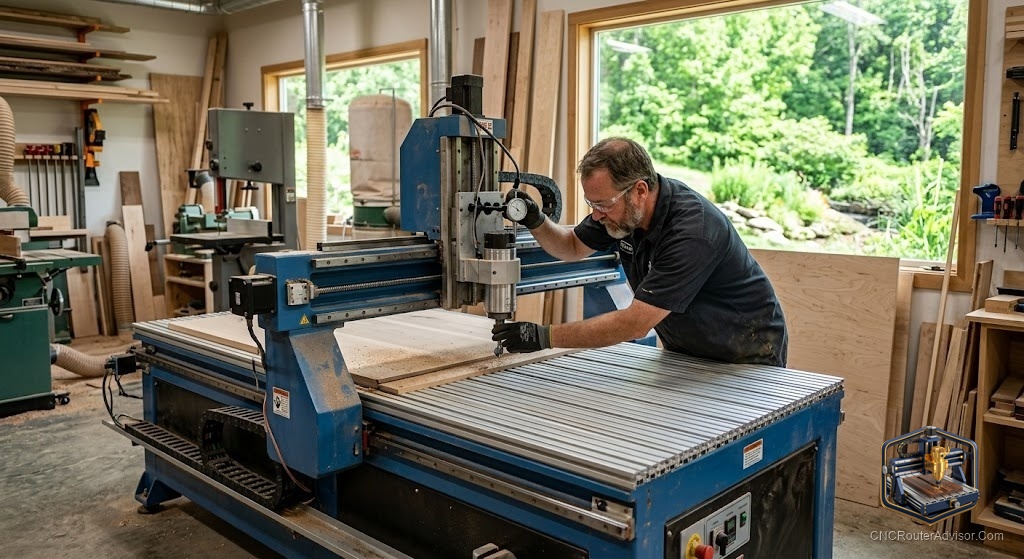
Buying a used CNC wood router is different from buying a used general-purpose router, and it is different from buying the same machine new. The wood shop environment puts specific demands on a machine: fine dust from MDF, hardwood chips, and sanding grit work into every bearing, groove, and linear surface. Production wood shops run their machines hard, which means wear patterns develop in predictable places and in wood-specific ways. Knowing what to inspect for in a wood shop machine tells you whether a used router has years of productive life left or whether the price that looks like a deal actually reflects a machine close to needing major rebuilding.
This guide covers the wood-specific used router inspection: what production wood cutting does to a machine over time, the places it shows, and the questions to ask before buying.
What wood production does to a CNC router
Wood and MDF produce large volumes of fine dust and chips in every cutting session. In a well-maintained shop, dust collection captures most of it. In a less careful environment, that dust works into the linear rails, lead screws or ball screws, and stepper or servo motor housings. MDF dust in particular is extremely fine and abrasive, and it acts as a lapping compound on any sliding surface it reaches over time.
The spoilboard and table also take abuse. A heavily used wood router often has a table with pronounced tool marks, an uneven surface from years of through cuts, and a spoilboard that has been resurfaced so many times it is barely there. That is cosmetic if the machine underneath is sound, but it tells you about the use history.
The inspection list for wood shop fitness
Linear rails and carriages are the first check. Run each axis by hand with the machine off and feel for roughness, grinding, or notchy movement that indicates dirty or worn bearing surfaces. On a machine with a wood production history, these are the first places fine dust and chip contamination accumulates. Smooth, consistent travel across the full axis length is what you want. Any roughness or tight spots is a red flag.
Ball screws or lead screws are next. Check for backlash on each axis by pushing and pulling the gantry or carriage while it is stationary, feeling for play before the drive takes up the load. Some backlash in a lead screw is expected and can be adjusted; significant backlash in a ball screw means wear that affects the machine’s precision and needs replacement.
Spindle condition is critical in a wood cutting machine because wood routing runs the spindle hard and the collet and taper get used constantly. Check for runout by mounting a straight test bar in the collet and measuring with a dial indicator while rotating by hand. Ask how many hours the spindle has run. A spindle with significant hours on a production wood machine has probably accumulated wear, even if the bearings still turn smoothly.
Dust collection history: ask the seller how the machine was dust collected. A machine that ran with a good collection system and dust shoes has far less contamination in the rails and electronics than one that ran open with a shop vacuum occasionally. Request photos of the inside of the electronics enclosure if possible; MDF dust in there is a real reliability risk.
The table and spoilboard condition tells a story about use. Heavy tool marks, a consumed spoilboard, and signs of frequent resurfacing mean a productive machine, which is reassuring, or a hard-used one with deferred maintenance, which requires further checking. Ask about the spoilboard maintenance history and when it was last surfaced.
Questions to ask the seller
- How was the machine dust collected? With a dust shoe, overhead system, or none?
- What materials were run most: MDF, plywood, hardwood, or mixed?
- Was the machine on a maintenance schedule? What did that include?
- Has the spindle been replaced or serviced? How many hours?
- Are there any known faults, repairs, or replacement parts recently fitted?
- Is all original documentation, firmware, and software available?
Price calibration for used wood routers
A wood production machine with clean rails and a known spindle history is worth more than one with contaminated rails and an unknown spindle, even at the same nominal price. The cost of replacing rails, ball screws, and a spindle is real money. Factor the likely refurbishment cost into the price evaluation before deciding what the machine is worth to you.
Seller stories about light use on a production machine should be verified through direct inspection rather than accepted at face value. A machine with light use has clean, smooth rails, minimal spoilboard wear, and a controller with a modest run hour count if it displays one.
Who should skip a used wood router
Skip it if you cannot inspect the machine in person before buying. The specific contamination risks in a wood production machine are visible and tactile on the rails, audible in the spindle, and documented in the dust management history. A remote purchase without inspection gives you no access to those signals.
Skip any machine with grinding or roughness in the rails and significant backlash in the ball screws unless the price fully accounts for rebuilding costs and you have the technical capability to do it.
Comparison: used wood machine inspection priorities
| Component | What to check | Red flag |
| Linear rails | Smooth, no grinding when moved by hand | Roughness, notchy movement, contamination |
| Ball screws | Minimal backlash, smooth thread | Significant play, worn thread feel |
| Spindle | Low runout, ask hours, listen at low RPM | Noise, high runout, unknown hours |
| Electronics | Clean, no MDF dust inside enclosure | Dust contamination, signs of overheating |
| Dust management history | Documented dust shoe and collector use | Machine ran without dust collection |
For a well-supported new machine at an accessible price instead of a used one with uncertainty, the Genmitsu PROVerXL 4030 is at this listing. For a larger area new option, the Genmitsu 4040 PRO MAX is at this listing.
The verdict
A used CNC wood router from a production environment can be excellent value or a maintenance project, and the difference is entirely visible on inspection. Check the rails for contamination and smoothness, check ball screws for backlash, check the spindle for runout and hours, and ask specifically about dust management history. A clean, well-maintained wood machine with a known spindle is a genuine bargain. One with dirty rails, unknown dust collection, and a heavily used spindle requires rebuilding before it performs reliably, and that cost needs to be in the calculation before you buy.
Frequently asked questions
What is the biggest risk when buying a used CNC wood router? Contamination of the linear rails and ball screws from fine wood and MDF dust, and spindle wear from sustained production use. Both are predictable outcomes of wood shop use without diligent dust management.
How do I check a used wood router’s linear rails? Move each axis by hand with the machine off, across the full travel. Smooth, consistent, effort-free motion is good. Grinding, roughness, or tight spots indicate contaminated or worn bearing surfaces.
Is MDF dust dangerous for a CNC router? Yes. MDF produces extremely fine abrasive particles that contaminate rails and ball screws, act as a lapping compound on precision surfaces, and, if they enter electronics enclosures, cause electrical reliability problems over time.
What spindle hours are acceptable on a used wood router? It depends on the spindle type and maintenance history. A well-maintained spindle with regular bearing lubrication lasts many thousands of hours. An unmaintained spindle in a dusty environment may show problems much earlier. Ask specifically and verify with a runout test.
Should I buy a used CNC wood router without an in-person inspection? No. The condition indicators that matter most, rail smoothness, backlash, spindle noise, and dust contamination, are tactile and audible. Remote purchase without inspection gives you no access to them.
Is it worth refurbishing a used wood router with dirty rails? Only if the price reflects the refurbishment cost and you have the capability to do it. Replacing linear rails, ball screws, and a spindle is real money. Calculate the full cost before deciding the used machine is a deal.
References
- CNC Router Info, How to Choose a CNC Router: https://cncrouterinfo.com/guides/how-to-choose-a-cnc-router/
- WorkshopCalc, Best CNC Routers guide: https://workshopcalc.com/guides/best-cnc-routers