
Portable CNC Wood Router: Cutting Wood On the Go
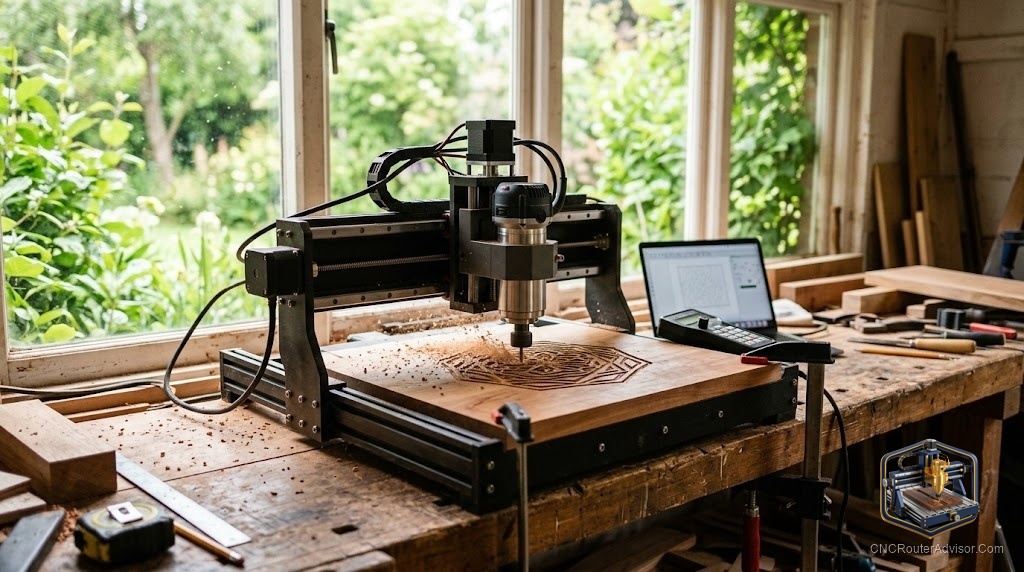
Cutting wood on a portable CNC router is not the same as cutting it on a shop machine, and the differences run deeper than just the smaller bed. Wood releases fine dust that needs managing everywhere you set up, not just in your own shop. It wants firm workholding because it can shift under cutting pressure more than rigid acrylic does. Hardwood particularly asks for enough spindle power to cut cleanly without burning, which is a different demand than engraving soft plastic. And if you are doing it at a craft fair, a client’s workshop, or a shared makerspace, the whole operation has to be tidy, fast, and considerate of the space.
This guide covers portable wood CNC routing specifically: the machine and setup choices that make wood cutting work well away from a fixed shop.
What portable wood CNC routing looks like in practice
The archetypal portable wood CNC user is a craftsperson who sells custom wood goods: engraved cutting boards, personalized signs, small decorative panels, and small furniture elements. They travel to markets, craft fairs, or client sites where cutting a piece on the spot is part of the presentation and the service. Or they rent studio time and bring their machine rather than relying on the studio’s equipment. Or they work between two spaces and need a machine that moves with them.
In all these cases, the setup must work quickly, the dust must go somewhere contained, and the wood must be held firmly enough to cut cleanly.
The short answer
For portable wood cutting, pair a compact rigid machine with a VFD or quiet spindle, a fitted dust shoe and HEPA shop vacuum, and a dedicated travel spoilboard with low-profile clamps. Wood produces more fine dust per session than most other materials, so the dust management is not optional: run the vacuum every cut, use a dust shoe that captures chips at the source, and choose lighter-dust materials like plywood and hardwood rather than MDF when the setting matters. Match your tooling to the wood you are cutting: sharp spiral bits sized to the depth of cut clean through wood in a single pass rather than grinding through it.
Machine choice for portable wood cutting
The spindle choice matters more for portable wood than for engraving. A trim router spindle is loud, which is a real constraint at a craft fair or a shared studio. A VFD spindle or a higher-quality DC spindle is quieter, especially at lower RPM, and produces better surface quality in wood at the moderate feed rates that a portable machine’s frame tolerates.
Frame rigidity determines whether you get clean cuts or chatter in hardwood. A compact machine on a rigid metal frame handles hardwood at shallow depths of cut cleanly. A V-wheel machine on aluminum extrusion chatters in oak or maple above conservative feed rates. For wood cutting specifically, a rigid frame is the first specification to confirm.
Workholding for wood on a portable setup
Wood moves. A piece of plywood or solid hardwood under cutting force wants to slide if it is not held correctly. Without a permanent vacuum table or T-slot infrastructure, a portable wood cutting setup relies on a well-prepared spoilboard with threaded inserts, low-profile clamps, and double-sided tape for smaller pieces.
Bring a dedicated travel spoilboard that has been surfaced flat on your own machine before the trip: do not assume whatever surface exists at the destination is flat. Secure the spoilboard to the workbench before mounting the machine to it, because a slipping spoilboard under wood cutting loads ruins the part.
Tooling for portable wood work
Sharp tooling is more important in a portable context because a blunt bit requires more cutting force, which a light portable machine’s frame translates into more flex and worse cuts. Carry spares and replace bits when they dull, not after they fail.
For plywood and sheet goods, a compression spiral bit or a downcut spiral cuts cleanly and reduces tearout on the visible face. For solid hardwood profiles and pockets, a good upcut spiral clears chips well. For engraving and lettering on wood, a V-bit at the appropriate included angle produces crisp results.
Dust management for wood in shared spaces
MDF and plywood produce fine dust that stays airborne long after cutting. In a shared or public space, that is not just inconvenient, it is a health concern for bystanders. A well-fitted dust shoe that captures chips at the spindle, connected to a compact shop vacuum with a HEPA filter, handles this at the source. Keep sessions short, run the vacuum during and briefly after each cut, and carry a small brush and cloth to wipe the work area clean before leaving.
Who should skip portable wood cutting
Skip it if your wood work is full-sheet panels, large furniture parts, or high-volume production: a fixed shop machine with full sheet capacity is the right tool for that. A portable machine does its best work on small signs, personalized pieces, and compact decorative work. Portable wood CNC pays off when the projects fit the machine and the mobility creates real value in how you sell or deliver the work.
Comparison: materials on a portable machine
| Material | Dust concern | Frame demand | Spindle demand |
| Plywood, softwood | Moderate | Low to moderate | Modest spindle fine |
| Hardwood (oak, maple) | Moderate | High - need rigid frame | VFD preferred |
| MDF | High - fine particles | Low | Modest spindle fine |
| Acrylic, plastic | Low | Low | Low to moderate |
For a quiet, rigid portable wood router, the Genmitsu 3030 PROVer Ultra offers a metal frame and good spindle for compact wood work at this listing. For a capable mid-size portable machine, the Genmitsu 4040 PRO is at this listing. For a VFD spindle upgrade on a compatible machine, this 500W air-cooled kit adds quiet variable speed capability.
The verdict
Portable wood CNC routing is a productive and satisfying way to work when the setup is right and the projects are sized for the machine. A rigid compact machine, a quiet spindle, a fitted dust shoe with a HEPA vacuum, firm workholding with a prepared travel spoilboard, and sharp tooling for the wood you cut: these are the components that make wood cutting work cleanly in any setting. Get them right and the portable setup enables work that a fixed shop machine would never reach.
Frequently asked questions
What spindle is best for a portable wood CNC router? A VFD spindle for the quietest, most capable option. A quality DC spindle is quieter than a trim router and works for lighter wood work. Trim routers are loud in shared or public settings.
Can I cut hardwood on a portable CNC router? Yes, with a rigid metal frame machine and a VFD spindle. Keep cuts shallow and at the right chip load to avoid burning or chatter in dense woods like oak and maple.
How do I control dust when cutting wood portably? A fitted dust shoe at the spindle connected to a compact HEPA-filter shop vacuum captures particles at the source. Run it during every cut. Avoid MDF in enclosed shared spaces if possible.
What workholding do I need for portable wood cutting? A prepared travel spoilboard with threaded insert holes, low-profile clamps, and double-sided tape for small pieces. Surface the spoilboard on your own machine before the trip.
What wood projects suit a portable CNC machine? Small signs, personalized engravings, cutting board designs, small decorative panels, jewelry, and small furniture elements. Projects that fit the machine’s work area and are cut on-site for effect.
Do I need to surface the spoilboard at every location? You need a spoilboard that has been surfaced flat on your own machine. Bring that prepared spoilboard with you. Surfacing at the destination requires time and assumes the destination table is stable enough, which it may not be.
References
- CNC Router Info, How to Choose a CNC Router: https://cncrouterinfo.com/guides/how-to-choose-a-cnc-router/
- Bubble Relief, CNC Router Projects for Beginners: https://bubblerelief.com/cnc-router-projects-for-beginners/