
CNC Wood Router 4x8 Buying Guide: Work Area, Power, and What It Enables
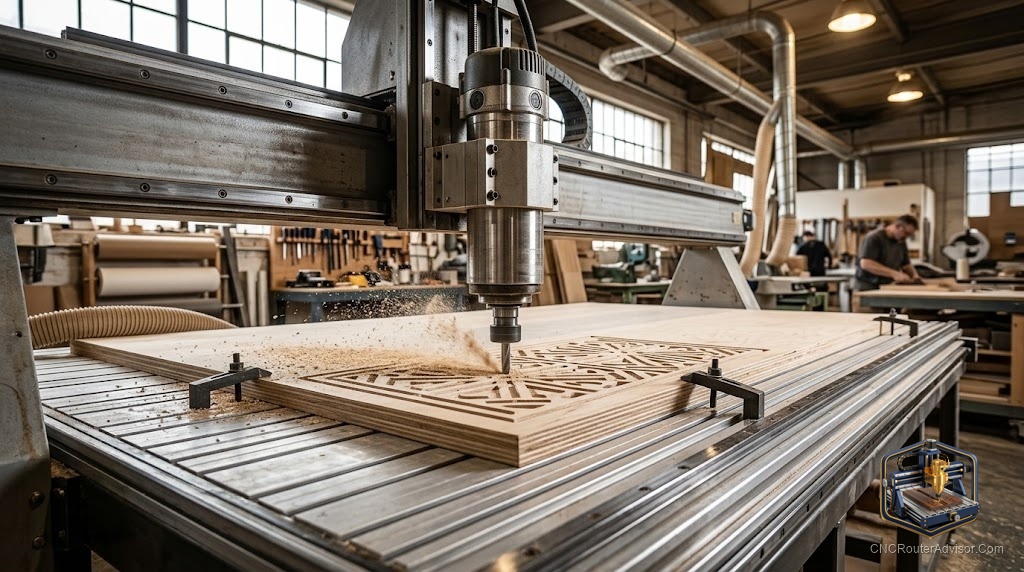
A 4 by 8 CNC wood router is the machine that matches a full sheet of plywood. That alignment is not coincidence - it is the whole point. Plywood and MDF come in 4 by 8 sheets, and a router sized to that sheet cuts an entire panel in one setup, without quartering the material, without repositioning, and without wasting the edges you cannot reach. For anyone who makes cabinets, furniture, large signs, wall panels, or any work that regularly involves full sheet goods, the 4 by 8 format is where a router stops being a large hobby tool and starts being a production machine.
This guide covers what a 4 by 8 wood router does, the specifications that matter at this size, and the buying considerations before you commit.
What a 4x8 wood router enables
The headline capability is full sheet processing. A 4 by 8 bed accepts a standard plywood or MDF sheet and cuts it completely: panels, cabinet carcass parts, door fronts, drawer sides, shelf dados, and routed profiles, all in a single setup per sheet. Nesting software lays out multiple parts on one sheet to minimize waste, which is real money when you run production. Large wall art, commercial signage, and display panels that have no viable path on a smaller machine cut in one pass.
The secondary capability is consistency. A machine that cuts all the parts for a cabinet set from the same file produces parts that fit together without adjustment, which is the point of CNC in a production context.
The short answer
For cabinetry, furniture, and large-format sign work, a 4 by 8 router is where productivity becomes real. Buy one when your projects genuinely fill that bed on a regular basis or you can see them doing so quickly. Prioritize frame rigidity and a quality motion system over bed size alone: a well-built 4 by 8 machine cuts cleaner and holds tolerance better over long production runs than a larger, flimsier one. Match the spindle to your hardest wood, plan for vacuum workholding on large panels, and budget for serious dust collection.
Frame and structure at 4x8 scale
At this size, the frame has to be substantially built. A gantry spanning 48 inches deflects under load unless the structure is heavy and well braced. Look for steel or heavy aluminum construction with a beefy gantry cross section. Rack and pinion is common on machines this size for the long travel axis because it handles the span reliably.
The table must be flat and stay flat. A vacuum table for workholding is worth serious consideration on a 4 by 8 machine, because clamping across a full sheet is impractical and vacuum hold-down gives consistent, even workholding across the whole panel. Many production shops regard a vacuum table as part of the machine.
Spindle for wood production
Cabinetry and furniture work in hardwood and plywood rewards a strong VFD spindle with variable speed control. A trim router is undersized for the material removal rate a 4 by 8 machine running production work demands. A VFD spindle sustains power under load, allows speed tuning for different materials and operations, and runs quieter - which matters in a shop environment over a long day.
ATC capability - an automatic tool changer - is worth considering if your jobs regularly use multiple tools, because manual changes on a large sheet machine add up. It is a production feature that earns back its cost at volume.
Workholding, spoilboard, and tooling
A vacuum table or a spoilboard system with a grid of threaded inserts are the standard workholding approaches at this size. The spoilboard itself must be surfaced flat with the machine’s own spindle to guarantee consistent Z depth across the full 4 by 8 area. Replace or resurface it when it is consumed.
Sheet goods routing at production rates puts through a lot of tooling. Compression spiral bits are the standard choice for cutting plywood cleanly on both faces. Upcut spirals clear pockets efficiently. V-bits and ball-nose bits handle detail work and carving. Budget for tooling as a running cost.
Who should skip a 4x8 wood router
Skip it if your projects are consistently smaller and you are buying the 4 by 8 for the occasional large job: a smaller machine costs less to own and run, and large jobs can go to a service shop. Skip it if your shop floor cannot accommodate the machine plus working clearance on all sides, because a 4 by 8 router without room to load and unload sheets safely is a constraint that degrades workflow and safety. And skip any machine at this scale that lacks rigidity or has an unproven support infrastructure, because a production machine down for parts is lost revenue.
Comparison: 4x8 machine considerations
| Factor | What to prioritize | Why it matters |
| Frame | Steel or heavy aluminum, braced gantry | Rigidity across 48-inch span |
| Drive | Rack and pinion or quality ball screw | Long travel accuracy |
| Spindle | VFD, matched to hardwood rate | Sustained power and variable speed |
| Workholding | Vacuum table or threaded spoilboard | Full sheet hold without clamping |
| Support | Parts available, service accessible | Production machine uptime |
A 4 by 8 CNC wood router is a production machine best evaluated through direct-sale manufacturers and dealers who provide training, installation support, and parts. Established makers include Avid CNC, ShopBot, Laguna Tools, and others at the prosumer and industrial tier. Evaluate through the manufacturer and confirm regional support before committing. For a well-supported benchtop machine while you scale toward full sheet capacity, the Genmitsu PROVerXL 4030 covers a lot of serious work at this listing.
The verdict
A 4 by 8 CNC wood router is the machine that makes full sheet processing practical and production work efficient. Its value is in the alignment between its bed and the standard sheet format: one setup per sheet, consistent parts, and efficient nesting that saves material. Buy when your work fills the bed regularly, plan the shop infrastructure carefully, and prioritize a rigid machine with a strong VFD spindle, vacuum or threaded workholding, and proven support. The investment is real, and so is the return when the work is there to fill it.
Frequently asked questions
Why are most CNC wood routers 4x8? Because standard plywood and MDF sheets are 4 by 8 feet, and a machine sized to that bed cuts a full sheet in one setup. For anyone working with sheet goods at volume, eliminating the need to quarter the material is a significant time and material savings.
What do I need besides the machine for 4x8 production work? A vacuum table or threaded spoilboard for workholding, a strong dust collector matched to full sheet production rates, material handling for loading sheets, a surfaced flat spoilboard, and a budget for tooling as a running cost.
What spindle does a 4x8 wood router need? A VFD spindle with sufficient power for sustained production cutting in hardwood and plywood. Variable speed matters for matching RPM to different materials and operations. ATC is worth considering for jobs using multiple tools.
Is a 4x8 router suitable for hardwood furniture? Yes, with an appropriate VFD spindle and rigid frame. It cuts cabinet parts, furniture panels, dadoes, mortises, and shaped profiles accurately and consistently from a file.
How much space does a 4x8 router need? The machine footprint is roughly 5 by 10 feet or more with the table and frame. Add working clearance on all sides for loading sheets, moving safely, and maintenance access. Plan for a dedicated production area.
Where do I buy a 4x8 wood router? Through direct-sale manufacturers and dealers with training, installation support, and parts. Compare Avid CNC, ShopBot, Laguna, and similar makers, evaluate through regional dealers, and confirm support terms before committing.
References
- CNC Router Info, How to Choose a CNC Router: https://cncrouterinfo.com/guides/how-to-choose-a-cnc-router/
- Bubble Relief, CNC Router Projects for Beginners: https://bubblerelief.com/cnc-router-projects-for-beginners/