
Cheap CNC Wood Router: Getting Real Woodworking on a Budget
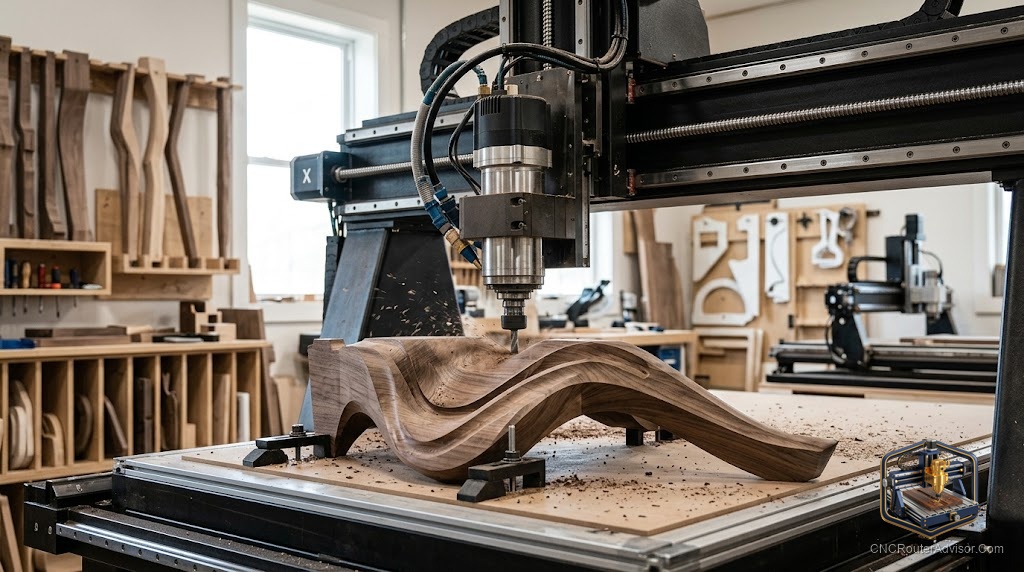
A cheap CNC wood router can absolutely produce woodwork you are proud of, but only if you buy the right one and run it the right way. Wood is more forgiving than metal, which is good news for budget machines, yet it still exposes a flimsy frame the moment you cut hardwood or push a deep pass. The trick is choosing a budget machine rigid enough for the wood you want to cut, then using technique to close the gap with pricier machines.
This guide focuses specifically on wood, covering which cheap machines handle it well, which woods play nicely with a light frame, and how to get clean cuts without spending more.
What a cheap wood router can and cannot do
A CNC wood router is a Computer Numerical Control machine that carves wood by moving a spinning cutter across the X, Y, and Z axes according to G-code. A cheap one delivers that capability at a low price, usually with a smaller work area, a lighter frame, and a trim router instead of an industrial spindle. For wood specifically, that is a more workable compromise than it would be for metal, because wood cuts at high speed and tolerates a little flex better than aluminum does.
What a cheap wood router can do is make signs, boxes, inlays, small furniture parts, and plenty of carving, in plywood, MDF, softwoods, and even hardwoods with care. What it cannot do well is cut full sheets in one pass, push aggressive deep passes in dense hardwood, or run production reliably. Knowing that boundary keeps your expectations aligned with the machine and points you toward the projects where it shines.
The short answer
For a cheap wood router, prioritize the stiffest frame in your budget, accept a small work area, and lean on technique. Use sharp bits suited to wood, take shallow passes, hold the work solidly, and clear dust as you go. A rigid budget machine plus good habits produces wood parts that belie its price.
The value picks for wood cluster around proven names. For learning and small parts, the Genmitsu 3018-PROVer V2 is the classic start: Check on Amazon . For real signs and furniture components, the 4040-PRO offers more room at a reasonable price: Check on Amazon . The FoxAlien Masuter Pro is another popular budget option for wood: Check on Amazon
Which woods suit a budget machine
| Material | Budget machine fit | Tip |
| Plywood | Very good | Use a compression bit for clean edges |
| MDF | Very good | Great detail, but plan for heavy dust |
| Softwood (pine, cedar) | Good | Sharp bits and a light finishing pass |
| Poplar, soft hardwoods | Good with care | Shallow passes, proper feed |
| Oak, maple, walnut | Workable with care | Take it slow, keep bits sharp |
Budget machines love plywood, MDF, and softwoods, which cut easily and forgive a lighter frame. Dense hardwoods are still achievable, but they demand shallow passes, sharp bits, and patience.
Technique closes the gap
On a cheap wood router, technique matters even more than on a premium one, and the good news is that technique is free. Take shallow depths of cut and let multiple passes reach full depth, which keeps a light frame from flexing and chattering. Use sharp bits suited to wood, since a dull bit burns hardwood and fuzzes softwood no matter the machine. Set feeds and speeds for a real chip load so the bit cuts rather than rubs. Hold the work solidly so nothing shifts. These habits let a budget machine produce clean wood parts that look far more expensive than the machine that made them.
The extras that make it usable
A cheap wood router needs a few inexpensive additions to reach its potential. A small set of quality bits, including a compression bit for plywood, improves results more than most machine upgrades. Basic dust control with a shoe and shop vac keeps your shop and lungs clear, since even small wood routers throw a lot of fine dust. An inexpensive touch probe saves time and prevents ruined cuts by finding the top of your material. And solid workholding, even just screws into the wasteboard, keeps parts from moving. None of these cost much, and together they transform a bare budget machine into a genuinely capable one.
Who should skip the cheap wood router
Skip a cheap wood router if you cut full sheets regularly, since a small light machine will have you tiling endlessly and a large-format machine is the right tool. Skip the lightest models if dense hardwood joinery is your main goal, because a flimsy frame will fight deep cuts, and a rigid mid-size machine is worth the stretch. And if you need production reliability, a budget machine cannot sustain it. For hobby woodworking, small parts, and learning, though, a cheap wood router is a genuinely smart buy.
The verdict
A cheap CNC wood router delivers real woodworking on a budget when you choose the stiffest frame you can afford, cut the woods that suit a lighter machine, and lean on free technique to close the gap with pricier machines. Add a few quality bits, basic dust control, a touch probe, and solid workholding, and a budget machine produces signs, boxes, and furniture parts you will be proud of. Match your projects to what the machine does well, run it with care, and cheap becomes capable. Buy wisely and work smart, and your budget stretches remarkably far in wood.
Wood rewards patience and sharp tools more than it rewards a big price tag. Bring both, and a cheap machine makes beautiful things.
Frequently asked questions
Can a cheap CNC router do real woodworking? Yes. With a rigid enough frame and good technique, a budget machine makes signs, boxes, inlays, and furniture parts in plywood, MDF, softwoods, and even hardwoods with care.
Which woods are easiest on a budget machine? Plywood, MDF, and softwoods like pine and cedar cut easily and forgive a lighter frame. Dense hardwoods work too but need shallow passes and sharp bits.
How do I get clean cuts on a cheap wood router? Take shallow passes, use sharp bits suited to wood, set feeds for a real chip load, and hold the work solidly. Technique matters more on a budget machine.
What bit should I add first for wood? A compression bit for clean plywood edges, plus a sharp upcut spiral for general cutting. Quality bits improve results more than most machine upgrades.
Do cheap wood routers make a lot of dust? Yes. Even small wood routers throw a lot of fine dust, and MDF is the worst. A dust shoe with a shop vac plus respiratory protection is essential.
When should I buy a pricier machine instead? When you cut full sheets regularly, need dense hardwood joinery, or require production reliability. A budget machine cannot sustain those, so stretch to a suitable one.
References
- CNCRouterInfo, how to choose a CNC router: https://cncrouterinfo.com/guides/how-to-choose-a-cnc-router/
- Bubble Relief, CNC router projects for beginners: https://bubblerelief.com/cnc-router-projects-for-beginners/