
Best CNC Router for Woodworking: Features to Compare Before You Buy
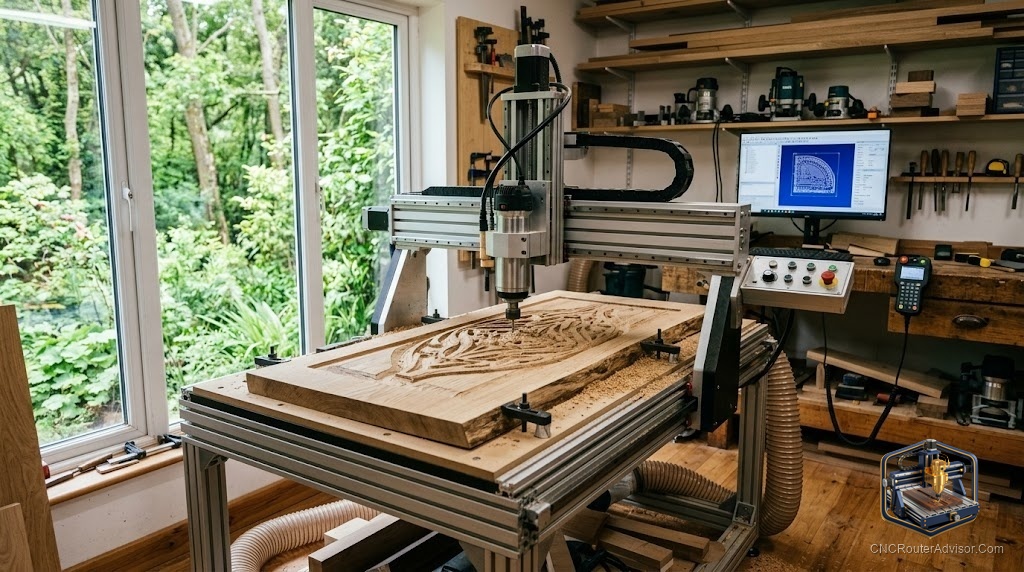
There is no single best CNC router for woodworking, and any article that names one without asking about your projects is selling you something. The best machine for a sign maker in an apartment is not the best machine for a cabinet shop, and the best machine for a hobbyist learning relief carving is not the best for a maker producing chairs. What actually helps is knowing which features to compare, so you can find the machine that is best for you.
This guide walks through those features in the order they matter for woodworking, so you can shortlist with confidence rather than chasing someone else’s pick.
What “best for woodworking” depends on
A woodworking CNC router is a Computer Numerical Control machine that carves wood by moving a spinning cutter across the X, Y, and Z axes according to G-code. “Best” depends on the wood you cut, the size of your parts, your space, and your budget, because those decide which features matter most to you. A machine that excels at large cabinet panels may be overkill for someone carving small signs, and a compact machine perfect for a hobbyist would bottleneck a production shop.
So rather than hunt for a universal winner, compare machines on the features that drive woodworking results: rigidity, work area, spindle, motion, software, and support. Weigh each by how it serves your specific work. The best router for woodworking is simply the one that scores highest against your real needs, and the sections below show you how to judge each factor.
The short answer
Compare woodworking routers on rigidity first, then work area, spindle power, motion system, software, and support, and weigh each by your own projects. For most home woodworkers, a rigid mid-size machine with linear rails and a strong spindle is the sweet spot. For production and full sheets, step up to premium or large-format machines.
A strong value benchmark for serious home woodworking is the Genmitsu 4040-PRO MAX, with linear rails and a 710 watt spindle: Check on Amazon . Above it, premium brands such as Carbide 3D, Onefinity, and Sienci offer greater rigidity and support for those who need it.
The features to compare
| Feature | Why it matters for wood | What to favor |
| Rigidity | Clean cuts and tight joinery | Heavy frame, linear rails |
| Work area | Fits your typical parts | Match to real projects |
| Spindle | Cutting speed and hardwood ability | Strong, ideally a VFD spindle |
| Motion system | Precision under load | Ball screws or linear rails |
| Software | How you design and cut | Fits your workflow |
| Support | Help when stuck | Large community or maker support |
Rigidity comes first
For woodworking, rigidity is the feature that most determines results, and it is the one buyers most often overlook in favor of work area. A stiff frame resists the flex that causes chatter, rough edges, and loose joinery, especially in hardwood. When you compare two machines at a similar price, the heavier, stiffer one will almost always produce cleaner wood. Prioritize rigidity, and treat a smaller work area on a stiffer machine as the better trade for most woodworking.
Match work area and spindle to your work
After rigidity, size the work area to your real parts. Signs and small furniture components fit a mid-size bed, while full cabinet panels want a large-format machine. Do not overbuy area you will not fill, since it costs money, space, and dust infrastructure. Spindle power should match your ambitions too: a trim router suits lighter wood work, while a VFD spindle around 700 watts and up cuts hardwood faster and quieter. Balance the two, since a strong spindle on a flexible frame still cuts poorly.
Software and support decide your experience
The best machine on paper frustrates you if its software fights your workflow or its support leaves you stranded. Confirm the machine works with design and CAM software you are willing to learn, and that its controller and post-processor match. Just as important, weigh the community and maker support, because when a cut goes wrong, a large user base or responsive maker turns a lost weekend into a quick fix. For woodworking beginners especially, support quality can matter as much as any hardware spec.
Who should choose which tier
Choose a compact machine if you carve small parts and value a small footprint, and accept tiling for occasional larger pieces. Choose a rigid mid-size machine if you make signs and furniture components and want clean joinery, which suits most home woodworkers. Choose a premium or large-format machine if you run production or cut full sheets, where rigidity, work area, and support justify the cost. Skip the tier above your real needs, since capability you will not use is just expense.
The verdict
The best CNC router for woodworking is the one that scores highest against your own projects, not a universal winner from a list. Compare machines on rigidity first, then work area, spindle, motion, software, and support, and weigh each by the wood you cut, the parts you make, and the space and budget you have. For most home woodworkers, a rigid mid-size machine with linear rails and a strong spindle is the sweet spot, with premium and large-format machines reserved for production. Judge by your needs, and the best machine for you becomes clear.
Ignore anyone who names a single best without asking what you make. The right answer always starts with your own bench.
Frequently asked questions
What is the best CNC router for woodworking? The one that best fits your projects. Compare rigidity, work area, spindle, motion, software, and support, and weigh each by the wood you cut and the parts you make.
What feature matters most for woodworking? Rigidity. A stiff frame produces clean cuts and tight joinery, especially in hardwood, and it is the feature buyers most often overlook.
How big a work area do I need? Match it to your typical parts. Signs and small furniture fit a mid-size bed, while full cabinet panels need a large-format machine. Avoid overbuying area.
Do I need a VFD spindle for woodworking? Not for lighter work, where a trim router suffices. A VFD spindle around 700 watts and up cuts hardwood faster and quieter, which helps for serious woodworking.
Why does support matter when choosing a machine? When a cut goes wrong, a large community or responsive maker turns a stalled project into a quick fix. For beginners, support can matter as much as hardware.
Is a premium machine worth it for a hobbyist? Only if you need its rigidity or run near production volumes. Many hobbyists are well served by a rigid mid-size machine at a fraction of the cost.
References
- CNCRouterInfo, how to choose a CNC router: https://cncrouterinfo.com/guides/how-to-choose-a-cnc-router/
- Bubble Relief, CNC router projects for beginners: https://bubblerelief.com/cnc-router-projects-for-beginners/
- CNC Dad, best CNC router for beginners: https://www.cnc-dad.com/blog/best-cnc-router-for-beginners/