
CNC Router Motor Repair: Diagnosis, Fixes, Maintenance, and Support
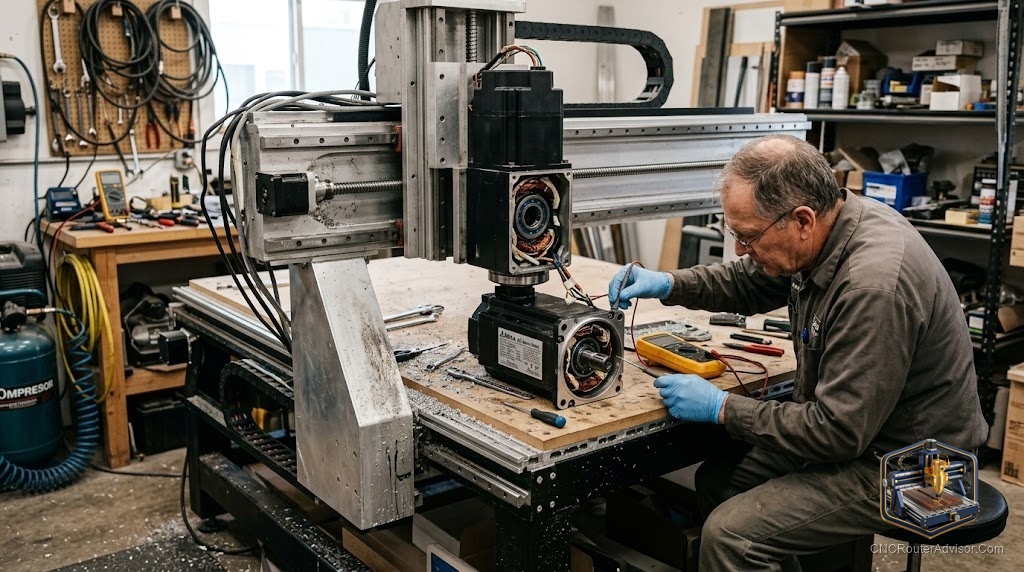
When a CNC router spindle acts up, the temptation is to assume the worst and start pricing a full replacement. Most of the time, the problem is smaller and more fixable than it first appears. Working through the symptoms in order saves money and, just as often, saves a project that is stuck halfway through.
Start with the symptom, not the part
Good repair begins with honest diagnosis. Each common symptom points toward a different cause.
- No power at all: Check the control box, the wiring, and the electrical grounding before blaming the motor. A loose connector or a tripped supply is a five-minute fix mistaken for a dead spindle every day.
- Intermittent power or sparking: On a brushed trim router, this usually means worn brushes or a dirty commutator.
- Growling or grinding that rises with RPM: Worn bearings, plain and simple.
- Overheating: Look at cooling first. An air-cooled spindle clogged with dust, or a water-cooled spindle with a stalled pump or low coolant, will cook itself.
- Rough finish or oversized cuts: Often tool runout from a worn collet or bearing rather than a motor fault at all.
The fixes that solve most cases
Bearings and brushes account for the large majority of spindle repairs. Both are wear items, both are affordable, and both are within reach of a patient hobbyist with basic tools. Cleaning and re-seating electrical connections resolves a surprising number of intermittent faults. Clearing dust from cooling paths fixes many overheating complaints.
Runout problems frequently trace back to the collet, not the motor. Swapping in a true, undamaged collet is one of the cheapest ways to restore cut quality.
When repair turns into replacement
If the diagnosis lands on a burned winding, a failed VFD, or a cracked housing, repair stops making sense. At that point a reliable, well-supported power head is the better investment. The Makita RT0701C and the DeWalt DWP611 are both proven as CNC spindles, with wide parts availability and a common mount size that fits most gantries. Choosing one of these also means easier future repairs, since parts and guides are everywhere.
Maintenance that prevents the next failure
Most spindle repairs are avoidable. A short routine goes a long way:
- Keep the motor and its cooling paths clear of dust after every few sessions.
- Check for shaft play periodically so you catch bearing wear before it damages anything else.
- Inspect brushes on brushed motors and replace them before they wear to nothing.
- Confirm collets are clean and undamaged, and retire any that show wear.
- Verify grounding and secure wiring so vibration does not loosen connections over time.
Getting support when you are stuck
When a fault does not match any obvious symptom, manufacturer troubleshooting resources and active user communities are worth their weight. Many spindle and controller issues have already been solved and documented by someone who hit the same wall. Describe the symptom precisely, note what you have already checked, and you will usually find a path forward faster than by guessing.
A spindle that is diagnosed carefully, repaired at the root cause, and maintained on a simple schedule will outlast the machine around it. Most of the time, the fix is closer and cheaper than the panic suggests.