
CNC Router ATC Spindle Guide: How It Works, Features, and Selection Tips
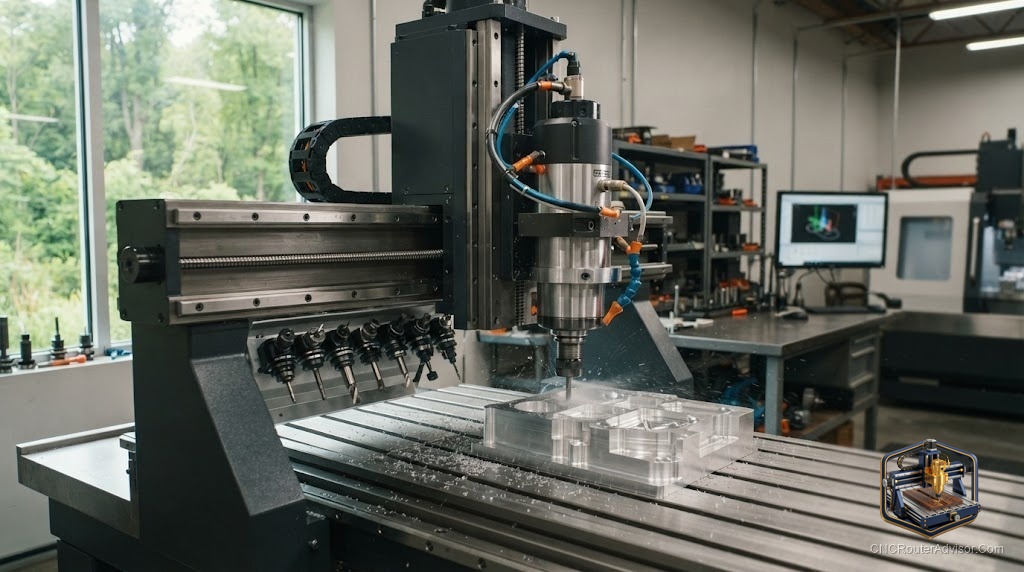
The automatic tool changer gets the attention, but the component that actually does the work is the ATC spindle. It is a different animal from the ordinary collet spindle on a hobby router: instead of a nut you tighten by hand, it has a pneumatic mechanism that grabs and releases a tool holder on command, in a fraction of a second, with enough force to hold it dead-true through heavy cuts. Understanding the ATC spindle is the key to understanding, specifying, or maintaining any tool-changing router.
An ATC spindle is a motorized spindle with an internal pneumatic drawbar that automatically clamps and releases standard tool holders, letting a CNC router change tools without manual intervention. This guide explains how it works, the features that define one, and what to weigh when selecting or servicing an ATC spindle.
How an ATC spindle works
The defining feature is inside the spindle:
- A drawbar and collet mechanism runs down the center of the spindle. A spring pack, or a set of disc springs, pulls the tool holder tight, clamping it with high force.
- Compressed air releases the grip. When the machine calls a tool change, air pressure pushes the drawbar down against the springs, opening the grip so the holder can be set into or lifted from the rack.
- The taper seats the tool, with a precision taper such as ISO30 or BT30 locating the holder concentrically every time, which is what preserves accuracy across changes.
- The springs re-clamp when the air releases, locking the new holder for cutting.
Because the spring force clamps and air only releases, a loss of air pressure will not drop a tool mid-cut, which is a deliberate safety design.
Key features that define an ATC spindle
- Taper standard: commonly ISO30 (also called ISO30) or BT30 on router-class ATC spindles, which sets which tool holders fit.
- Power rating, typically several kilowatts, matched to the materials and duty.
- Cooling, either air-cooled or water-cooled, with water-cooled running quieter and cooler for long production.
- Speed range, the RPM band the VFD can drive, which should suit your bits and materials.
- Bearing quality, which sets runout, longevity, and how well it holds tolerance under load.
- Automatic clamp and release via the pneumatic drawbar, the trait that makes it an ATC spindle at all.
Selection tips
- Match the taper to your ecosystem, since the taper decides which tool holders you buy, and switching later is expensive. Pick a common standard.
- Size the power to your work, with more kilowatts for metal and heavy production, less for light wood work.
- Prefer water cooling for continuous runs, for quieter, cooler, longer operation, accepting the added pump and plumbing.
- Check the air requirement, confirming your compressor supplies the pressure and clean, dry air the drawbar needs.
- Value bearing quality and runout specs, because a spindle with low runout holds finish and accuracy far better.
- Confirm VFD and control compatibility, so the spindle integrates with your machine’s controller and the tool-change sequence.
Maintenance realities
An ATC spindle asks for more care than a collet spindle. Keep the air clean and dry to protect the drawbar mechanism, keep the taper and holders clean so tools seat true, monitor drawbar clamping force over time, and watch bearing health, since worn bearings raise runout and ruin finish. Neglect the air quality especially, because moisture and debris are the fastest way to damage the internal mechanism.
The honest verdict
The ATC spindle is the heart of any tool-changing router, and its quality sets the ceiling on the whole machine’s accuracy and reliability. When selecting one, treat the taper standard as a long-term commitment, size the power and cooling to your real work, insist on good bearings and low runout, and confirm it fits your air supply and controller. It is more complex and more demanding to maintain than a simple collet spindle, but for a production machine that swaps tools all day, it is exactly the right and necessary component. Match it well and it runs for years, neglect the clean-air requirement and it will not.
Frequently asked questions
What is an ATC spindle? A motorized spindle with an internal pneumatic drawbar that automatically clamps and releases standard tool holders, letting a CNC router change tools without manual intervention.
How does an ATC spindle grip the tool? A spring pack pulls the drawbar to clamp the tool holder with high force. Compressed air pushes against the springs to release it during a tool change.
Will an ATC spindle drop a tool if the air fails? No. Springs provide the clamping force and air only releases the grip, so a loss of air pressure will not drop a tool mid-cut. It is a deliberate safety design.
What taper do ATC router spindles use? Commonly ISO30 or BT30 on router-class machines. The taper decides which tool holders fit, so it is a long-term commitment worth choosing carefully.
Should I choose an air-cooled or water-cooled ATC spindle? Water-cooled runs quieter and cooler for long production, at the cost of a pump and plumbing. Air-cooled is simpler and fine for lighter duty.
What maintenance does an ATC spindle need? Clean, dry air for the drawbar, clean tapers and holders, monitoring of clamping force, and attention to bearing health, since worn bearings raise runout and ruin finish.
What power rating do I need? Several kilowatts is typical, sized to your work: more for metal and heavy production, less for light wood. Match the power and speed range to your bits and materials.