
Industrial ATC CNC Router with Four Spindles for Sale: New vs. Used and What to Check
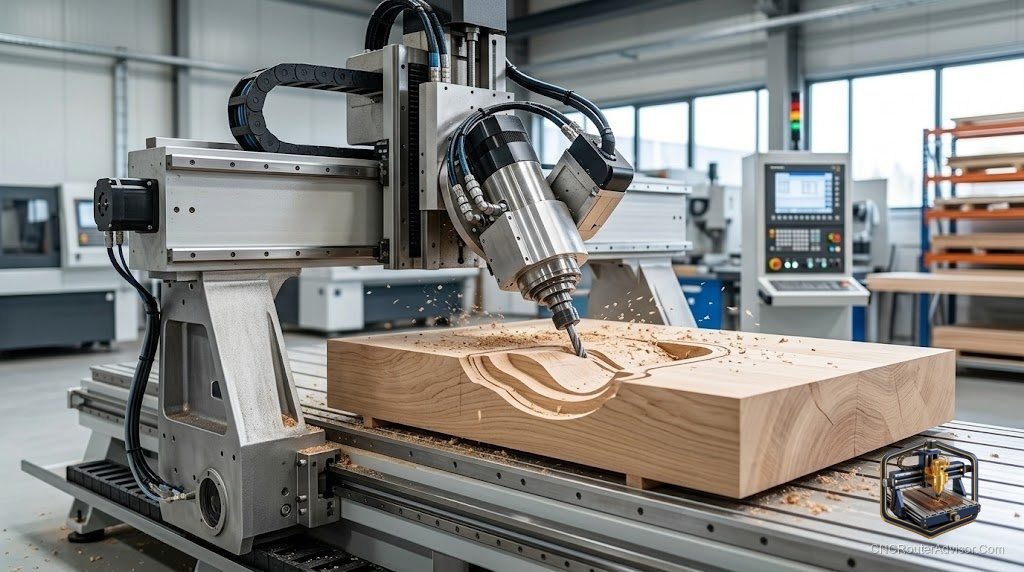
A four-spindle industrial router is a production decision, not a shop upgrade. Nobody buys one of these to make signs on the weekend. They get bought when a shop has an order book that justifies running four identical parts at once, all day, and needs the throughput math to work out over a multi-year payback. That framing matters, because it changes what you should be looking at when you evaluate one, and it changes the calculus of buying new versus used in ways that a hobby machine never has to consider.
The search term itself tells you the buyer is at the transactional stage: they know they want a multi-spindle machine with automatic tool changing, they are looking at what is available, and they need a checklist. This guide is that checklist, written for someone about to spend real money on a machine that will either make them money for a decade or become a very heavy paperweight.
An industrial ATC CNC router with four spindles is a large-format production machine equipped with four independent or ganged spindle heads and an automatic tool changer (ATC), designed to machine multiple identical parts simultaneously or to run heavy production throughput on a single large workpiece. The four spindles multiply output for repetitive nested-part production, and the ATC eliminates manual tool changes between operations, keeping the machine cutting rather than waiting for an operator.
For a shop with genuine production volume, buying used from a reputable dealer often delivers the best value per dollar of capability, provided the spindles, ATC mechanism, drive system, and controller check out. Buying new makes sense when uptime guarantees, warranty, and the latest controller and software integration justify the premium.
Why four spindles, and is it the right configuration for you
Multi-spindle machines exist to multiply throughput on repetitive parts. If your production is nested small parts (cabinet components, furniture parts, sign blanks, panel goods) cut from full sheets in high volume, four spindles cutting four copies of the same nest simultaneously multiplies your output without multiplying your floor space or operator count proportionally.
The configuration is wrong for you if your work is varied one-off pieces, large single workpieces that occupy the whole table, or low volume where a single-spindle machine’s throughput already exceeds your order flow. A four-spindle machine that runs at twenty percent utilization is a worse investment than a single-spindle machine running at eighty percent. Match the machine to the actual order book, not the aspirational one.
The inspection checklist for a used four-spindle machine
Spindles
Spindles are the highest-value wear component and the most expensive to replace, and on a four-spindle machine you have four of them. Check each spindle for bearing condition: run each at operating speed and listen for grinding, whining, or vibration that differs between heads. Check runout on each spindle with a dial indicator; excessive runout means worn bearings and a rebuild in your near future. Confirm all four spindles reach rated RPM and hold it under load. Ask for the spindle hours if the controller logs them, and factor a bearing rebuild on any spindle with high hours into your offer price.
On premium machines the spindles are often HSD, Colombo, or comparable Italian units, which are rebuildable and well-supported. Generic or unbranded spindles are cheaper to buy but harder to source parts for; confirm the brand and the parts availability before committing.
The ATC mechanism
The automatic tool changer is a precision mechanism that degrades with use. Watch it run a full tool-change cycle on each spindle if the machine has independent changers, or the shared changer if it is a common rack. Check that tool pickup and drop-off are clean and repeatable, that the tool clamp draws the holder fully home every time, and that the tool carousel or rack indexes accurately. A hesitant or misaligned ATC is a source of crashes and downtime that is expensive to correct after purchase.
Drive system and rails
On an industrial machine, look for rack-and-pinion or ball-screw drives with servo motors, and inspect the linear rails and bearing blocks for wear, pitting, and lubrication history. Run each axis through its full travel and listen for roughness or notchiness. Check for backlash by commanding small reversing moves and measuring actual displacement. Worn rails and drives are repairable but the cost is significant; document what you find.
Controller and software
Confirm the controller is a supported model with available parts and software updates. Industrial routers from major builders use controllers that are still supported; orphaned controllers from defunct builders are a real risk because a failed control board on an unsupported system can idle the whole machine indefinitely. Verify the machine communicates with current CAM software via a supported post-processor and that you can load and run a program end to end.
Dust collection, vacuum table, and infrastructure
Confirm the vacuum hold-down system (pump, zones, and seals) pulls adequate vacuum across the table. Check the dust collection integration. Confirm the electrical requirements (three-phase voltage and amperage) match what your facility can supply, and budget for an electrician if they do not. These infrastructure items are easy to overlook and expensive to retrofit.
New versus used: the honest calculation
Buying used from a reputable dealer who has inspected, cleaned, and warrantied the machine typically delivers the most capability per dollar, because industrial routers depreciate faster than they wear out when properly maintained. A well-kept machine that is five to eight years old can have most of its productive life ahead of it. The risk is buying a machine that was run hard and poorly maintained, which is why the inspection checklist matters and why buying from a dealer who stands behind the machine reduces risk over a private sale.
Buying new makes sense when: your production cannot tolerate the downtime risk of an older machine, you want a full manufacturer warranty and support relationship, you need the latest controller and software integration for your workflow, or the specific configuration you need is not available on the used market. New machines also carry current safety systems and documentation, which matters in regulated production environments.
Whatever you buy, budget for installation, rigging (these machines are heavy and require professional moving), electrical work, and operator training. The purchase price is not the total cost of getting the machine producing.
The verdict
A four-spindle ATC router is a throughput investment that only pays back at genuine production volume. Match the configuration to your real order book, inspect the spindles, ATC, drives, and controller ruthlessly on any used machine, and favor a reputable dealer over a private sale for the reduced risk. New buys down uptime risk and buys support; used buys the most capability per dollar when the machine checks out.
Three things to take with you:
- Four spindles multiply throughput on repetitive nested parts; they are the wrong configuration for varied one-off work or low volume.
- On a used machine, the four spindles and the ATC mechanism are the highest-value, highest-risk components; inspect each spindle for bearing wear and runout and watch the ATC run full cycles.
- Budget beyond the purchase price for rigging, three-phase electrical, vacuum and dust infrastructure, and operator training.
FAQ
What is a four-spindle CNC router used for? Multiplying production throughput on repetitive parts. Four spindles cut four identical copies of a nested part simultaneously, quadrupling output on high-volume repetitive work without a proportional increase in floor space or operators.
Is it better to buy a used or new industrial ATC router? Used from a reputable dealer typically delivers the most capability per dollar, since well-maintained industrial routers depreciate faster than they wear out. New makes sense when uptime guarantees, warranty, current controllers, and manufacturer support justify the premium.
What should I check on the spindles of a used four-spindle machine? Bearing condition (listen for grinding or vibration at speed), runout measured with a dial indicator, whether each spindle reaches and holds rated RPM under load, and the spindle hours if logged. Budget a bearing rebuild into your offer on any high-hour spindle.
What is an ATC and why does it matter on a production router? An automatic tool changer swaps cutting tools without operator intervention, keeping the machine cutting instead of waiting. On a production machine, the ATC’s reliability directly affects uptime; inspect it running full tool-change cycles before buying.
What infrastructure does an industrial four-spindle router require? Three-phase electrical power at the correct voltage and amperage, a vacuum hold-down pump and zoned table, dust collection, professional rigging to move the machine, and adequate floor space and floor loading. Budget for all of these beyond the purchase price.
How do I avoid buying an orphaned controller? Confirm the controller is a currently supported model from a builder still in business, with available spare boards and software updates, and verify it communicates with your CAM software through a supported post-processor before purchase.
References
- MultiCam Inc, CNC Routers (industrial machine specifications): https://www.multicam.com/en/cnc-routers
- CNC Machines, used industrial router listings and specifications: https://cncmachines.com