
CNC Router Spindle Repair: Diagnosing Problems and Deciding Whether to Fix or Replace
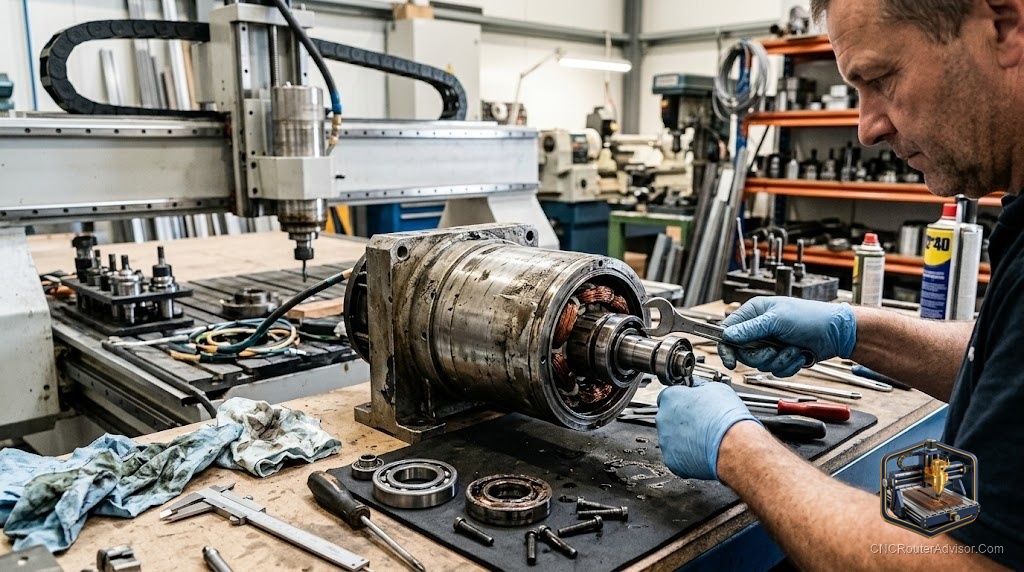
The spindle is the heart of a CNC router. When it fails, the whole machine stops. A spindle problem can present as subtle vibration that ruins finish or an outright refusal to spin, and the difference between a quick fix and a full replacement comes down to correct diagnosis.
How spindles fail
Bearing wear and failure. The most common failure. Symptoms: gradually worsening vibration, a rough or growling sound when spinning, chatter marks in cuts even with correct feeds and speeds. Bearings wear from normal use, side-loading, contamination, and lubrication failure over time.
Collet and taper wear. A worn or damaged collet allows tool runout, where the bit tip wobbles rather than rotating perfectly on-axis. Symptoms: poor surface finish, faster-than-expected tool wear, chatter at correct settings. Collets are inexpensive and should be replaced routinely.
Overheating damage. Spindles overheat from excessive duty cycles, inadequate cooling, or blocked airflow. Symptoms: very hot housing during normal use, burnt smell, inconsistent speed, or failure to reach target RPM.
Electronic/VFD faults. The variable-frequency drive can develop faults independently of the spindle. Symptoms: error codes on the VFD display, failure to start, runaway speed, or speed that does not match the commanded value. Always check VFD error codes before assuming the spindle is the problem.
Contamination. Chips and coolant entering the spindle accelerate bearing and seal wear.
Diagnosing the problem
- Listen and feel. Run the spindle by hand (power off). Rough or notchy rotation usually indicates bearing damage.
- Check the tool and collet first. Remove the tool, inspect the collet for wear or scoring, and seat a new collet.
- Check the VFD. Read the fault codes before further diagnosis.
- Measure runout. A dial indicator on the spindle taper or tool shank reveals runout. More than about 0.01 to 0.02 mm indicates a problem.
- Check cooling. Confirm airflow for air-cooled; flow and temperature for water-cooled.
What you can fix yourself
Collet replacement. Simple routine maintenance. Remove the old collet, inspect the taper, clean it, seat a new correctly-sized collet.
Cleaning and contamination removal. Clearing chips and debris from the spindle housing and collet is basic owner maintenance.
Cooling system service. Cleaning air-cooled fins, replacing coolant, checking water-cooled pump function.
VFD troubleshooting. Reading fault codes and adjusting VFD parameters are skills within reach of most owners.
What usually needs a shop or replacement
Bearing replacement. Technically possible for experienced DIYers but requires a bearing press, clean conditions, and exact replacement bearings. Errors destroy the spindle. Many owners send spindles to a specialist.
Shaft damage or winding faults. Effectively end-of-life in most hobby cases. Repair cost usually approaches or exceeds replacement.
Taper damage. Damage to the collet taper in the spindle body is serious and often means replacement.
The fix-or-replace decision
What is the spindle worth, and what will the repair cost? Bearing replacement by a specialist on a mid-range spindle is often cost-effective. On a cheap spindle, replacement is frequently cheaper. On an expensive quality spindle, repair almost always makes sense. For VFD faults, a replacement VFD is usually affordable and worth trying first.
The bottom line
Spindle repair starts with correct diagnosis. Check the collet and VFD first, the cheapest and most common fixes. If bearings are the culprit, weigh repair cost against replacement based on the spindle value. Good maintenance, clean collets, appropriate duty cycles, and unobstructed cooling prevents most failures.
Frequently asked questions
How do I know if spindle bearings are failing? Gradually worsening vibration, growling sound when spinning, chatter marks despite correct settings. Rotate by hand (power off) and feel for roughness.
Can I replace CNC spindle bearings myself? Possible but requires a bearing press, clean conditions, and exact replacement bearings. Errors can destroy the spindle.
Why does my spindle vibrate? Worn bearings, loose or worn collet causing runout, out-of-balance tool, or chips in the taper. Check and replace the collet first.
What are VFD fault codes? Error codes from the drive controlling spindle speed. Each code indicates a specific fault. Check the VFD manual before assuming the spindle is damaged.
How do I prevent spindle failure? Replace collets regularly, stay within duty cycle limits, maintain unobstructed cooling, keep chips away from the housing.
Is it worth repairing a spindle? Depends on the spindle value and repair cost. Collet and VFD repairs are almost always worth it. Shaft or winding damage typically means replacement.
References
- General spindle and VFD manufacturer service guides. Bearing supplier technical notes on angular contact bearing replacement.