
Grizzly Benchtop CNC Router Buying Guide: Work Area, Power, Software, and Trade-Offs
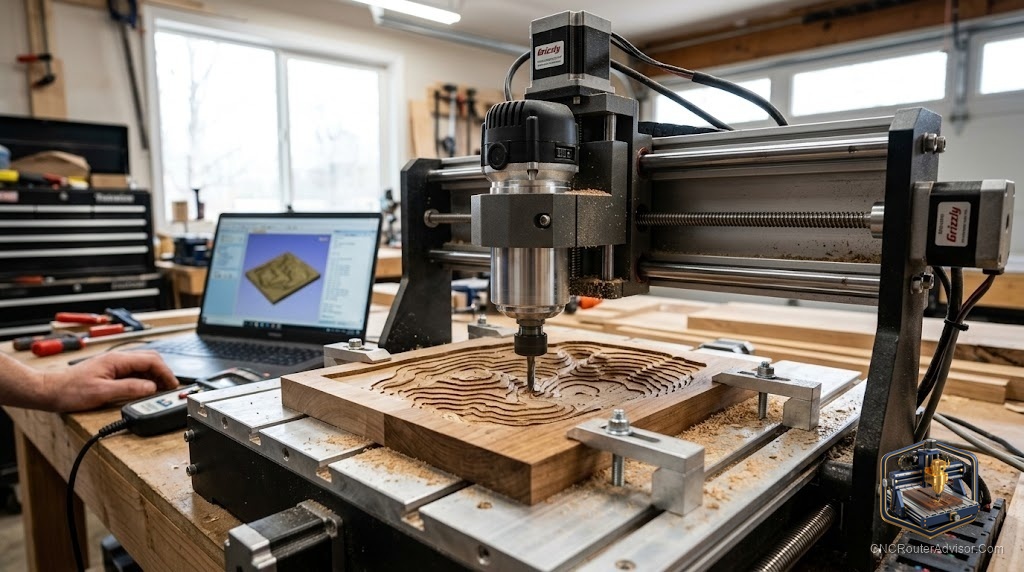
Grizzly is a name most woodworkers already trust for table saws, jointers, and bandsaws, so when people see a Grizzly benchtop CNC router, there is an instant assumption that it will be built like their other machinery: heavy, no-nonsense, and made to work. That reputation is worth something, but a CNC router is a different animal from a bandsaw, and the questions you ask before buying one are different too. Here is how to weigh a Grizzly benchtop machine against what you actually plan to cut.
A Grizzly benchtop CNC router is a compact, bench-mounted CNC machine from Grizzly Industrial, aimed at hobbyists and small shops cutting wood, plastics, and light materials. As with any benchtop CNC, the factors that matter are work area, rigidity, spindle or router power, the software and controller, and how it is supported. Judging one means matching those specifications to your projects rather than relying on brand reputation alone.
Short answer: evaluate a Grizzly benchtop CNC router the same way you would any benchtop machine: confirm the work area fits your projects, judge the frame rigidity and drive system, check the spindle or router power, and understand the controller and software it uses. Grizzly’s strength is its established reputation and support network, but always match the specific model’s specs to your work. Verify current details on Grizzly’s official listing before buying.
What “benchtop” means for capability
A benchtop CNC sits on a bench or stand rather than standing on its own frame, which shapes what it can do:
- Compact work area suited to signs, plaques, small parts, and light carving, not full sheets.
- Manageable size and power that fit a home shop and standard power.
- A trade in capacity, since a benchtop machine will not match a large freestanding router for big panels or heavy production.
If your work is small to mid-size, a benchtop machine is a natural fit; if you routinely process large panels, look at bigger machines.
The specifications that decide it
Judge any Grizzly benchtop model on the same fundamentals:
- Work area. Confirm the cutting envelope handles your largest project, with room to grow.
- Frame rigidity. A stouter frame cuts cleaner and faster, especially in hardwood. This is where build quality shows.
- Drive system. Ball or lead screws favor precision; belts favor budget and speed. Match to your accuracy needs.
- Spindle or router power. Enough power and the right RPM range for your materials, and whether it uses a trim router or a spindle.
- Z clearance and travel. Adequate for your material thickness and any fixtures.
- Controller and software. What controls the machine and what CAD/CAM it works with, since this shapes your daily workflow.
Software and workflow
A machine is only as usable as its software chain. Confirm what controller the Grizzly model uses, what software drives it, and whether CAD/CAM is included or bought separately. A machine that works with common, well-supported software is easier to learn and troubleshoot than one tied to an unusual system. Check that the workflow, design to toolpath to sending, is clear before you buy.
The Grizzly trade-offs
In its favor:
- An established company with a long track record in woodworking machinery.
- A support and parts network, which matters when something goes wrong.
- A reputation for solid, work-ready machinery.
Worth weighing:
- CNC-specific community and software support may be smaller than for brands built entirely around hobby CNC, like some GRBL-focused makers.
- As with any machine, confirm the specific model’s rigidity and specs rather than assuming they match Grizzly’s larger tools.
- Compare its work area and features against dedicated hobby CNC brands in the same class before deciding.
Who should buy, and who should skip
Buy a Grizzly benchtop CNC router if you value an established brand with real support, your work is small to mid-size, and the specific model’s specs match your projects. Skip it if you need full-sheet capacity, since a benchtop machine cannot deliver that, or if you want the largest hobby-CNC community and software ecosystem, where a GRBL-centric brand may serve you better. Always compare the exact model against its direct competitors.
The bottom line
A Grizzly benchtop CNC router brings a trusted woodworking-machinery name to compact CNC, but brand reputation is a starting point, not a decision. Confirm the model’s work area, rigidity, drive, and spindle fit your projects, understand its controller and software, and weigh Grizzly’s support network against the larger communities of dedicated hobby-CNC brands. Verify the current specifications on Grizzly’s official listing, match them to your work, and you will know whether it is the right benchtop machine for you.
FAQ
What is a Grizzly benchtop CNC router? A compact, bench-mounted CNC machine from Grizzly Industrial for hobbyists and small shops, aimed at cutting wood, plastics, and light materials.
What can a benchtop CNC router cut? Signs, plaques, small parts, and light carving in wood and plastics. Benchtop machines are not built for full sheets or heavy production.
How do I evaluate a Grizzly CNC model? Check the work area, frame rigidity, drive system, spindle or router power, Z clearance, and the controller and software, then match them to your projects.
Is Grizzly a good brand for CNC? Grizzly is an established woodworking-machinery company with real support and parts. For CNC specifically, confirm the model’s specs and compare its software ecosystem to dedicated hobby-CNC brands.
What software does a Grizzly CNC use? It depends on the model and controller, so confirm what drives it and whether CAD/CAM is included. A machine using common software is easier to learn.
Should I buy a benchtop or a larger CNC? Choose benchtop for small to mid-size work that fits a bench; choose a larger machine if you routinely cut big panels or need production capacity.
Where can I check current Grizzly CNC specs? On Grizzly’s official website, which lists the current models and specifications. Always verify details there before buying.
References
- Grizzly Industrial official site: https://www.grizzly.com
- CNCRouterInfo, how to choose a CNC router: https://cncrouterinfo.com/guides/how-to-choose-a-cnc-router/