
Handheld Router CNC Buying Guide: Work Area, Power, Software, and Trade-Offs
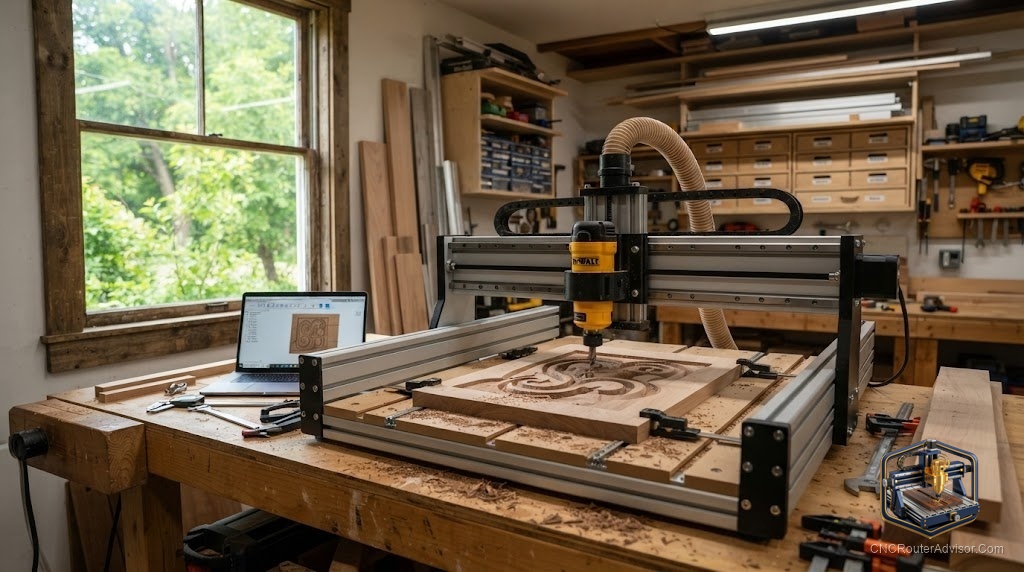
The phrase “handheld router CNC” points at two very different tools, and sorting out which one you mean is the whole game. One is a genuinely clever category of computer guided handheld tools that put the precision of CNC in your hands for cutting almost any size of material. The other is what people call the plain trim router that mounts on a normal CNC gantry. They solve opposite problems, and buying the wrong one for your goal leads to real frustration.
This guide untangles the two, explains where a handheld CNC tool shines and where it struggles, and helps you decide whether it fits your work or whether a benchtop machine serves you better.
What “handheld router CNC” actually means
The interesting category is a handheld CNC tool: a device you guide by hand while onboard electronics and a computer keep the cutter precisely on the design path. You move it roughly along the line, and the tool makes the fine corrections to stay accurate. Because you carry the tool to the material instead of fitting material into a machine, it can cut parts far larger than any benchtop work area, limited mainly by your reference setup rather than a fixed bed.
The other meaning is simply the trim router used as the spindle on a standard CNC router, a handheld tool repurposed as the cutter on an automated gantry. That is not a handheld CNC experience at all. It is a component of a normal machine.
The short answer
Buy a handheld CNC tool if you need to cut large or awkward workpieces, work on site, or value portability and small storage over hands off automation. Buy a benchtop CNC router if you want to press start and walk away, cut repeatable parts unattended, or work in metal and demanding materials. The core trade-off is portability and unlimited size versus automation and hands off repeatability. Neither is better overall. They fit different jobs, so decide by how you work, not by which sounds more advanced.
Work area: the handheld tool’s superpower
The biggest advantage of a true handheld CNC tool is that it is not bound by a fixed work area. A benchtop machine can only cut what fits its bed. A handheld tool travels to the material, so you can cut a large tabletop, a full sheet, or a part of an installed piece that would never fit a machine. For anyone working with oversized stock or on site, that alone can justify the tool.
The catch is that you provide the guidance and reference. Large cuts mean repositioning and re registering your reference as you go, which takes care and adds time compared with a machine that simply traverses its whole bed.
Power and materials
A handheld CNC tool uses a router style cutter and suits wood, plywood, MDF, and plastics well, the same materials a light benchtop router handles. It is not a metal machine, and it is not built for the heavy, continuous cutting a rigid benchtop router with a strong VFD spindle can sustain. If your work is soft aluminum or dense production cutting, a rigid benchtop machine is the better tool. For signage, furniture parts, templates, and joinery in wood and plastic, the handheld tool is very capable.
Software and workflow
Handheld CNC tools pair with their own design and guidance software, often streamlined so you import a vector file, place it on your material with an on tool display, and follow the guided path. The workflow feels more like tracing than programming. Benchtop machines use the familiar CAD to CAM to G-code chain, which offers more control and unattended operation but a steeper learning curve. If you want a fast, intuitive path from design to cut and do not need automation, the handheld workflow is appealing. If you want to batch parts overnight, the benchtop workflow wins.
Who should skip a handheld CNC tool
Skip a handheld CNC tool if you want hands off automation, because you still guide the cut and cannot walk away. Skip it if you need repeatable production of many identical parts, since a benchtop machine does that far more efficiently. Skip it too if you work in metal or need heavy continuous cutting, which calls for a rigid machine. And if all you actually need is a spindle for a gantry, remember that a plain trim router mounted on a benchtop machine is the real answer, not a handheld CNC device.
Comparison: handheld CNC tool vs benchtop router
| Factor | Handheld CNC tool | Benchtop CNC router |
| Max part size | Very large, portable | Limited to the bed |
| Automation | You guide the cut | Hands off, unattended |
| Repeatable batches | Slower, manual | Efficient and consistent |
| Materials | Wood, plastic | Wood, plastic, soft aluminum |
| Storage | Compact | Takes a dedicated bench |
If you conclude a benchtop machine fits you better, a compact, well supported option is the Genmitsu 3020 PRO MAX at this listing, and a larger rigid platform is the Genmitsu PROVerXL 4030 at this listing. True handheld CNC tools are specialized devices best evaluated directly through their maker, since they are a different category from marketplace benchtop routers.
The verdict
“Handheld router CNC” is really a fork in the road. A true handheld CNC tool trades automation for portability and near unlimited part size, making it excellent for large workpieces, on site work, and small storage, as long as you accept guiding the cut yourself. A benchtop CNC router trades portability for hands off automation and repeatability, which wins for production and demanding materials. And if you only wanted a spindle for a gantry, a plain trim router on a benchtop machine was the answer all along. Decide by how you work and what you cut, and the right tool becomes obvious.
Frequently asked questions
What is a handheld CNC router? It is a computer guided handheld tool that keeps the cutter precisely on your design path while you move it by hand. Because you carry it to the material, it can cut parts far larger than any benchtop work area.
Can a handheld CNC tool cut anything a benchtop machine can? Not quite. It handles wood, plywood, MDF, and plastics well, but it is not a metal machine and is not built for heavy continuous cutting. Benchtop machines also offer hands off automation it cannot match.
Is a handheld CNC tool good for production? No. You guide each cut, so making many identical parts is slower and more manual than a benchtop machine that runs unattended. Handheld tools shine on large one off parts and on site work.
Does “handheld router CNC” sometimes just mean a trim router? Yes. People often use it to describe the trim router mounted as the spindle on a standard CNC gantry. That is a machine component, not a handheld CNC experience.
What are the size limits of a handheld CNC tool? There is no fixed bed, so part size is limited mainly by your reference setup and how you reposition the tool. That makes it ideal for large tabletops, full sheets, and installed pieces.
Should I buy handheld or benchtop for a first machine? Choose by your work. If you want automation and repeatable parts, buy benchtop. If you need portability and to cut oversized material without a big machine, a handheld CNC tool fits better.
References
- CNC Router Info, How to Choose a CNC Router: https://cncrouterinfo.com/guides/how-to-choose-a-cnc-router/
- CNC Dad, Best CNC Router for Beginners: https://www.cnc-dad.com/blog/best-cnc-router-for-beginners/