CNC Router for Advertising and Sign Making: Uses, Setup, and Key Considerations
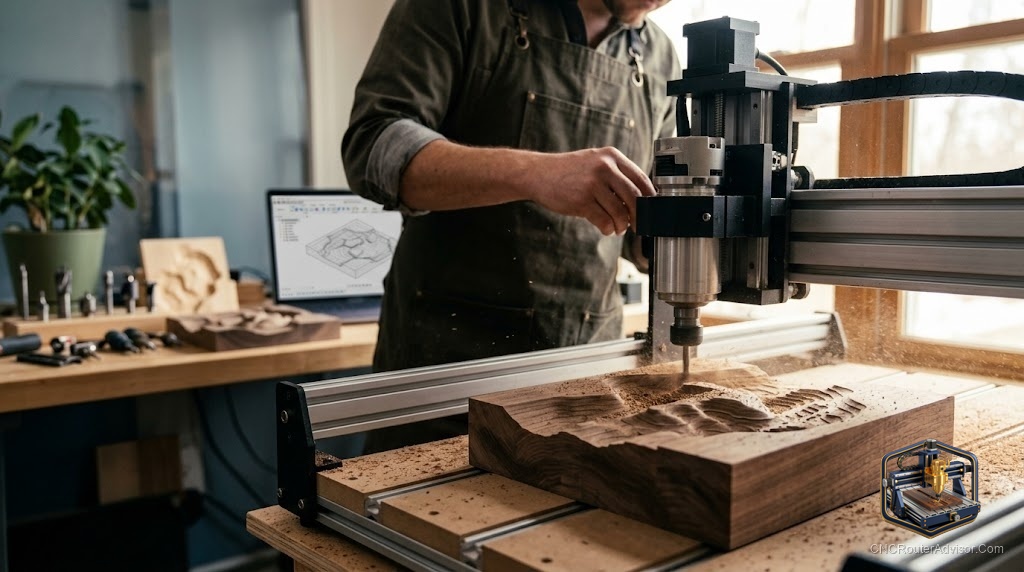
You are asked to make a sign for a local restaurant. The owner wants the logo carved in relief, the address in clean V-bit lettering, and the whole thing cut from 25mm thick cedar. The first quote from a sign shop is four times what the customer expected. You tell them you can do it. The CNC router sitting in your garage is about to pay for itself.
A CNC router for advertising and sign making is a CNC machine sized and configured for producing signage: carved letters, relief logos, routed channel letters, engraved plaques, and cut acrylic and PVC signage. The term “advertising CNC router” refers to exactly this application, named because sign shops and advertising companies have been the largest commercial buyers of mid-size CNC routers for decades.
Here is the short answer for a sign maker choosing a machine: the work area sets the sign sizes you can cut in one setup, the spindle quality determines how clean your V-carve text comes out, and the motion system determines whether your lettering is consistent across the full length of a long sign. For most sign and advertising work, a machine in the 600x900mm to 1200x2400mm class covers 80% of real jobs.
What sign and advertising work a CNC router does
V-carve lettering. The most common CNC sign operation. A V-groove bit cuts tapered channels that form letters, with the channel width varying to fill each letter stroke. The result is crisp, professional text that would take hours to hand-carve.
3D relief carving. A logo or artwork file converted to a 3D toolpath creates a raised or recessed relief in wood, HDU foam, MDF, or PVC. Signs with a carved logo field and a flat painted background.
Channel letter profiles. Cutting the letter faces and returns for backlit channel letters in acrylic, aluminum composite, or PVC.
Flat profile cutting. Routing letters and shapes to exact profiles from sheet material for push-through letters, logo cut-outs, and decorative panels.
Engraving plaques. Precise shallow engraving in hardwood, acrylic, aluminum, and brass for awards, nameplates, and directional signs.
Work area: matching the machine to the signs you make
For most small sign shops and hobbyist sign makers, two size categories cover the realistic job range:
Desktop 600x900mm class. Handles single-panel signs, personalized name signs, address plaques, menu boards, and logo panels up to about 35 inches on the long axis. This is the class used by most small independent sign shops.
Full sheet 1220x2440mm (4x8) class. Handles full sheets of HDU foam, dibond, and PVC for large advertising panel production. This is the commercial sign shop standard.
The gap between these two is where most buying decisions happen. A 6090-class machine handles everything up to about 900mm. For signs above that, you either tile the job (cut in two setups with a seam) or invest in a larger machine.
Materials for advertising and sign work
HDU foam (High Density Urethane). The standard material for carved dimensional signs. Machines easily, takes paint well, and is lightweight enough to mount on walls and facades.
MDF. Inexpensive, flat, and consistent. Ideal for painted signs, real estate signs, and interior commercial displays.
PVC foam board (Sintra, Komatex). White, lightweight, weatherable. Standard for outdoor advertising panels and real estate signs.
Cedar and redwood. Traditional outdoor sign materials that look warm and natural. Carves beautifully with V-bits and produces signs that look handmade but are consistent.
Acrylic. For edge-lit signs, backlit letters, and LED illuminated panels.
Aluminum composite (Dibond, ACM). A sandwich of two aluminum skins around a polyethylene core. Routes cleanly, is very flat, and is used for street signs, trade show displays, and storefront panels.
Machine and spindle recommendations for sign work
For sign work, three specifications matter more than anything else:
Work area. Size the machine to your most frequent job size. A machine one size larger gives you room to grow without tiling jobs.
Spindle quality and runout. V-carve lettering exposes spindle runout. Any wobble at the tip shows up as uneven depth in fine-stroke letters. A water-cooled spindle with low runout produces cleaner text than a trim router at the same path.
Ball screws. Long sign panels require the machine to hold dimension over the full Y travel. Belt-driven machines drift at the far end of the travel; ball screws maintain accuracy across the full length.
Verified picks:
| Machine | Work area | Spindle | Best for |
|---|---|---|---|
| Axiscreat A6060 | 600x600mm | 710W trim router | Small plaques, name signs, desktop sign shop |
| OCASAMI 1.5KW 4-Axis 6090 | 900x600mm | 1.5kW water cooled | Small sign shop: most plaques, address signs, logo panels |
| OCASAMI 2.2KW 4-Axis 6090 | 900x600mm | 2.2kW water cooled | Larger cedar and hardwood signs, deeper relief, aluminum composite |
For the full 4x8 sheet category, factory-direct machines from STYLECNC, Blue Elephant, or similar are the correct channel. These are freight machines, not Amazon purchases.
Software for sign making
Vectric VCarve Pro is the industry standard for sign shop CNC work. It handles V-carving, 3D relief, toolpath nesting, and direct import of common sign design formats (DXF, SVG, AI). The majority of professional sign shops in the 6090 to 4x8 machine class run VCarve or Aspire.
Alternatives include Carveco, which is subscription-based and well suited to relief carving, and Easel from Inventables for beginners who need a simpler starting point.
For text specifically: V-carve fonts are designed to work with V-bit geometry. Not all typefaces V-carve well; fonts with very thin strokes can result in nearly invisible channels. Stick with fonts designed for V-carving, which are widely available free and commercially.
Workholding for sign blanks
Sign blanks are flat and often large. The practical workholding options for sign work:
Double-sided tape. Works for MDF and PVC foam board that will not shift. The tape-and-CA-glue method (painter’s tape on both surfaces, CA glue between) is more secure for longer jobs.
Compression clamps at the edges. Low-profile T-slot clamps keep the blank flat without interfering with the toolpath if placed outside the cutting area.
Vacuum table. The production standard for sign shops. Holds large flat sheets with full-surface suction, no clamp shadows, fast load and unload.
For cedar and hardwood slabs that are not perfectly flat: surface the blank first with a large surfacing bit (spoilboard cutter or large straight bit) before carving. This ensures consistent V-carve depth across the full sign.
Paint and finish for CNC-cut signs
A V-carved sign typically gets two paint operations:
- Base coat on the full sign, sealed against the paint that fills the carving.
- Fill coat painted into the carved areas and wiped off the flat field while still wet, leaving color only in the V-carved grooves.
This is the standard technique used on painted wood signs. Acrylic craft paint or sign paint works. The carved walls hold paint with less bleed than you might expect from wood grain.
For outdoor cedar signs, a penetrating oil sealer under the paint extends the life significantly.
FAQ
What is an advertising CNC router? The term refers to a CNC router configured and used for sign making and advertising display production: carved signs, channel letters, engraved plaques, and routed signage panels.
What size CNC router do I need for sign making? For small shop and hobby sign work, a 600x900mm machine handles most plaques, address signs, and logo panels. For larger commercial signs above 900mm in any direction, a full-sheet 4x8 machine is the production standard.
What material do most CNC-carved signs use? HDU foam for dimensional carved signs, cedar and redwood for traditional wooden signs, MDF for painted indoor signs, and PVC foam board for outdoor flat-panel advertising.
What software do sign shops use for CNC routing? Vectric VCarve Pro is the industry standard for sign shop CNC work. Aspire (also by Vectric) adds advanced 3D relief capability for high-end dimensional sign work.
Can I start a sign business with a 6090 CNC router? Yes. Many solo sign makers operate profitably with a 6090-class machine. The work area handles 80 to 90 percent of small-shop sign jobs. You add a larger machine when your orders consistently exceed the 900mm dimension.
How important is spindle quality for sign work? Highly important for V-carve text quality. Low runout from a water-cooled spindle produces crisper letter edges than a trim router at the same toolpath. If text quality is your primary product, invest in a spindle over belt-driven machines.
References
- Vectric, VCarve Pro sign making tutorials: https://www.vectric.com
- cncrouterinfo.com, “How to Choose a CNC Router”: https://cncrouterinfo.com/guides/how-to-choose-a-cnc-router/
- cnc-dad.com, “Best CNC Router for Beginners”: https://www.cnc-dad.com/blog/best-cnc-router-for-beginners/