CNC Router Blueprints: What Good Plans Include, and Where to Get Them Right
Every DIY CNC build starts with the same fork in the road: follow a proven set of blueprints, or wing it. The people who wing it usually end up buying the blueprints anyway, after a frame that racks, axes that bind, and a machine that cuts like it is nervous. Good CNC router blueprints are not just a parts list, they are the accumulated hard-won knowledge of everyone who built the design before you, and they are the single best insurance against an expensive, frustrating build.
CNC router blueprints are the design plans for building a CNC router, including frame drawings, dimensions, a bill of materials, motion and electronics specifications, and assembly instructions. They range from free community designs to paid, refined plans, and their quality varies enormously.
The direct answer before the detail: good blueprints should give you complete dimensioned frame drawings, a full bill of materials, motion and electronics specs, wiring guidance, and clear assembly steps, ideally for a proven design with a community behind it. If a set of plans is missing the bill of materials, the electronics, or real dimensions, treat it as inspiration, not a build guide. The sections below cover what complete plans include, the well-known open designs, and how to judge a set before you commit weeks of your life to it.
What complete blueprints actually include
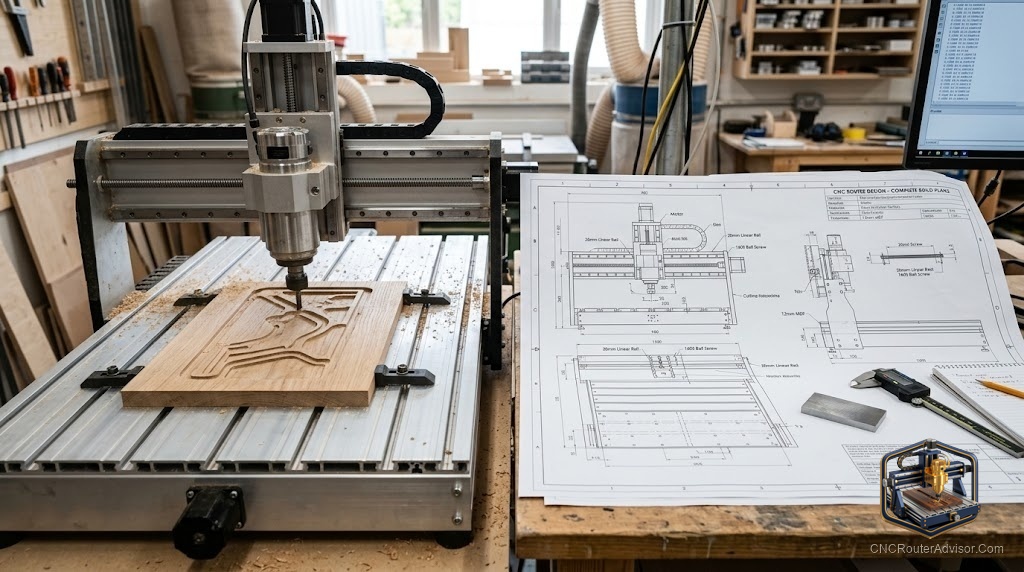
A usable set of plans is more than a pretty rendering. It should contain fully dimensioned frame drawings, a complete bill of materials with specific parts, motion system specifications (belts, screws, or rails and the matching hardware), electronics and wiring details (controller, drivers, steppers, power supply), and step-by-step assembly instructions. Cut sheets and recommended tolerances are a bonus that separates good plans from great ones. If any of these core pieces is missing, you will be improvising exactly where mistakes are most costly.
Proven designs with communities behind them
The safest blueprints are the ones thousands of people have already built, because the mistakes have been found and documented. Open-source and community designs like the MPCNC and LowRider (V1 Engineering) and the PrintNC are widely built, well documented, and backed by active forums where you can get help when you are stuck. A design with a living community is worth more than a slightly better design that nobody else has built, because you are never troubleshooting alone.
How to judge a set of plans before you start
Before committing, check that the plans match your goals: work area, materials you want to cut, and your budget and skill. Confirm the bill of materials is complete and the parts are actually available to you. Look for build logs and reviews from people who finished the design, and favor plans with clear electronics and wiring guidance, since that is where beginners struggle most. Plans that assume knowledge you do not have will stall your build; plans that explain the reasoning will teach you as you go.
If you would rather understand the whole build process than pick plans in isolation, our guide to building a CNC wood router walks the full roadmap from frame to first cut.
Who should skip DIY blueprints
Skip plans and buy an assembled or kit machine if you want to be cutting quickly, have limited mechanical experience, or do not enjoy the build itself. Blueprints reward people who value understanding and customization over speed to first cut. If that is not you, a ready-made machine will make you happier and probably cost less once your time is counted.
Final verdict
Good CNC router blueprints are the backbone of a successful build, and the difference between a machine you trust and a pile of extrusion is usually the quality of the plans and the community behind them. Insist on complete dimensioned drawings, a full bill of materials, real electronics and wiring guidance, and clear assembly steps, and favor proven open designs like the MPCNC, LowRider, or PrintNC that thousands have already built. Choose plans that match your goals and skill, and the build becomes a rewarding project. Choose incomplete plans, and you will pay for the missing pages in time and frustration.
FAQ
What should CNC router blueprints include? Complete dimensioned frame drawings, a full bill of materials, motion and electronics specifications, wiring guidance, and step-by-step assembly instructions. Cut sheets and tolerances are a valuable bonus.
Are free CNC router plans any good? Many are excellent, especially proven open-source designs with active communities. Judge free plans by their completeness and by how many people have successfully built them.
Which open-source CNC designs are well supported? The MPCNC and LowRider from V1 Engineering and the PrintNC are widely built and well documented, with active forums for troubleshooting help.
How do I know if a plan matches my needs? Check that its work area, supported materials, budget, and skill level fit yours, that the bill of materials is complete and available, and that others have finished the build.
Do blueprints include the electronics? Good ones do, specifying the controller, drivers, steppers, and power supply plus wiring guidance. Plans missing electronics detail leave beginners to improvise where it is riskiest.
Should a beginner use blueprints or buy a kit? A kit or assembled machine gets you cutting faster with less risk. Blueprints suit builders who value understanding and customization and enjoy the build itself.
References
- V1 Engineering, MPCNC and LowRider open-source designs: https://docs.v1e.com
- PrintNC, open-source CNC build documentation: https://wiki.printnc.info
- GRBL project documentation, controller and wiring reference: https://github.com/gnea/grbl/wiki