Chicago Banner & CNC Router Business Sign Gallery: What It Shows and How the Work Gets Made
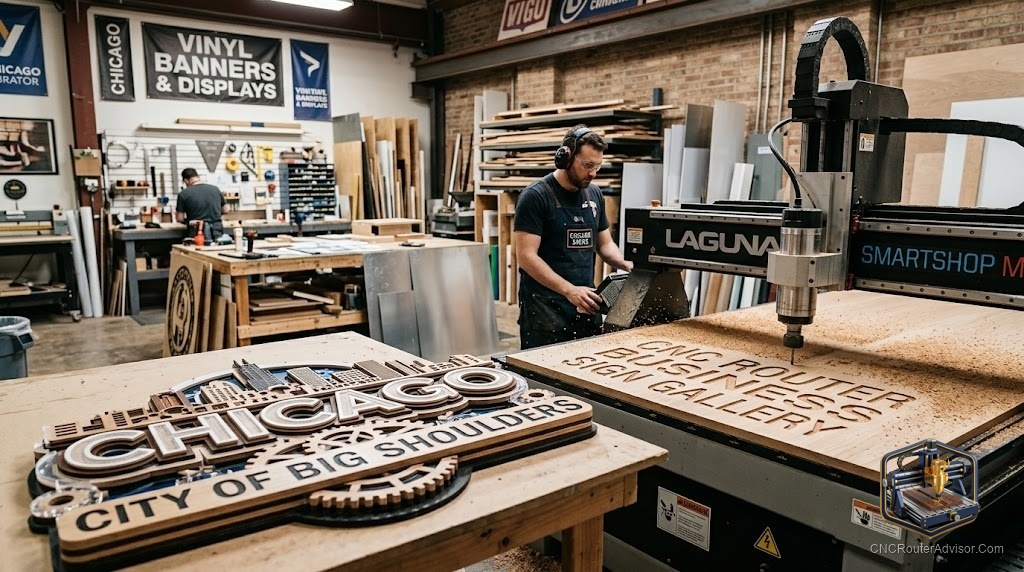
Walk past a well-made storefront sign and you rarely think about how it was built. A Chicago banner and CNC router business sign gallery is where that curtain gets pulled back: a showcase of finished business signage, from printed banners to dimensional CNC-routed letters and logos, gathered so prospective buyers can see what is possible before they order. For a business owner planning a sign, a gallery like this is less about browsing pretty pictures and more about understanding what each method can actually deliver.
A Chicago banner and CNC router business sign gallery is a portfolio-style collection of commercial signage examples that pairs large-format printed banners with CNC-routed dimensional signs, shown together so buyers can compare materials, styles, and fabrication methods for their own business.
The practical takeaway before the detail: a gallery like this exists to help you match a signage method to your goal, budget, and installation site. Banners are the fast, portable, temporary option, while CNC-routed signs are the durable, dimensional, premium option, and most real storefronts end up using both at different times. The sections below explain what you are actually looking at in such a gallery, how the CNC-routed pieces are made, and what to consider before you commission your own.
What a sign gallery is really showing you
A good gallery is organized by method and use, not just by looks. You will typically see printed vinyl banners for events, sales, and temporary promotion, alongside CNC-routed signs cut from materials like HDU (high-density urethane), acrylic, aluminum composite, and wood for permanent storefront and lobby use. Seeing them side by side is the point: it lets you judge which style fits your brand and which method fits your site and timeline.
Treat the gallery as a menu of tradeoffs. A banner reads well from a distance and installs in minutes, while a routed dimensional sign carries a sense of permanence and quality that a flat print cannot match. Neither is better in the abstract; they answer different questions.
How the CNC-routed signs are made
The dimensional pieces in the gallery are cut on a CNC router, which follows a digital design to carve letters, logos, and shapes with clean, repeatable edges. Common materials include HDU for carved and painted signs, acrylic and aluminum composite for modern flat-cut lettering, and hardwood for a warmer look. The router’s precision is what makes crisp logos and consistent lettering possible, and it is why dimensional signs command a premium over flat prints.
Understanding this helps you brief a sign shop well. If you want raised letters, a carved logo, or a specific material finish, that is CNC-routed work. If you want a large, temporary graphic quickly, that is a banner.
What to consider before you commission
Start with the site and the goal. Indoor or outdoor, permanent or temporary, viewed up close or from across a parking lot: each answer points to a method and material. Consider durability against weather and sun, installation and mounting requirements, and how long the message needs to last. A promotion is a banner; a permanent brand mark is a routed sign. Getting these questions settled before you talk to a shop saves time and money.
If your interest is in making signs yourself rather than commissioning them, our guide on the best CNC router for a small shop covers machines suited to sign work.
Who a gallery like this is for
It is for business owners and marketers deciding how to present their brand physically, and for anyone comparing the speed of banners against the permanence of routed signage. It is less useful if you already know exactly what you want and simply need a quote, though even then it helps confirm a shop’s range and quality before you commit.
Final verdict
A Chicago banner and CNC router business sign gallery is a decision tool, not just a portfolio. Use it to see the real difference between a printed banner and a CNC-routed dimensional sign, then match the method to your site, your timeline, and how long the message must last. Banners win on speed and portability, routed signs win on durability and presence, and a smart business uses each where it fits. Come to a sign shop with those tradeoffs already understood, and you will get a better sign for less back-and-forth.
FAQ
What is a business sign gallery? It is a curated collection of finished signage examples, often mixing printed banners and CNC-routed dimensional signs, meant to help buyers compare methods and styles before ordering their own.
What is the difference between a banner and a CNC-routed sign? A banner is a large-format printed graphic that is fast, portable, and temporary. A CNC-routed sign is cut from solid material for durable, dimensional, permanent signage.
What materials are CNC-routed signs made from? Common choices include HDU (high-density urethane), acrylic, aluminum composite, and hardwood, each offering a different look, durability, and finish.
When should I choose a banner over a routed sign? Choose a banner for events, sales, and temporary promotions where speed and portability matter. Choose a routed sign for permanent storefront or lobby branding.
Can one shop do both banners and routed signs? Many full-service sign shops offer both, which is why galleries often show them together. It lets a business handle temporary and permanent signage in one place.
What should I decide before commissioning a sign? Settle the installation site, indoor or outdoor use, how long the message must last, and mounting requirements. Those answers determine the method and material.
References
- International Sign Association, signage types and materials overview: https://www.signs.org
- Carbide 3D, CNC routing capabilities for signage materials: https://carbide3d.com
- U.S. Small Business Administration, business signage and branding guidance: https://www.sba.gov