CNC Router for Sign Making Guide: Features, Specifications, and Buying Considerations
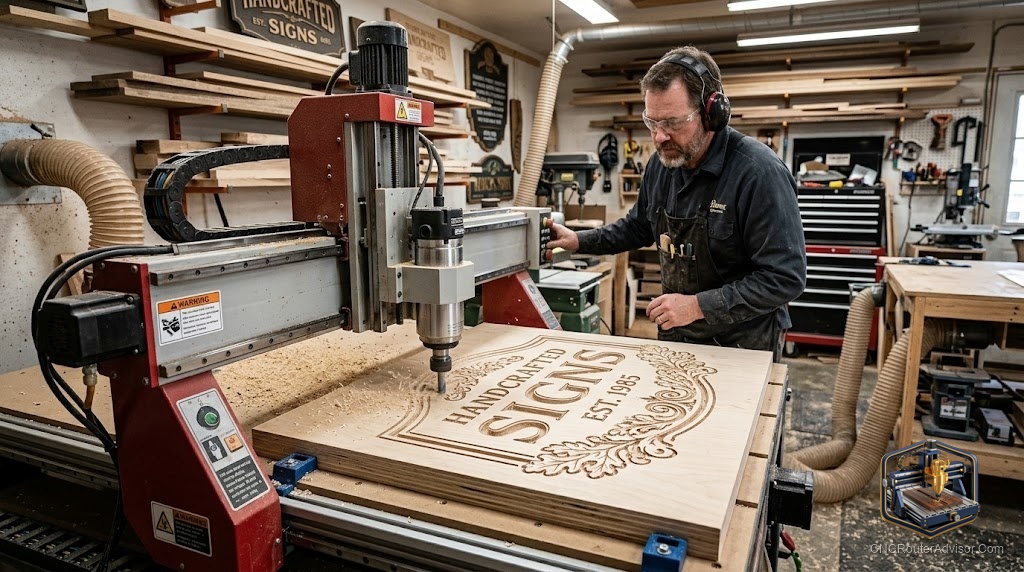
Sign making is one of the few CNC niches where the machine can pay for itself fast. Carved wooden signs, dimensional address plaques, business signage, and personalized gifts all command real money, and a CNC router turns them out cleanly and repeatably once it is dialed in. But not every router is equally suited to signs. The features that make a great sign machine are specific, and knowing them helps you buy the right tool instead of fighting the wrong one.
A CNC router for sign making is a machine chosen and set up to produce signs, from carved and V-routed lettering to dimensional and painted signage, in wood, plastic, and composite panels. Sign work rewards a machine with a work area sized to your signs, clean V-carving capability, a smooth spindle, and software strong at lettering and layout. The bed size and finish quality matter more than raw cutting power.
Short answer: for sign making, prioritize a work area matched to your typical sign sizes, excellent V-carving through a rigid machine and quality spindle, and CAM software strong at text and layout like VCarve. A 2 by 4 foot bed suits most sign shops, while smaller machines handle plaques and gifts. Finish quality and clean lettering matter most, so favor rigidity and a smooth spindle over headline power.
What makes a good sign-making machine
Sign work has particular demands:
- Work area sized to your signs. Decide the largest sign you plan to make. Plaques and gifts fit a desktop machine; yard signs and business signage want a 2 by 4 foot or larger bed.
- Clean V-carving. Crisp V-carved lettering is the heart of sign work, and it depends on a rigid machine and a smooth, low-runout spindle so letters come out sharp.
- Spindle quality. A quiet VFD spindle runs long jobs cleanly, though a good trim router serves smaller shops.
- Precision drive. Ball or lead screws give the accuracy detailed lettering needs.
- Software for text and layout. Sign-focused CAM like Vectric VCarve handles fonts, text-on-a-path, and V-carve toolpaths beautifully.
Specifications to compare
- Bed size against your sign dimensions, with room to grow.
- Spindle type and power, weighing a quiet VFD spindle for long runs against a trim router for smaller shops.
- Drive system, favoring ball or lead screws for clean lettering.
- Z clearance, enough for thicker sign blanks and dimensional work.
- Software compatibility, confirming strong V-carve and text tools.
- Community and support, so you are never stuck mid-order.
Sign types and techniques
A sign machine handles a wide range of work:
- V-carved lettering for classic carved wooden signs, using V-bits for crisp letters.
- Dimensional and raised-letter signs where the background is cleared and letters stand proud.
- Painted and filled lettering where carved text is painted for contrast.
- Inlays combining contrasting woods or materials.
- Personalized gifts like name signs, address plaques, house numbers, and quote signs.
Most start from vector artwork in SVG or DXF, with fonts and layouts arranged in the design software.
Materials for signs
Sign makers work in plywood and MDF for painted signs, hardwoods for premium carved signs, and softwoods like cedar for outdoor signage. Plastics like acrylic and HDPE suit modern and outdoor signs, and composite panels serve business signage. Tight-grained woods hold crisp lettering best.
Product picks
SainSmart Genmitsu PROVerXL 4030 V2 (versatile sign machine). A rigid desktop router with a generous bed for mid-size signs and plaques, a strong community, and clean V-carving once dialed in. Honest flaw: the base setup uses a trim router rather than a quiet spindle, so long sign runs are loud. On Amazon.
Genmitsu V-bit and detail bit set (lettering tooling). V-bits are the core of sign lettering, and this affordable set is a practical way to start carving crisp text and details. Honest flaw: budget bits dull faster than premium tooling, so replace them as letters start to soften. On Amazon.
Who should buy, and who should skip
Buy a sign-focused router if you want to make carved and dimensional signs, plaques, and personalized gifts, whether as a hobby or a business, and you value clean lettering and finish. Choose a smaller machine for plaques and gifts and a 2 by 4 or larger for full signage. Skip an oversized industrial machine if you only make small personalized pieces, since a desktop router does that beautifully for far less.
The bottom line
A great sign-making router is defined by clean V-carving, a work area matched to your signs, a smooth spindle, and software strong at text and layout, not by raw power. Size the bed to your signs, prioritize rigidity and a quality spindle for crisp lettering, and lean on capable CAM like VCarve. Get those right and sign making becomes one of the most profitable and satisfying uses of a CNC router.
FAQ
What size CNC router do I need for signs? Match the bed to your largest sign. Plaques and gifts fit a desktop machine; yard and business signs want a 2 by 4 foot or larger bed.
What makes a router good at sign making? Clean V-carving from a rigid machine and smooth spindle, precise drives for sharp lettering, and CAM software strong at text and layout.
What bits do I need for signs? V-bits for crisp lettering, straight or upcut end mills for clearing backgrounds, and ball-nose bits for any dimensional or relief detail.
What software is best for sign making? Sign-focused CAM like Vectric VCarve handles fonts, text-on-a-path, and V-carve toolpaths, which are central to sign work.
What materials are best for signs? Plywood and MDF for painted signs, hardwoods for premium carved signs, cedar for outdoor use, and acrylic or composite panels for modern signage.
Can I make money making signs? Yes. Carved signs, plaques, and personalized gifts command real value, and a router produces them cleanly and repeatably once dialed in.
Do I need a spindle or is a router enough? A trim router serves smaller shops, but a quiet VFD spindle runs long sign jobs more cleanly and comfortably.
References
- BubbleRelief, CNC router projects for beginners: https://bubblerelief.com/cnc-router-projects-for-beginners/
- Instructables, DIY CNC router plans and how to build: https://www.instructables.com/DIY-CNC-Router-Plans-How-to-Build/