
Large Format CNC Router Kit: What to Know Before You Build Big
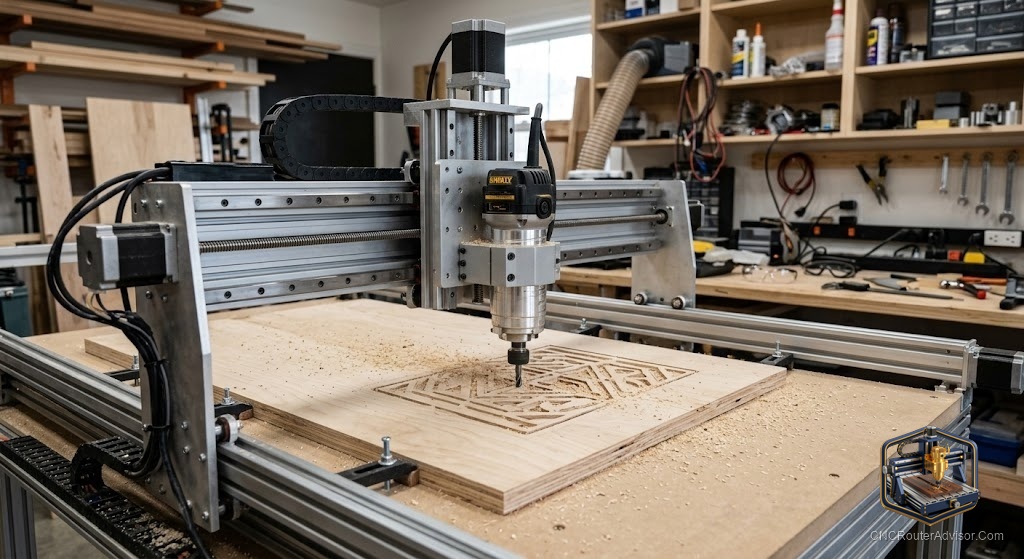
There is a moment every ambitious CNC owner hits: the project no longer fits the machine. You want to cut a full sheet of plywood, a boat part, a big sign, a run of cabinet doors, and your tidy desktop router suddenly looks like a toy. That is when the large format CNC router kit starts calling. It is a tempting path, a big machine for far less than a factory-built one, but going big multiplies every engineering challenge, and a kit that ignores those challenges will frustrate you more than a small machine ever could.
A large format CNC router kit is a set of parts and plans that let you build a big-work-area machine, commonly in the 4 by 4 foot to 4 by 8 foot range, yourself. Kits vary from complete bolt-together systems with everything included to plans-plus-parts packages where you supply some materials. The appeal is capacity at a lower cost than a fully assembled industrial router, and the trade-off is that you take on the build and the rigidity problem that comes with size.
The short version: choose a kit based on rigidity first, drive system second, and completeness third. Big machines flex more, so frame stiffness and a good motion system matter more than they ever did on a small machine. Expect to invest serious assembly time and to add a strong spindle, dust collection, and workholding on top of the base kit. Done right, a large format kit is a genuine bargain. Done cheaply, it is a big, rackety disappointment.
Why “large” changes everything
On a small machine, a little flex is forgivable. Scale the frame up to 4 by 8 feet and that same flex multiplies, because longer spans sag and twist more under the same load. This is the central truth of large format builds: rigidity is the whole game. A gantry that spans eight feet has to resist bending across that entire length, and any weakness shows up as chatter, inaccuracy, and disappointing edges on the exact big parts you bought the machine to make.
This is why the best large format kits lean on heavy extrusion, steel reinforcement, and stiff gantry designs, and why drive choice matters. Rack and pinion is common on big machines because it handles long travels well, while ball screws over long spans get expensive and can whip. Whatever the kit uses, the question to ask is always the same: how does it stay rigid across that big span?
What separates a good kit from a frustrating one
Four things decide whether a large format kit is worth building.
Frame and gantry rigidity. This is non-negotiable, as above. Read owner reports about flex before buying, because marketing photos never show a gantry deflecting.
Drive system suited to long travel. Rack and pinion or robust ball screws sized for the span. Belts stretched over eight feet are a recipe for lost accuracy.
Completeness and documentation. A kit that includes clear plans, all the fasteners, and the electronics saves you weeks of sourcing. A plans-plus-parts kit is cheaper but assumes you enjoy hunting down components. Know which you are buying.
Spindle and support systems. A big machine needs a spindle with enough power for full-sheet work, plus serious dust collection and a large, flat spoilboard. Budget for these from the start, because they are not optional at this size.
Well-regarded sources in this space include Avid CNC’s PRO series, which sells complete large format kits, and community plans from builders who document rigid designs. Compare several before committing, since a big machine is a big commitment.
Setup realities people underestimate
Two things surprise first-time large-format builders. First, space and infrastructure: a 4 by 8 machine needs floor space, dust extraction, and often a dedicated circuit for the spindle, so plan the shop, not just the machine. Second, squaring and tramming a big frame is genuinely harder than on a desktop, because small errors span large distances. Patience during assembly pays off across every future cut, and rushing the setup is the most common way people end up disappointed with an otherwise capable machine.
Safety scales up too. A large machine with a powerful spindle throwing chips across a full sheet demands proper eye, ear, and respiratory protection and a reachable emergency stop, without exception.
Who should build large, and who should wait
Build a large format kit if you genuinely need full-sheet or big-part capacity, have the shop space and power for it, and are willing to invest the assembly time to get a rigid, square machine. Wait, or buy a smaller machine, if most of your work fits a 24 by 36 inch bed, because you will pay in money, space, and setup effort for capacity you rarely use. The most common large-format regret is buying big for the one project a year that needed it.
If you are unsure whether your work truly demands full-sheet capacity, our guide on how to choose a CNC router helps match work area to real projects before you commit to a big build.
The honest takeaway: a large format CNC router kit is one of the best values in the hobby when you actually need the size and you respect the engineering that size demands. Put rigidity first, budget for the spindle and dust collection, give the assembly the patience it needs, and a kit will give you factory-scale capacity for a fraction of the factory price.
Frequently asked questions
What size is a large format CNC router kit? Most fall in the 4 by 4 foot to 4 by 8 foot work-area range, large enough to process full sheets of plywood and big signs.
What is the most important spec in a large format kit? Rigidity. Longer spans flex more, so frame and gantry stiffness matter more than any other spec on a big machine.
What drive system is best for a big machine? Rack and pinion is common because it handles long travels well. Robust ball screws work but get expensive and can whip over long spans, and belts stretch too much.
Do I need a special spindle for full-sheet work? Yes, a spindle with enough power for continuous cutting, plus strong dust collection and a large flat spoilboard, all of which you should budget from the start.
How long does a large format kit take to assemble? Realistically many days to weeks, with squaring and tramming the big frame being the most time-consuming and important step.
Is a kit cheaper than a factory-built large router? Usually yes, often significantly, which is the main appeal. The trade-off is the build time and the responsibility for getting rigidity and squareness right.
References
- Avid CNC, “PRO Series CNC Router Kits” - https://www.avidcnc.com/products/cnc-router-kits/
- All3DP, “DIY CNC Router: Which Parts Do You Need?” - https://all3dp.com/2/diy-cnc-router-parts-build-own-cnc-router/
- CNCCookbook, “CNC Router Buyer’s Guide” - https://www.cnccookbook.com/cnc-router/