
CNC Router Upgrades Guide: Compatibility, Installation, and Upgrade Choices
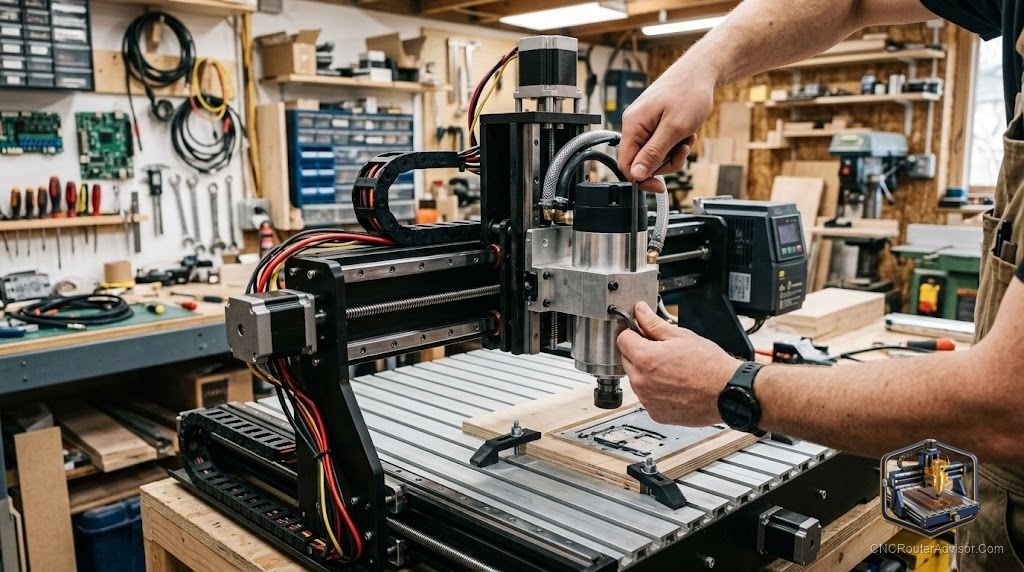
There comes a point with almost every CNC router when you start to feel its limits. Maybe the cuts chatter when you push harder, maybe the belts introduce a little slop, maybe you wish the spindle had more muscle. That itch is a good sign. It means you understand your machine well enough to improve it. Upgrading a CNC router, done thoughtfully, can transform a frustrating machine into one that punches well above its price. The key is knowing which upgrades matter and how to choose them in the right order.
Upgrade for the problem you actually have
The most common mistake is upgrading the exciting part instead of the limiting part. Before buying anything, figure out what is actually holding your machine back. Chatter and flex point to rigidity. Slop and inaccuracy point to the drive mechanism. Bogging down in cuts points to the spindle. Fixing the true bottleneck gives you a bigger improvement than chasing the upgrade that sounds most impressive.
Rigidity upgrades
Rigidity is the foundation of cut quality, so it is often the highest-value place to start. Reinforcing a flexible frame, upgrading from V-wheels to proper linear rails or linear guides, and stiffening the gantry all reduce the flex that causes chatter and poor finish. On many entry machines built from aluminum extrusion, moving to linear rails is the single upgrade people notice most. A stiffer machine lets you cut harder materials and take deeper passes with confidence.
Drive mechanism upgrades
How the gantry moves determines precision. Timing belts are common on lighter machines and are fine for many tasks, but they can introduce backlash under load. Moving to ball screws or lead screws, or fitting an anti-backlash nut, tightens accuracy and repeatability. If your parts come out slightly off or you see lost motion on direction changes, the drive mechanism is worth your attention.
Spindle and motor upgrades
If your machine bogs down or cannot hold speed in tougher cuts, the power head is the limit. Stepping up from a small DC spindle or a basic trim router to a more capable spindle, or a VFD spindle with real speed control, opens up harder materials and better finish. When you upgrade the spindle, check the spindle mount diameter so the new unit fits your gantry, and confirm the control wiring suits your controller.
Motion and electronics upgrades
Stepper motors, the controller, and the electronics that tie them together also shape performance. Upgrading to stronger stepper motors such as moving from NEMA 17 to NEMA 23 class motors can help a machine that is losing steps under load, provided your controller and drivers can support them. A more capable GRBL controller or updated electronics can add features and reliability. These upgrades reward planning, since motors, drivers, and controller all have to match.
Compatibility comes first
Every upgrade lives or dies on compatibility. Before you buy, confirm that the part fits your frame and mounting, that motors match your drivers and controller, that a new spindle fits your mount and wiring, and that mechanical upgrades suit your machine’s travel and geometry. A DIY CNC kit or an open, well-documented machine makes upgrades far easier, since parts and dimensions are known. Measure twice, check the specifications, and confirm fit before committing.
Upgrade in sensible order
The smartest upgrade path fixes the biggest limit first, then the next, rather than scattering money across the machine. Rigidity, then drive accuracy, then spindle power is a common and effective order for machines that started life on the lighter side. Take it one improvement at a time, test the difference each makes, and you will end up with a machine that feels custom-built for your work, without having replaced it wholesale.