
CNC Router Kit: What You Get, What You Build, and What to Watch For
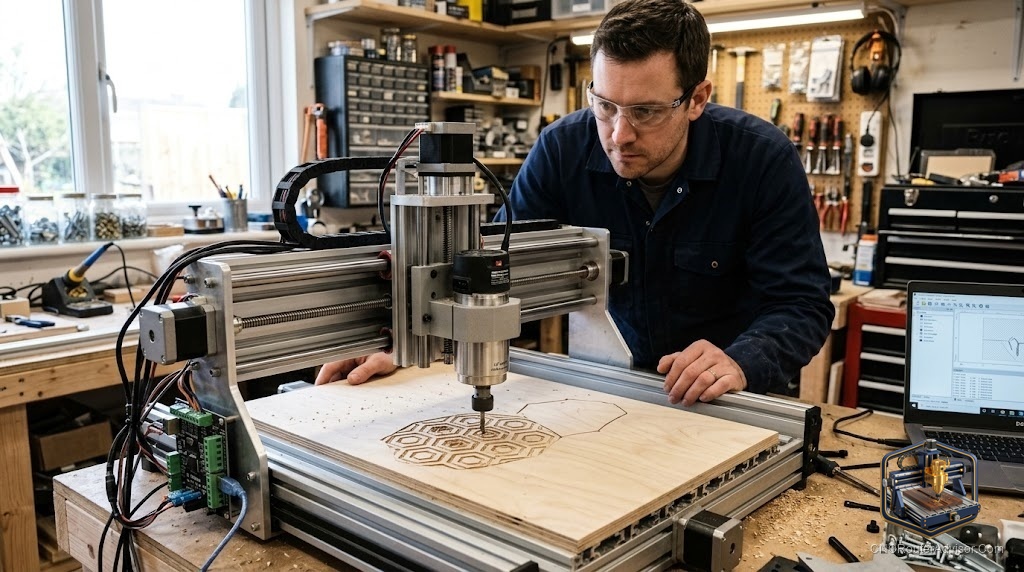
A CNC router kit is not a shortcut. It is a decision to be involved in the construction of your machine, which means you understand how it works when something needs fixing six months later.
Kit machines ship disassembled or partially assembled. You complete the build. The trade-off is cost versus time: kits typically land below fully assembled equivalents, and the build process teaches you the mechanical and electrical layout of the machine in ways that an out-of-box setup never does.
The Sienci LongMill MK2.5 is the most widely recommended kit machine in the hobby CNC market. It ships with documented assembly instructions, active community support, and hardware quality that matches many assembled competitors. Build time is typically 4-6 hours for a first-time assembler. The 30x48-inch configuration covers most woodworking applications a hobby shop encounters.
For a smaller footprint, the Genmitsu 3018-PROVer V2 assembles in about 35 minutes and teaches the same workflow at lower investment. Its 11x7-inch area limits production work but makes it an ideal first machine for someone who wants to understand CNC before committing to a larger kit.
The FoxAlien Masuter Pro arrives mostly pre-assembled, splitting the difference between kit and turnkey. Main components arrive wired; the assembly step is structural mounting rather than electronics work.
What a Kit Typically Includes
- Machine frame components (aluminum extrusion, steel, or acrylic depending on tier)
- Motion system components (motors, lead screws or ball screws, pulleys and belts)
- Electronics package (controller board, wiring harnesses, limit switches)
- Hardware (fasteners, end caps, cable management)
- Documentation (build instructions, wiring diagrams)
Typically not included: Spindle or router, CAM software, spoilboard, dust shoe, workholding hardware.
What to Verify Before Buying a Kit
Community support: A kit machine from a manufacturer with a large active user forum is significantly less frustrating than a kit from a lesser-known brand. Sienci Labs, Carbide 3D, and Inventables all have communities where assembly questions get answered quickly.
Spare parts availability: Verify that replacement V-wheels, belts, lead screws, and driver boards are available to order. Hobby CNC kits with proprietary hardware that is not available separately become expensive paperweights when one component fails.
Wiring quality: The most common source of early kit machine failures is poor connectors. Machines that arrive with JST connectors and clean wiring harnesses are more reliable than those with friction-fit or crimped-wire connections.
FAQ
Is it worth buying a CNC router kit versus assembled? For first-time CNC users who want to understand their machine: yes. Kit assembly takes hours but the mechanical understanding it produces reduces troubleshooting time significantly over the life of the machine. For users who want to cut parts from day one without a build project: buy assembled.
How hard is it to build a CNC router kit? Entry kits like the Genmitsu 3018 assemble in under an hour with basic tools. Mid-range kits like the LongMill MK2.5 take 4-6 hours. Neither requires specialized tools or electronics skills. The assembly documentation quality varies significantly by manufacturer.
What tools do I need to assemble a CNC router kit? Most kits require only metric hex keys, a set of pliers, and a screwdriver. Some kits include the necessary hex keys. A set of metric wrenches and a multimeter for verifying wiring continuity are useful additions.
References
- Sienci Labs. LongMill MK2.5 assembly documentation. sienci.com
- SainSmart. Genmitsu 3018-PROVer V2 product page. sainsmart.com