
Air Compressor for CNC Router Explained: Uses, Setup, and Key Considerations
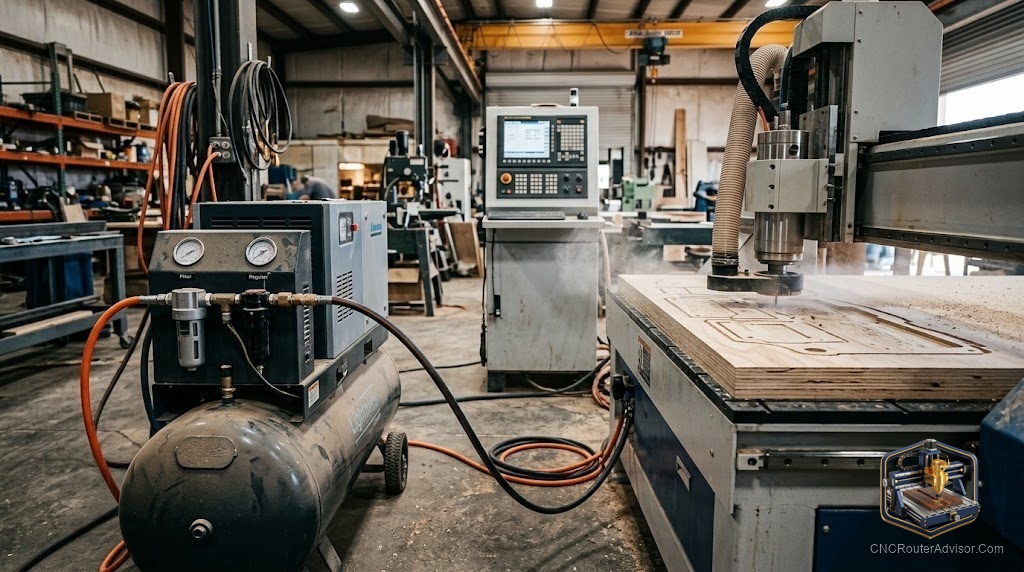
Most people buy their first air compressor for a CNC router by accident. They’re mid-cut in aluminum, the chips start welding themselves to the bit, and someone online says “just blow air on it.” Suddenly a tool they thought was for inflating tires becomes one of the most useful things in the shop. Let’s unpack what an air compressor actually does for a CNC router, and how to set one up without overbuying.
What the air is actually for
On a CNC router, compressed air does three jobs, and you may care about one, two, or all three:
- Chip clearing (air blast). A steady stream of air keeps cut chips out of the slot. This matters most in aluminum and plastics, where recut chips ruin finish and break bits. Good chip evacuation is often the single biggest quality upgrade for metal work.
- Cooling. Air carries heat away from the cutter. A plain blast helps; a cold air gun helps dramatically.
- Coolant delivery. A mist coolant or MQL system uses air to atomize a tiny amount of lubricant onto the bit - the classic way to cut aluminum without flooding your machine.
These support the same goals you’re chasing everywhere else on the machine: clean chip evacuation, controlled heat, less chatter, and fewer moments of tool breakage.
Sizing the compressor: quiet beats big
Here’s the thing hobbyists get wrong - you don’t need a huge compressor, you need a tolerable one. CNC air use is intermittent and low-volume, so tank size matters less than noise. A screaming compressor kicking on next to your ears for a two-hour job is misery.
- For a small desktop setup, a genuinely quiet 1-gallon unit like the California Air Tools CAT-1P1060S runs around conversation-level volume and is plenty for air-assist chip clearing.
- If you want longer sustained air with fewer motor cycles, the California Air Tools 8010A 8-gallon oil-free stays quiet while giving you more capacity.
- On a tighter budget, the classic BOSTITCH 6-gallon pancake compressor is louder but a proven workshop staple that does everything a hobby CNC needs.
Cooling upgrades: the cold air gun
If you cut a lot of aluminum, a cold air gun (vortex tube cooler) is a revelation. It takes your compressed air and splits it into a genuinely cold stream you aim at the cutter - no liquid, no mess. The industry standard is the EXAIR vortex tube cooling kit, which is superbly built though not cheap. A budget alternative like the Vortex cold air gun spot cooler gets you most of the benefit for far less. Pair either with a cold air gun habit and you’ll see cleaner edges and longer tool life.
Mist coolant for aluminum
When air alone isn’t enough, a mist coolant system adds a whisper of lubricant. These sip fluid - a fraction of what flood cooling uses - while cutting heat and built-up edge. An affordable kit like the OriGlam mist coolant spray system mounts on a magnetic base with an adjustable nozzle, and an alternative CNC mist coolant sprayer offers similar performance. Both are the hobbyist’s answer to the pricey branded fog systems that only sell factory-direct.
The simple accessory that ties it together
Don’t forget a good nozzle. An adjustable air blow gun with extensions lets you reach into pockets and around clamps to clear chips between passes - cheap, and you’ll use it constantly.
Setup notes that save headaches
- Put a moisture trap/water separator inline. Compressed air carries water, and water plus mist plus aluminum equals a mess.
- Regulate the pressure down - you need a steady breeze at the bit, not a hurricane that flings chips across the room.
- Route the air line so it moves with the gantry and never snags mid-job.
- If noise is a concern, park the compressor outside the immediate work area with a longer hose.
The bottom line
An air compressor turns a frustrating aluminum job into a clean one. Prioritize quiet over huge, add a cold air gun if you cut metal often, step up to mist coolant for the toughest jobs, and always trap the moisture. It’s a small investment that quietly upgrades everything else your CNC router does.
Frequently asked questions
How big a compressor do I need? Smaller than you think. CNC air use is intermittent - prioritize a quiet unit over a huge tank.
Air blast or mist coolant? Start with air blast for chip clearing. Add mist coolant when you’re cutting aluminum hard enough that heat and built-up edge become the problem.
Do I need a cold air gun? Only if you cut metal regularly. For wood and most plastics, a plain air blast is plenty.