
Affordable CNC Router Table: Budget Options and Trade-Offs
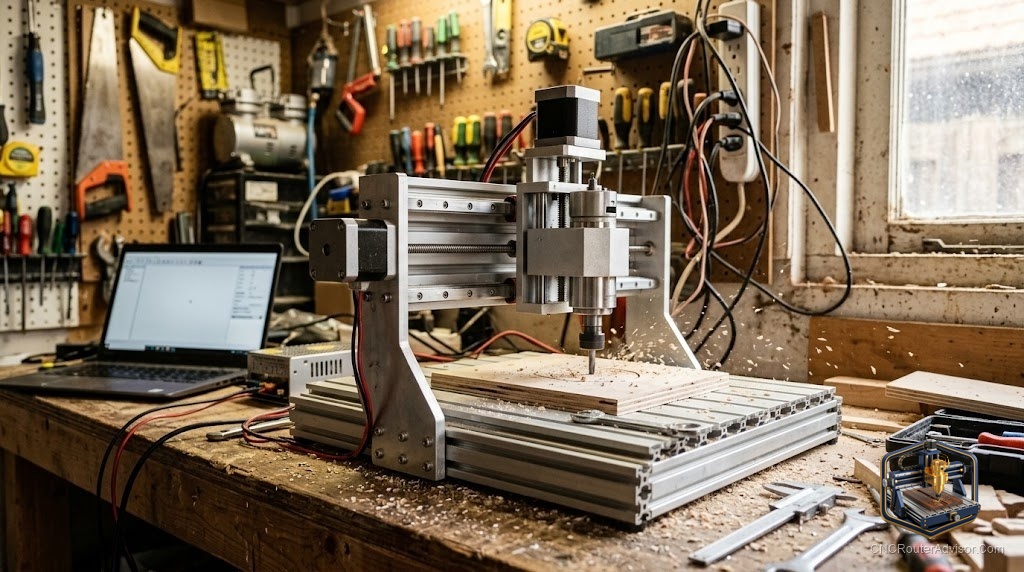
Ask ten CNC owners what made the biggest difference in their results, and a surprising number won’t say the machine at all. They’ll say the table - the bed, the hold-down, the dust story. An affordable CNC router table isn’t about buying the cheapest slab you can find. It’s about spending a modest budget in the right order so that every cut lands flat, secure, and clean.
What “router table” actually means here
There are two things people mean by a CNC router table, and it’s worth separating them. One is the whole machine plus its bed - a portable cnc router or benchtop unit with an integrated work surface. The other is the work-holding ecosystem you build on top of that bed: the wasteboard (also called a spoilboard), the clamps and clamping kit, and the material hold-down strategy that keeps stock from shifting mid-cut. This guide is about spending wisely across both.
Start with the surface: the spoilboard
Before anything else, get comfortable sacrificing material to save material. A wasteboard - a flat sheet of MDF you screw or clamp over the bed - is the cheapest upgrade in CNC and one of the most important. You surface it flat with a facing bit so it’s dead parallel to the spindle, and from then on your cuts share that flatness. When it gets chewed up, you reface or replace it. This is the definition of affordable: a few dollars of MDF protecting everything above it.
Then solve hold-down
A workpiece that moves is a ruined workpiece and, sometimes, a broken bit. You don’t need an expensive vacuum table to hold work well. A basic clamping kit goes a long way, and you can layer options as you grow:
- T-slot clamps for machines with a slotted bed give fast, strong edge clamping. A set like the Genmitsu T-track hold-down clamp kit is an inexpensive way to get repeatable workholding immediately.
- Cam clamps and toggle-style clamps speed up repeat jobs. A pack of POWERTEC cam clamps is handy for irregular parts and quick setups.
- For small or thin stock, painter’s tape plus CA glue is nearly free and holds shockingly well.
Don’t skip dust and safety
An affordable table setup still has to be a livable one. Chip evacuation and dust extraction keep your cuts clean and your lungs safe, and they don’t have to be expensive. A dust shoe that rides around the bit captures debris at the source - the Genmitsu dust shoe pairs with an ordinary shop vacuum to handle most benchtop work. If you scale up to a real dust collector, a cyclone separator like the Oneida Dust Deputy keeps fine dust out of your vacuum and stretches its life.
And please build the basics of safety precautions into the budget: safety glasses, ear protection, and - especially with MDF and hardwoods - respiratory protection. These are the least glamorous line items and the ones you’ll be gladdest you bought.
Add accuracy tools last
Once the surface, hold-down, and dust are handled, a touch probe or Z-probe makes setup faster and repeatable, especially for tool changes. The Genmitsu 3-axis touch probe removes a lot of the guesswork from zeroing without adding much cost.
The affordable-table spending order
- Flat spoilboard (cheap, essential)
- Clamps / clamping kit for reliable hold-down
- Dust shoe + shop vacuum for chip evacuation
- Safety glasses, ear protection, respiratory protection
- Touch probe for repeatable zeroing
Spend in that order and even a tight budget produces clean, safe, repeatable work - which is the whole point.
Frequently asked questions
Do I need a vacuum table? Not to start. Vacuum tables shine for high-volume flat work; for most hobby and small-shop jobs, a good spoilboard plus clamps is more affordable and just as reliable.
Is MDF the best spoilboard material? It’s the most affordable and surfaces beautifully. Some shops prefer HDPE or a vacuum jig, but MDF is the default for a reason.
How much should I budget for dust control? Less than you’d think. A dust shoe plus a decent shop vacuum covers most benchtop work; add a cyclone separator when you’re ready.