
6012 CNC Router Explained: Uses, Setup, and Key Considerations
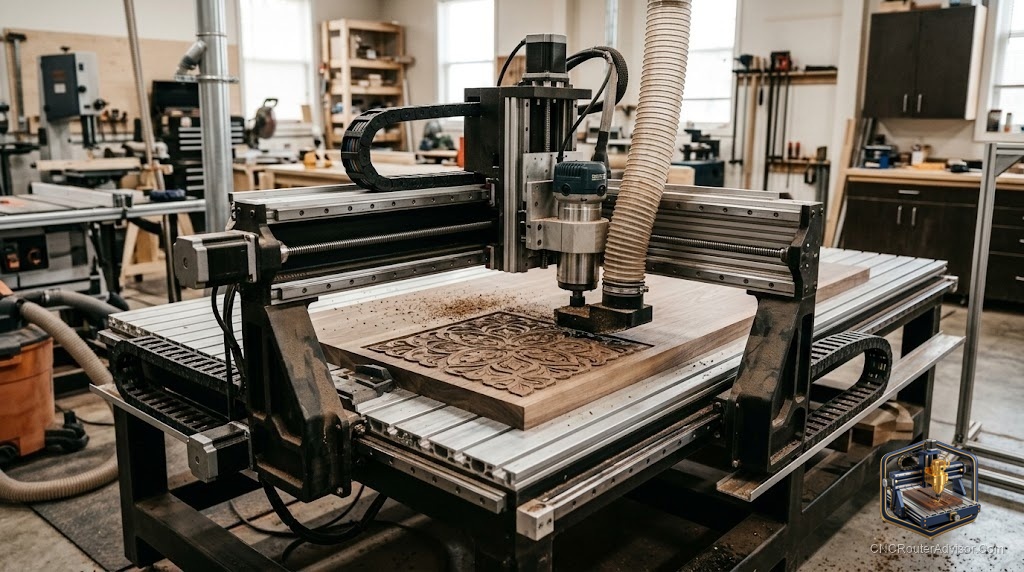
You clear out half your garage, wrestle a full sheet of plywood onto sawhorses, and realize the small desktop machine you started with can only reach a corner of it. That gap between what you want to cut and what your table can hold is the exact reason people start looking at a 6012 CNC router. It sits between the hobby toys and the room-filling industrial iron, and for a lot of shops that middle ground is the sweet spot.
A 6012 CNC router is a machine with a roughly 600mm by 1200mm cutting area, about 24 by 48 inches. The number is a shorthand for the work envelope, not a brand. You will see it stamped on units from importers and factories like STYLECNC, OMNI, FORSUN, and AccTek, usually sold as a mid-size CNC router machine for wood, MDF, acrylic, and soft metals.
Here is the short answer if you are deciding right now: a 6012 CNC router makes sense when a desktop CNC router feels cramped but a 4x8 machine is too much floor space, money, and power draw for what you cut. You get real panel capacity, a rigid frame, and industrial-style motion parts, at the cost of weight, a bigger footprint, and a setup that expects some patience.
Most of these machines are not sold on Amazon. They ship from factory dealers, freight forwarders, or industrial suppliers, often built to order. Keep that in mind before you go hunting for a one-click purchase.
What the “6012” number actually tells you
The two-digit pairs describe the bed. The 60 is 600mm of travel on one axis, the 12 is 1200mm on the other. That translates to about 2 feet by 4 feet of usable cutting area, with Z-axis travel (the up and down clearance for your cutter and material) usually landing around 200mm, sometimes more on taller gantry versions.
Compare that to the popular smaller sizes. A 6090 gives you 600mm by 900mm. A 6012 keeps the same width but stretches the long axis, so you can run longer signs, cabinet parts, and slats without repositioning the stock. That extra length is the whole point of the class.
One thing the number does not tell you is quality. Two machines can both say 6012 and be built completely differently inside. The frame, the motion system, and the spindle are where the real differences hide, so treat the size code as a starting filter, not a spec sheet.
Typical uses for a 6012 CNC router
This size lands squarely in small-business and serious-hobby territory. People use it for sign making, cabinet and furniture components, cutting boards, acrylic displays, guitar bodies, and batch parts where a single sheet gets carved into many pieces.
It handles wood and MDF easily, cuts acrylic and most plastics cleanly with the right feeds, and can machine soft metals like aluminum and brass if the frame is rigid enough and you slow down. It is not a metal mill. Steel and hard alloys are out of scope for this class.
The long bed also suits anyone doing 3D relief carving, since you can lay out several panels or one large piece and let the machine run.
Frame and rigidity: the part that decides everything
Rigidity is the quiet factor that separates a machine you love from one you fight. When the frame flexes, your cuts wander, edges chatter, and bits break. A stiff frame lets you push faster and deeper with cleaner results.
Most quality 6012 units use a welded steel frame for the base. Steel is roughly three times stiffer than aluminum per unit volume, and a welded joint has no micro-play the way a bolted one does. That combination is why factory spec sheets from builders like FORSUN and AccTek highlight all-welded steel bases.
Lighter machines lean on aluminum extrusion for the frame or gantry. Extrusion is easier to assemble and lighter to move, but it dampens vibration poorly on heavy cuts. The takeaway: for a 6012 you are buying for panel work, favor a welded steel base.
Motion system: ball screw, lead screw, or rack and pinion
The motion system converts the motor spin into table and gantry movement. On this size machine you will run into three approaches.
Ball screws use recirculating steel balls between the screw and nut. That gives near-zero backlash and over 90% efficiency, with positioning accuracy often in the range of a few hundredths of a millimeter. They shine on precision work and on the Z-axis.
Lead screws use a threaded shaft and a sliding nut. Simpler and less expensive, but they carry more backlash and lose efficiency to friction.
Rack and pinion uses a gear riding along a toothed rack. It is the go-to for long axes on larger machines because it stays fast and strong over distance without the whip problem of long screws. On a 6012, you will sometimes see rack and pinion on the long axis paired with a ball screw on the Z.
| Motion system | Backlash | Best for | Weak spot |
|---|---|---|---|
| Ball screw | Very low | Precision, Z-axis, shorter travels | Whip on long axes |
| Lead screw | Moderate | Wood, entry budget builds | Friction, less accurate |
| Rack and pinion | Low with good gears | Long axes, speed over distance | Needs quality gears to stay tight |
A common smart config for a 6012: ball screws on the short axis and Z, rack and pinion on the long axis, all riding profile linear rails.
Spindle power and cooling
For wood, MDF, and plastics, a mid-range spindle around 2.2kW to 3.0kW is a practical sweet spot. Heavier production or soft metal work benefits from more power. Watch the difference between peak power and continuous (rated) power. Buy on the continuous number.
Water-cooled spindles run quieter and dissipate heat well during long sessions, which is why so many 6012 units use them. If a listing mentions a VFD and an ER20 or ER25 collet, that is a sign it is built around a proper spindle rather than a hobby router.
Controllers, software, and G-code
Smaller and DIY-leaning 6012 machines often run a GRBL controller, open-source firmware that pairs with free senders like Universal G-code Sender.
Factory-built 6012 units more often ship with a DSP handheld controller, Mach3, or an NC Studio system. These handle heavier files and offer features like tool-length setting and job resume after a power cut, which matter on long production runs.
Whatever the controller, they all speak G-code. You design in CAD, generate toolpaths in CAM software (Vectric, Fusion, Artcam, and others), and export G-code the controller can run.
Workholding, meaning how you clamp the stock so it does not shift, is its own skill. Many 6012 tables offer T-slot aluminum, a vacuum table, or both.
Setup, space, and power you should plan for
These machines are heavy and large. Factory shipping specs for the 6012 class run into hundreds of kilograms, and the crate arrives by freight, not a parcel van. Plan for a way to move it and a permanent spot to set it down.
Many 6012 spindles and VFDs expect 220V power, and some larger units want dedicated wiring. Confirm the electrical requirement before you buy. Budget floor space for the machine footprint plus room to load full-length stock on the long axis.
Dust collection is not optional at this size. Routing wood and MDF throws a lot of fine dust, so a collector and a dust shoe around the spindle keep your shop and your lungs clear.
Should you buy a 6012 CNC router?
The honest verdict: a 6012 CNC router is the right call when you have outgrown a desktop CNC router and regularly work with panels up to about 2 feet by 4 feet, but you do not need or cannot house a 4x8 industrial machine. It gives you real capacity and industrial-grade parts without taking over the whole room.
It is the wrong call if you only make small items, if you need to machine steel, or if you cannot supply the power and floor space.
Concrete takeaways before you commit:
- Prioritize a welded steel base and profile linear rails. Frame rigidity affects every cut you will ever make.
- Match the motion system to your work: ball screws for precision, rack and pinion for fast long-axis travel.
- Buy the spindle on continuous power, not peak, and prefer water cooling for long sessions.
- Confirm voltage, freight delivery, and floor space in writing before you pay, and budget for dust collection and workholding.
FAQ
What does 6012 mean on a CNC router? It describes the work area: about 600mm by 1200mm, or roughly 24 by 48 inches. The number refers to the cutting envelope, not a brand or model line.
Is a 6012 CNC router good for beginners? It can be, but it is a step up from a desktop CNC router in size, weight, and setup. A beginner who plans to grow into panel work can start here, but expect a steeper learning curve.
Can a 6012 CNC router cut metal? It can machine soft metals like aluminum and brass if the frame is rigid and you use conservative feeds and the right bits. It is not built for steel or hard alloys.
What spindle power do I need on a 6012? For wood, MDF, and plastics, a continuous rating around 2.2kW to 3.0kW covers most work. Always compare continuous power, since peak ratings overstate what a spindle can hold during real cutting.
Ball screw or rack and pinion for a 6012? Ball screws give the tightest accuracy and suit shorter travels and the Z-axis. Rack and pinion keeps speed and strength over the long axis. Many good 6012 machines combine both.
What software runs a 6012 CNC router? You design in CAD, create toolpaths in CAM software like Vectric or Fusion, and export G-code. The machine runs that G-code through a controller such as GRBL, a DSP handheld, Mach3, or NC Studio.
Are 6012 CNC routers sold on Amazon? Rarely. Most 6012 machines come from factory dealers and industrial suppliers and ship by freight, often built to order. You can find bits, collets, clamps, and other accessories through general retailers, but the machines themselves usually are not one-click purchases.
How much space and power does a 6012 need? Plan for the machine footprint plus room to load long stock, a freight-capable delivery path, and often 220V power. Add space for a dust collector, which you should treat as required, not optional.
References
- Autodesk Fusion 360 Blog, “G-Code for CNC Programming” (autodesk.com)
- HowToMechatronics, “G-code Explained | List of Most Important G-code Commands” (howtomechatronics.com)
- AccTek CNC, “What Are the Differences Between Different Drive Systems for CNC Routers?” (acctekcnc.com)
- AccTek CNC, “What Power CNC Router Spindle Should I Choose?” (acctekcnc.com)
- ShopSabre CNC, “Aluminum vs. Steel Gantry CNC Construction” (shopsabre.com)