
5x10 CNC Router Table: Configuration, Capacity, and Production Setup
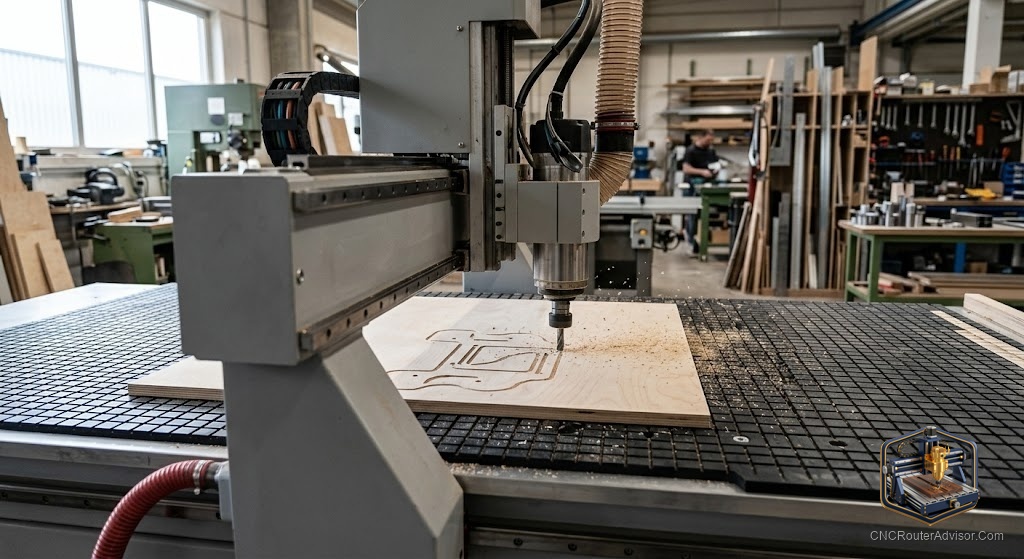
The difference between a 5x10 router table that runs reliably at production pace and one that produces inconsistent results often comes down to the same two variables: vacuum hold-down consistency across the full surface and spoilboard flatness. Both are maintenance issues, not design flaws. Both are solved with procedures, not purchases.
A 5x10 CNC router table in this context refers to the complete machine at the 5-foot by 10-foot format, including the work surface system. The term is sometimes used interchangeably with the machine itself.
The direct answer: a 5x10 CNC router table handles two standard 4x8 sheets simultaneously or single oversized sheets up to approximately 58x118 inches. It requires a 5 to 7.5HP vacuum pump, 10 to 12 zone-valved vacuum circuits, and a porous MDF spoilboard system faced flat on the machine.
Dual-Sheet Operation
The key operational advantage of the 5x10 table over a 4x8: two standard 4x8 sheets can be loaded side by side. The extra 24 inches of width (60 inches vs. the 48-inch standard sheet width) provides room for sheet separation and workholding between the two sheets.
With dual-sheet operation, one machining cycle produces two sheets’ worth of parts, doubling throughput over a 4x8 machine without doubling labor.
Maintenance Requirements
Spoilboard facing: A 60x120-inch surface requires the full gantry travel to resurface. Schedule quarterly or when Z height variation exceeds 0.5mm across the table.
Vacuum system: Check pump oil level (for oil-sealed pumps), clean intake filters, and verify hold-down pressure monthly under production load.
Zone valving: Test each zone valve operation quarterly. A stuck-closed zone valve produces a dead spot in the vacuum table.
Verdict
The 5x10 table enables dual-sheet throughput. Maintenance of the vacuum system and spoilboard is the key to consistent production quality across the full table area.
References
- Avid CNC: avidcnc.com
- Thermwood: thermwood.com