48x96 CNC Router: Full-Sheet Production and the Infrastructure It Requires
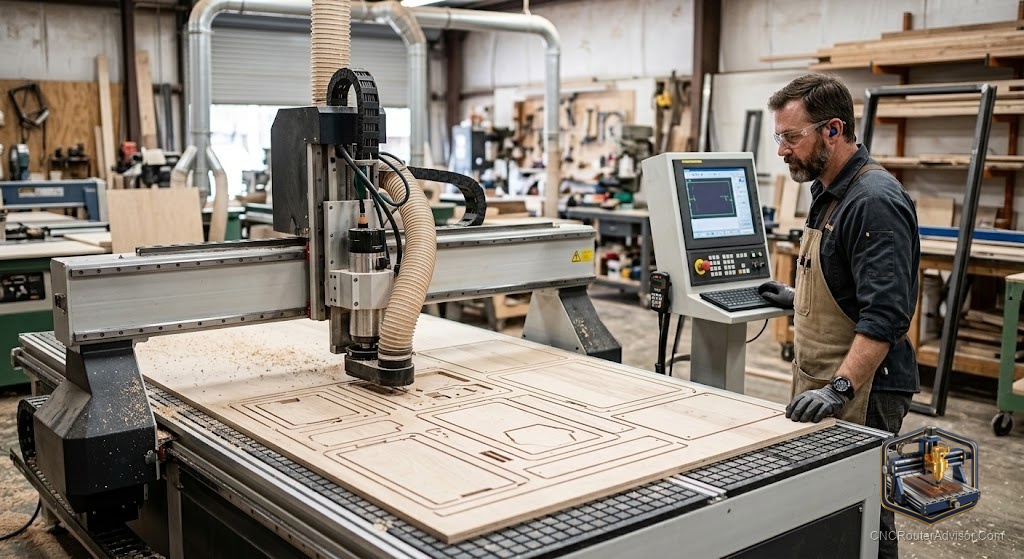
Running the first nested parts program on a 48x96 machine is a different feeling from anything a smaller machine produces. You load a 4x8 sheet, the machine runs for 40 minutes, and a complete cabinet box comes off the table in parts: two sides, a top, a bottom, a back panel, all labeled with engraved part numbers in the waste area. That’s the production case for this format. And it comes with proportional requirements.
A 48x96 CNC router (4 feet by 8 feet) is the production-standard format for cabinet shops, sign fabricators, and furniture manufacturers who process full sheets of plywood, MDF, melamine, HDU foam, and other 4x8-foot panel goods.
The direct answer: the Avid CNC PRO4896, ShopBot Desktop MAX, and Camaster Stinger are the main production-entry machines at this format. All require a vacuum table for workholding, a 2.2kW or larger VFD spindle, dedicated dust collection, and permanent floor-level installation.
The Complete System
A 48x96 CNC router is not a machine you install in a corner. The complete system includes:
Machine: Avid CNC PRO4896, ShopBot Desktop MAX, Camaster Stinger, or similar. Floor space: approximately 6x12 feet with sheet-loading clearance.
Vacuum workholding: 2 to 5HP vacuum pump, zone-valved table, porous MDF spoilboard faced flat on the machine.
Spindle: 2.2kW minimum. 3kW to 4kW for dense material production.
Dust collection: 4-inch minimum intake. 5 or 6-inch for production environments.
CAM software: VCarve Pro or Aspire for woodworking. Cabinet Vision or Microvellum for automated cabinet production.
Machine Comparison
Avid CNC PRO4896: Most configurable. Rack-and-pinion X/Y, ball screw Z, CNC12 controller, servo or stepper options. Strong support from Avid CNC.
ShopBot Desktop MAX: American-made, established reputation. Proprietary controller with dedicated ShopBot software.
Camaster Stinger: Designed specifically for cabinet and furniture production. Heavier construction than entry-level options.
Production Throughput
A properly set up 48x96 machine running 3/4-inch plywood at production feeds (8,000 to 12,000mm/min with a 3kW spindle and compression bit) produces a full cabinet box worth of parts from one sheet in 35 to 60 minutes depending on part complexity and nesting efficiency.
Verdict
The 48x96 format is a production business tool. The machine investment, supporting infrastructure, and space requirements are proportional to the production value it delivers. Evaluate the full system cost, not just the machine cost, before purchasing.
- 48x96 = full-sheet production for cabinet shops, sign fabricators, furniture manufacturers
- Full system cost includes vacuum, spindle, dust collection, and spoilboard system
- Avid CNC PRO4896, ShopBot, and Camaster are the main production-entry options
- 2.2kW minimum spindle; 3 to 4kW for production throughput
FAQ
What industries use 48x96 CNC routers? Cabinet manufacturing, sign fabrication, furniture production, architectural millwork, boat building, and RV interior manufacturing.
How much does a 48x96 CNC router cost to run? Evaluate bit consumption (compression bits at $30 to $80 each with finite service life), spoilboard facing (quarterly on production machines), vacuum pump power, and dust collection maintenance.
What is the minimum spindle power for a 48x96 production machine? 2.2kW for most woodworking. 3kW to 4kW for routing hardwood, composite panel, and HDU sign foam at production speeds.
References
- Avid CNC PRO4896: avidcnc.com
- ShopBot: shopbottools.com
- Camaster: camaster.com