
4-Axis Rotary CNC Router: The Right Uses, Wrong Expectations, and What to Buy
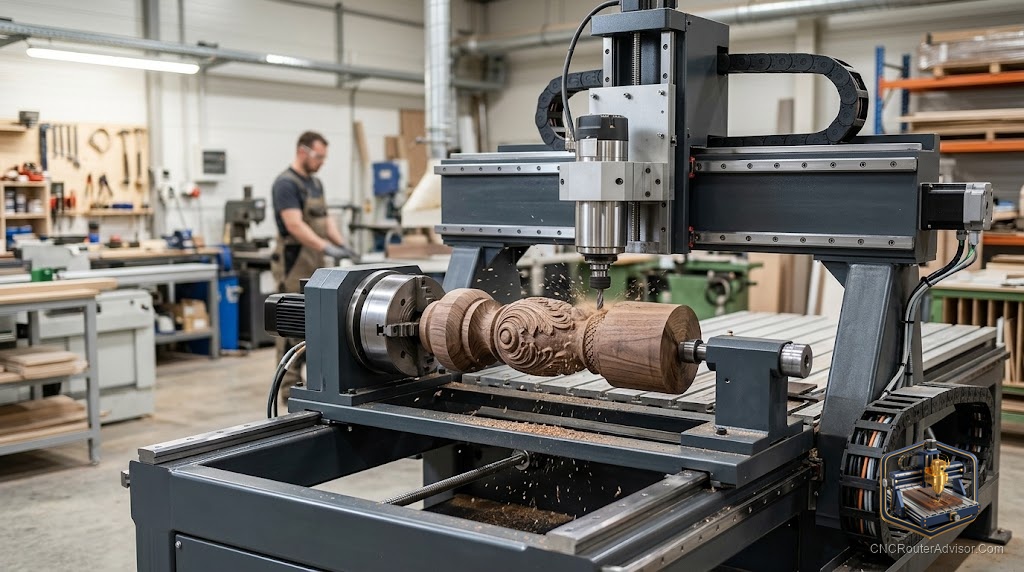
The marketing photos for 4-axis rotary CNC machines always show a perfectly fluted column or a seamlessly carved cylinder. What they don’t show is the two hours of CAM setup, the alignment of the chuck and tailstock, or the test cuts that run before you’re confident enough to load the mahogany you’ve been saving for the actual job. The capability is real. The ease is overstated.
A 4-axis rotary CNC router combines standard three-axis motion with a powered rotary axis that holds and rotates cylindrical workpieces during cutting. The rotary axis (A axis) is the defining feature: it allows the machine to carve continuously around the circumference of a cylindrical or round workpiece without manual repositioning.
The direct answer: for hobbyist and small-shop rotary CNC work, the Sienci LongMill MK2 with the Vortex rotary axis is the most accessible and documented option. For production-volume rotary work (furniture leg runs, award production), a dedicated 4-axis machine in a 6040 or 6090 format with servo motor A-axis drive is more appropriate.
Rotary vs. Indexing Operation
Rotary (simultaneous): The A axis rotates while X and Z move simultaneously. The tool traces a helical path around the workpiece surface. This produces seamless flutes, spirals, and wrapped designs. Requires CAM software that generates simultaneous 4-axis toolpaths.
Indexing: The A axis rotates to a fixed angle, locks, and the machine performs a standard 3-axis cut on the exposed face. Then rotates to the next angle. This is simpler but produces flat facets at transition points on organic forms.
Wood Species for Rotary CNC
Basswood: Soft, consistent, cuts cleanly in all directions around the circumference. Best for detail rotary work.
Maple: Harder, produces crisp chip-free edges on flute profiles. Excellent for decorative columns.
Cherry: Beautiful natural color, moderate hardness. Good for visible furniture legs.
Avoid: Open-grain species (red oak, ash) for very fine rotary detail; the open grain tears at fine feature edges.
Sienci Vortex Rotary
Designed specifically for the LongMill MK2. NEMA 23 motor-driven chuck, tailstock for workpiece support, full gSender integration. The most accessible 4-axis rotary solution for hobbyist woodworkers.
Concrete flaw: Limited to the LongMill’s 30x30-inch work area. The LongMill’s lead screw drive means the rotary results are adequate but not as precise as a machine with ball screws on all linear axes.
Verdict
For woodworkers who regularly produce table legs, decorative columns, or award cylinders, the 4-axis rotary capability is worth learning. The Sienci Vortex is the right entry point. For production volume, a dedicated 4-axis machine with servo A axis is more appropriate.
- Simultaneous 4-axis produces seamless cylindrical carvings; indexing produces facets
- Sienci Vortex + LongMill: the most documented hobbyist entry to rotary CNC
- Production volume: dedicated 4-axis machines with servo motor A axis
- Rotary CAM toolpaths require Aspire or Fusion 360
FAQ
What is a rotary axis on a CNC router? A powered A axis that holds and rotates cylindrical workpieces during cutting, enabling circumferential carving without manual repositioning.
Can I add a rotary axis to my existing CNC router? Yes, if your controller supports 4-axis output. The Sienci Vortex works specifically with the LongMill. Third-party rotary axes are available for Shapeoko and other machines.
What software generates rotary CNC toolpaths? Vectric Aspire and Fusion 360 both support rotary toolpath generation.
References
- Sienci Vortex: sienci.com/vortex
- Vectric Aspire rotary tutorials: vectric.com