
CNC Router Machine Guide: Types, Sizes, Features, and Buying Factors
Most people shop for a CNC router machine the way they shop for a TV: bigger number, better, add to cart. Then the box arrives, the gantry flexes on the first hardwood cut, and they learn the hard way that a spec sheet and a good machine are not the same thing. The number that sells a machine is rarely the number that decides whether you enjoy owning it.
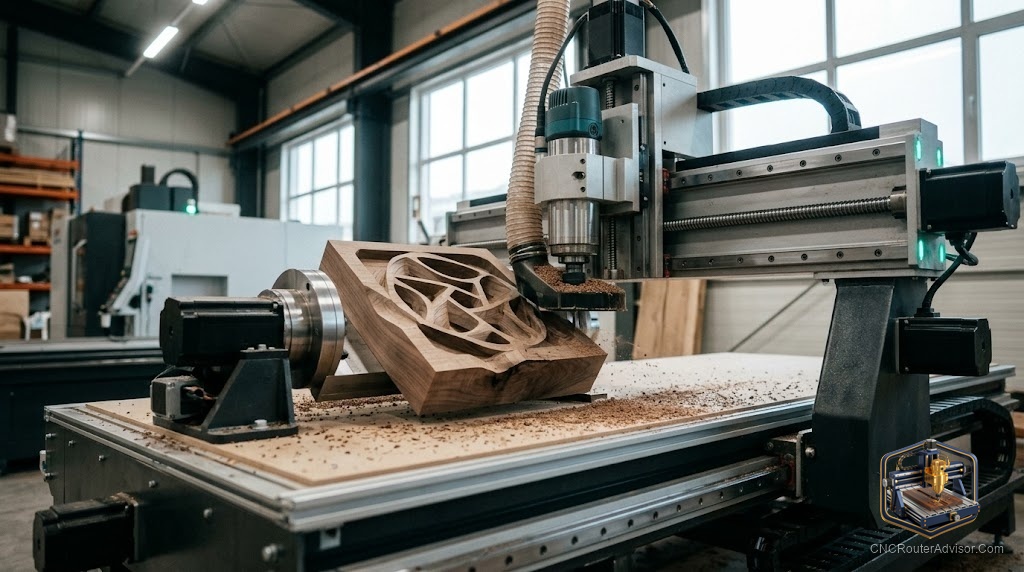
A CNC router machine is a computer-controlled gantry that drives a spinning cutter across three axes to shape wood, plastic, foam, and soft metals. The buying decision really comes down to four questions in order: what will you cut, how big are your parts, how accurate do they need to be, and how many will you make. Get those answers straight and the right machine practically points at itself.
The short version: for hobby wood and signs, a rigid desktop or benchtop machine wins. For a small business cutting sheet goods, a 4 by 4 or 4 by 8 foot gantry with a spindle earns back its footprint. Skip anything that brags about work area while staying quiet about frame material and drive system.
The main types of CNC router machines
Desktop and benchtop routers. These sit on a table and carve areas from roughly a paperback up to a couple of feet square. They are the on-ramp: affordable, easy to store, and honest teachers of the workflow. The SainSmart Genmitsu series is the classic starting point here, with the leap from the small 3018 class to the router-powered 4040-PRO MAX being the moment beginners stop feeling boxed in.
Prosumer full-frame routers. Machines like the Shapeoko and Onefinity lines bridge hobby and small business. They cut larger parts, take real workholding, and accept spindle upgrades. This is where most serious hobbyists land and stay for years.
Full-sheet industrial routers. A 4 by 8 foot bed, a heavy welded or extruded frame, a real spindle, and often a vacuum table and tool changer. Avid CNC, ShopSabre, and similar brands live here. If your parts come off standard sheet goods and you make money per part, this footprint stops being a luxury.
Moving-table versus moving-gantry. Most router machines move the gantry over a fixed bed, which saves floor space. Some smaller machines move the table under a fixed bridge, which can be more rigid but needs room on both sides for the table to travel. For sheet work, moving-gantry almost always wins on space.
Sizing the machine to your parts
Work area is the spec everyone fixates on, and it does matter, but it is a trap when you buy on it alone. A common regret, described again and again by shop owners, is buying a bed that cannot take a full sheet, then losing usable pieces every time they cut stock in half to fit. If your business runs on 4 by 8 sheets, a bed that swallows a whole sheet pays for itself in yield alone.
Go the other way if your parts are small. A giant bed you never fill is wasted money, wasted floor space, and a heavier machine to square and maintain. Size to the largest part you will realistically make often, plus a little clamping margin, not to the largest part you can imagine.
The features that actually matter
Frame and rigidity. Steel-welded and heavy aluminum-extrusion frames resist the flex that turns a clean line into chatter. This is the single feature most worth paying for, and the one marketing pages talk about least.
Drive system. Ball screws on hardened linear rails give the best precision and stiffness. Lead screws are a solid middle ground. Timing belts are quiet and cheap and fine for light wood, but they stretch under load. Match the drive to the material: belts for foam and soft wood, screws and rails for anything you want tight and repeatable.
Spindle versus router. A VFD spindle holds torque across its range, runs quieter, and lasts longer than a trim router. A router keeps the entry price down and is genuinely fine for occasional wood work. Choose by hours of use, not by ambition.
Controller and software support. A machine tied to obscure, locked software is a machine that will frustrate you at 11pm. GRBL-based controllers and machines with strong community support (documented setups, active forums, available parts) save you more grief than any single spec.
Z-axis clearance and travel. Thicker material, taller clamps, and 3D work all need Z height. It is easy to overlook until a clamp collides with the gantry mid-job.
A quick comparison of the three tiers
| Tier | Typical work area | Drive system | Best for | Main drawback |
|---|---|---|---|---|
| Desktop / benchtop | Small to ~2 ft square | Belts or lead screws | Learning, signs, small parts | Flexes under heavy cuts |
| Prosumer full-frame | ~2 to 4 ft | Lead or ball screws + rails | Serious hobby, side income | Needs dedicated space |
| Full-sheet industrial | 4x4 to 4x8 ft | Ball screws, rack-and-pinion | Production, sheet goods | Footprint, up-front outlay |
The pattern is consistent: as you climb tiers you trade money and floor space for rigidity, capacity, and quieter, longer-lived cutting. Buy the tier that matches your parts and your hours, not the one above it because the spec looked impressive.
Who should skip the big machine
If you carve signs and small gifts on weekends, a full-sheet router is a machine you will resent squaring and dusting. And if you have not yet run a CNC at all, resist starting at the top. A modest machine teaches feeds, speeds, and workholding on cheap stock, and those lessons transfer straight up when you scale.
The bottom line
Pick your machine in this order: material first, part size second, accuracy third, volume fourth. Then spend on frame rigidity and drive system before work area, match the cutting head to your real run time, and insist on good software and community support so you are never stranded. A right-sized, rigid machine you understand will out-produce a bigger, flimsier one every single day.
Frequently asked questions
What size CNC router do I need? Size to the largest part you will make often, plus clamping margin. If your work starts from full 4 by 8 sheets, a full-sheet bed prevents wasted material. If your parts are small, a smaller, more rigid machine is the smarter buy.
Are desktop CNC routers good enough for a business? For small parts, engraving, and low volumes, yes. For production runs off sheet goods, a desktop machine becomes a bottleneck, and a full-frame or full-sheet machine pays back quickly.
What is more important, work area or rigidity? Rigidity, almost always. A rigid smaller machine cuts cleaner and holds tolerance better than a large flexible one. Work area only matters up to the size of the parts you actually make.
Should I get a router or a spindle? A trim router keeps the entry outlay low and suits occasional wood work. A VFD spindle is quieter, holds torque, and lasts longer, which suits daily use and harder materials.
What is the difference between belts and ball screws? Belts are quiet, cheap, and forgiving but stretch under load. Ball screws are stiffer and more precise but cost more and add weight. Belts suit light wood and foam; ball screws suit tight, repeatable, heavier cutting.
Does the controller and software really matter? Yes. A machine on well-supported, open software with an active community is far easier to run and repair than one locked to obscure tools. This affects your daily experience more than most headline specs.
References
- Wood Magazine, “A Buyer’s Guide to Benchtop CNC Machines” (woodmagazine.com)
- Carbide 3D, “Shapeoko vs X-Carve: Side-by-Side Comparison” (carbide3d.com)
- The Maker’s Chest, “CNC Router Buying Guide: By Material, Size & Volume” (themakerschest.com)