
24×36 CNC Router Guide: The Furniture Makers Format and What It Handles
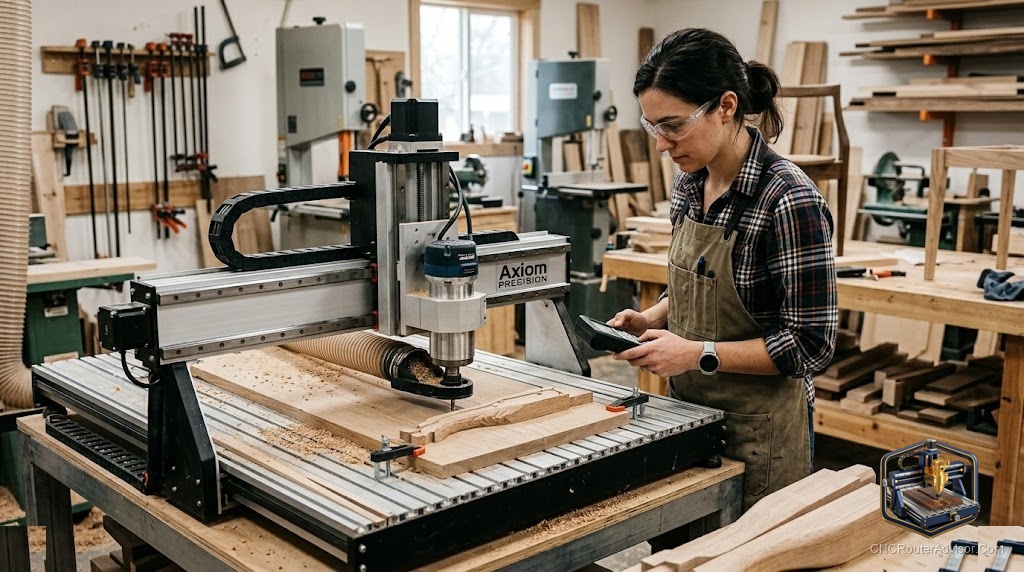
There is a logic to the 24×36 inch format that furniture makers understand immediately: 36 inches is three feet, which is approximately the length of a drawer, a cabinet side panel, a shelf, and dozens of other furniture components. Combined with a 24-inch width, this work area covers the overwhelming majority of furniture parts made in a typical residential furniture shop without requiring the floor footprint or cost of a full 4×8 machine. It is also a natural format for sign shops producing landscape-oriented signs in the 24×36 range, which is a common commercial size.
A 24×36 CNC router is a machine with approximately 24×36 inch (610mm×915mm) usable work area, suited for furniture component production, residential cabinet work, three-foot-class sign panels, and guitar and instrument production. The asymmetric format (wider in X, longer in Y, or vice versa depending on machine orientation) matches the dimensional reality of most furniture parts better than a square machine, because furniture components are more often rectangular than square.
The short guide: the 24×36 is the right format when your work is consistently longer than 24 inches in one dimension but consistently shorter than 48 inches. If your projects are mostly square, 24×24 serves you better. If they regularly exceed 36 inches, look at 24×48 or the full 4×8 format.
What 24×36 opens up that 24×24 cannot
Full cabinet sides and ends. A standard base cabinet side panel is typically 24 inches wide and 30 to 34.5 inches tall. A 24×36 machine handles the full panel in one setup; a 24×24 machine requires tiling.
Three-foot shelves and stretchers. Furniture shelves, table stretchers, and bench seats in the 30 to 36 inch length range are within the work area in a single setup.
Guitar bodies plus neck in one run. While a guitar body alone fits in a 24×24 machine, a 24×36 allows running the body and a rough-positioned neck template in the same spoilboard setup, simplifying multi-part instrument builds.
36-inch sign panels. A 24×36 sign face is a common commercial size for directional and informational signage. The machine processes it in one setup.
Drawer fronts and face frames at scale. Longer drawer fronts (30 to 36 inch wide panels for wide furniture pieces) fit without tiling.
Machine options at 24×36
The 24×36 format is less standardized as a named machine format than 24×24 or 4×8. The best options:
Avid CNC configurable: Rack-and-pinion drive, configurable to 24×36 inch work area dimensions, US-manufactured and serviced.
Carbide 3D Shapeoko 5 Pro in extended configuration: Some Shapeoko configurations reach into the 24×36 class. Verify the specific model’s Y travel.
Import-market 6015 class machines (600mm×1500mm): Somewhat larger than 24×36 but in the same size tier. Available through Chinese export channels.
For production tooling, the Amana Tool 46170-K compression spiral and Whiteside RD2100 downcut in 1/4 inch shank cover the core operations for furniture and sign work.
Our guide on how to choose a CNC router covers the full machine class selection framework.
The takeaway: the 24×36 CNC router fits the furniture maker’s component dimension reality better than the square 24×24 class, because most furniture parts are rectangular with a longer dimension in the 30 to 36 inch range. If that describes your work, this format saves the floor space and cost of stepping up to 24×48 or the full 4×8 machine.
Frequently asked questions
Is 24×36 a common CNC router format? Less common as a named format than 24×24 or 4×8, but several configurable machines (Avid CNC) reach this specification. Some import-market machines approximate it.
What is 24×36 in millimeters? Approximately 610mm×915mm.
Can a 24×36 machine cut cabinet sides? Yes. Standard base cabinet sides (24×30 to 24×34.5 inches) fit within a 24×36 work area.
What drive system is best for a 24×36 machine? Ball screw for precision joinery; rack-and-pinion for high-speed production. At 36-inch Y travel, belt drive shows more stretch than at 24-inch dimensions.
What is the step up from 24×36? 24×48 for half-sheet material processing, or 4×8 for full sheet production.
What spindle is appropriate for a 24×36 machine? 800W to 1.5kW purpose-built CNC spindle for regular production use.
References
- Avid CNC, configurable machine dimensions — https://www.avidcnc.com/
- CNC Router Info, machine format comparison — https://cncrouterinfo.com/guides/how-to-choose-a-cnc-router/
- Carbide 3D, Shapeoko extended configuration — https://shop.carbide3d.com/