
VEVOR CNC Router Machine 300W: Models, Specifications, and Honest Buying Considerations
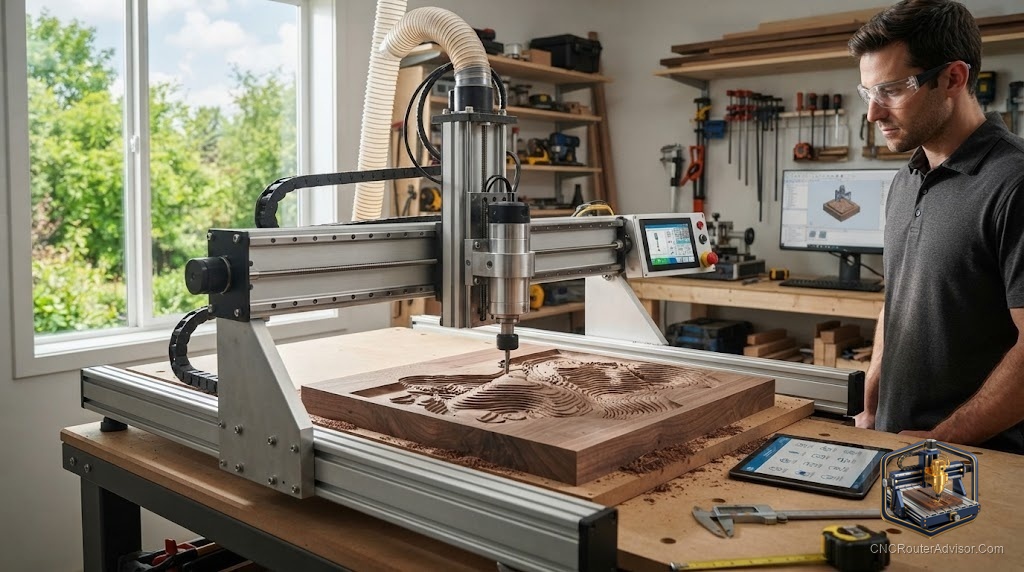
VEVOR is a brand that has expanded aggressively into the US market across a remarkably wide range of workshop tools, and their CNC router lineup has attracted real interest from entry-level buyers because the price point is hard to argue with and the machines show up on Amazon with Prime shipping. The 300W designation appears on several of their compact CNC machines, and sorting out what you actually get for that number, in terms of spindle power, frame construction, and real-world capability, is more useful than any headline specification.
The VEVOR CNC router machine 300W is a compact desktop CNC router sold under the VEVOR brand through Amazon and VEVOR’s own website, with a 300-watt spindle motor, aluminum extrusion frame, belt or lead-screw drive depending on the specific model, and a work area typically in the 300 by 180 mm to 400 by 300 mm range depending on configuration. It targets entry hobbyists who want a first CNC machine at the lowest possible entry cost and are willing to accept the trade-offs of a value-market machine.
The short assessment: the VEVOR 300W machines are genuine entry-level tools, not toys, but they are firmly entry-level. The 300W spindle is adequate for wood, soft plastic, and light engraving but not for sustained aggressive cutting in harder materials. The frame is light aluminum extrusion, which is acceptable for the intended materials at modest feed rates. The support model is VEVOR’s generic customer service rather than a CNC-specialist support team, which matters if you run into setup or calibration questions. Buy one knowing those trade-offs, and it is a reasonable first machine. Buy one expecting prosumer performance, and it will disappoint.
What 300W actually means in practice
Spindle power determines how hard the machine can cut without stalling or producing poor surface finish. Three hundred watts is on the lower end of what desktop CNC machines offer, below the 500W to 800W that more capable entry machines typically carry. In practice, 300W is sufficient for:
- Engraving and shallow carving in wood, MDF, and acrylic
- Profiling and cutting thin (under 10 mm) wood and plywood with conservative settings
- PCB routing and light metal engraving
- Foam and soft material cutting
It starts to struggle with:
- Cutting through thick (over 10 to 12 mm) hardwood in single or double passes
- Running large diameter bits at full depth in wood
- Any material that requires sustained high cutting force
For someone whose work is primarily engraving, sign carving, or thin sheet cutting, 300W is adequate. For someone who wants to cut cabinet parts or thick hardwood, looking at 500W and above is worth the additional investment.
Frame and motion system
VEVOR’s 300W machines use aluminum extrusion frame construction with either V-groove wheel bearings or linear rails depending on the specific model version. Aluminum extrusion is standard for the entry class and adequate for the materials and speeds the spindle supports. Do not expect the rigidity of a steel-frame machine at this tier, and do not push it with aggressive settings that would flex the frame.
The drive system varies: some VEVOR 300W versions use belt drive (fast but with slightly less accuracy) and some use lead screws (more accurate, lower speed). Check the specific listing you are considering, because both appear under similar VEVOR model names.
Controller and software compatibility
Most VEVOR CNC routers use a GRBL-based controller, which is the correct choice for an entry machine: GRBL is open-source, widely supported, and compatible with free sender software (Candle, UGS, LaserGRBL) and popular CAM programs (Easel, Carbide Create, Fusion 360). Verify the specific controller in the listing, but GRBL compatibility is the norm and gives you access to the large GRBL community for troubleshooting and tuning guidance.
The included software varies by listing and may be proprietary or third-party. Most buyers replace it quickly with Carbide Create or another free CAM tool, which is fine given GRBL compatibility.
Who should buy a VEVOR 300W machine
The VEVOR 300W CNC router fits the buyer who wants the lowest possible entry cost into desktop CNC, primarily to engrave, carve signs, and cut thin wood and plastic, and who is willing to learn on a basic machine before deciding whether to invest in something more capable.
For buyers who have decided CNC routing is a real hobby or small business tool for them and want a step up in capability and documentation, the Genmitsu 3018-PROVer V2 offers a better-documented GRBL machine with limit switches, Z-probe, and emergency stop built in, at a comparable price point with more established support resources.
Our guide on how to choose a CNC router maps entry machine specs to use cases more broadly.
The takeaway: the VEVOR 300W CNC router is a legitimate entry-level machine at a low entry cost. Know its limits (300W spindle, light frame, value-tier support), use it within those limits, and it delivers real engraving and light cutting capability. Exceed those limits and it tells you quickly.
Frequently asked questions
Is the VEVOR CNC router good for beginners? Yes, at the entry level. The low cost reduces the stakes of learning mistakes, and GRBL compatibility provides access to a large support community. The limited spindle power and light frame are the main constraints.
What materials can the VEVOR 300W CNC router cut? Wood, MDF, acrylic, soft plastics, foam, and PCB material well. Thick hardwood and aggressive cutting are at the edge of what 300W supports.
Does the VEVOR CNC router use GRBL? Most models do. Verify the specific listing, but GRBL compatibility is typical for VEVOR’s CNC lineup.
What is the work area of the VEVOR 300W CNC router? Varies by model, typically in the 300 by 180 mm to 400 by 300 mm range. Check the specific product listing for the model you are evaluating.
How does VEVOR compare to Genmitsu at the same price? Genmitsu (SainSmart) has more CNC-specific documentation, an established community, and machines that come with limit switches and Z-probes included. VEVOR competes on price; Genmitsu wins on documentation and support ecosystem.
Where is the VEVOR CNC router sold? Primarily through VEVOR’s Amazon storefront and their own website at vevor.com.
References
- VEVOR, CNC router product listings — https://www.vevor.com/
- Reddit r/hobbycnc, VEVOR CNC router owner discussions — https://www.reddit.com/r/hobbycnc/
- CNC Router Info, entry machine comparison — https://cncrouterinfo.com/guides/how-to-choose-a-cnc-router/