
US CNC Router Market Guide: Machine Classes, Buying Channels, and What to Expect
The US CNC router market is one of the most varied in the world, which is both its strength and its challenge for a buyer who is new to the space. You can spend two hundred dollars on a hobby kit or two hundred thousand on a production router, and both are sold as “CNC routers.” Between those extremes is every budget, machine class, and use case imaginable. Understanding how the market is structured is not a detail for industry analysts, it is practical knowledge that prevents you from wasting money on a machine that was never built for your work.
The US CNC router market spans four broad tiers: entry-level hobby machines (typically Chinese-manufactured desktop kits sold through Amazon and direct channels), prosumer and serious hobbyist machines (from established brands with real support, mostly desktop to small-format), mid-size commercial machines (for small to medium production shops), and industrial machines (for high-volume production facilities). Each tier has its own supply chain, support structure, and pricing logic, and the buyer who understands which tier they need makes far better decisions than the one comparing a hobby machine spec sheet to an industrial one.
The short version of navigating the market: define your use case before you define your budget. A production cabinet shop and a weekend woodworker are not competing in the same market, even if both call what they want a “CNC router.” Once you know whether you are buying a learning tool, a small-business machine, or a production system, the right tier is obvious and the right brands and channels follow.
How the US market is tiered
Entry / hobby tier. This is the fastest-growing segment in the US, driven by the maker movement and the rise of affordable Chinese manufacturing. Machines in this tier are mostly desktop-class, with work areas from 300 by 180 mm up to about 600 by 500 mm, belt or lead-screw drive, and trim-router spindles. They are sold primarily through Amazon and direct brand storefronts. Established names in this segment include Genmitsu (SainSmart), RATTMMOTOR, FoxAlien, and Two Trees, all of which sell through Amazon and offer English-language support. This segment has grown dramatically since 2018 and shows no sign of slowing.
Prosumer / serious hobbyist tier. Between entry kits and commercial machines is a growing prosumer tier: machines like the Carbide 3D Shapeoko and Nomad, the Onefinity, the Avid CNC kits, and the Laguna iQ. These are sold direct (not typically on Amazon), have real US-based support, and are designed for regular use by serious makers and small shops. Prices reflect real support structures and better hardware.
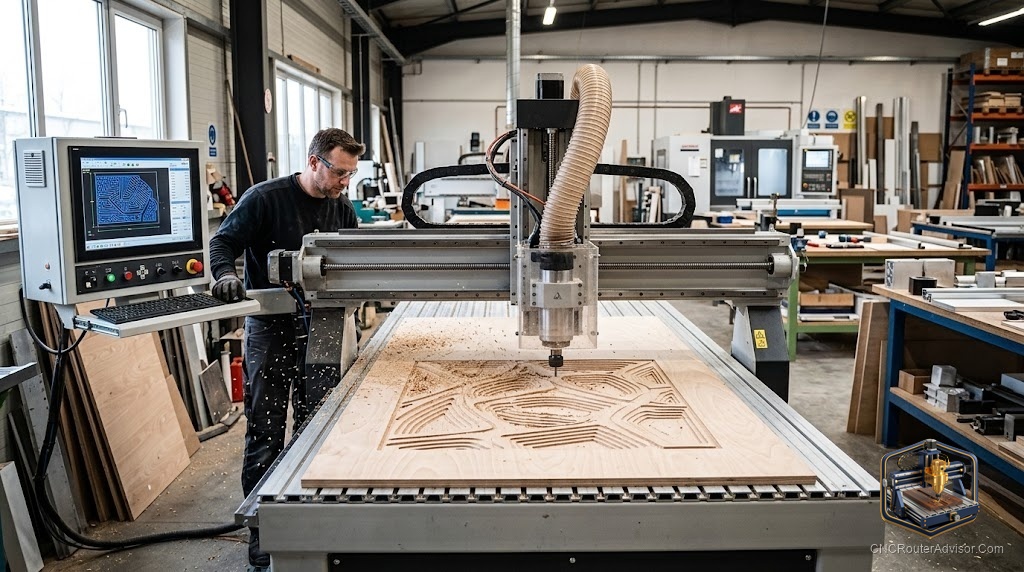
Small commercial tier. For shops that need production throughput but are not running industrial volumes, light-commercial machines from brands like Laguna, ShopSabre, and MultiCam’s lighter models serve small cabinetmakers, sign shops, and custom manufacturers. These are sold through dealers with installation and training.
Industrial tier. The heavy production end of the market: CNC machines from brands like C.R. Onsrud, Homag (distributed by Stiles Machinery), MultiCam, and Thermwood. These are full-service capital equipment purchases with installation, training, and maintenance contracts.
Where US buyers actually buy
Buying channel matters as much as brand in the US market. Here is the practical breakdown.
Amazon is the dominant channel for entry and hobby machines. The return policies, customer reviews, and fast delivery of Amazon make it the natural home for a category where buyers want to evaluate before committing fully. SainSmart, RATTMMOTOR, FoxAlien, and similar brands have established Amazon storefronts with real seller history.
Direct from brand is the norm for prosumer machines (Carbide 3D, Onefinity, Avid CNC). These brands invest in their own e-commerce and support infrastructure and do not need a marketplace middleman.
Dealer networks serve the commercial and industrial tiers. MultiCam and Laguna have dealer networks across the US. Industrial brands like Onsrud and Stiles/Homag sell through regional dealer relationships.
Used market (eBay, Craigslist, Machineseeker, and specialist used equipment dealers) is significant for commercial and industrial machines, where the capital cost is high enough that used machines represent real value. The inspection checklist for used machines is a distinct buying skill.
What makes the US market distinctive
Three factors shape the US CNC router market specifically. First, the maker and hobbyist movement has created the world’s most developed entry-tier ecosystem, with deep community resources, YouTube content, and forum support in English that other markets lack. Second, domestic brands in the prosumer tier (Carbide 3D, Onefinity) have built strong direct relationships with US buyers through community investment. Third, the used industrial market is large and accessible because the US has a deep installed base of commercial CNC equipment.
For buyers new to the space, our guide on how to choose a CNC router maps machine specs to use cases in a way that helps navigate the US market efficiently.
The takeaway: the US CNC router market has a machine for every use case and budget. The buyer who defines their use case first, identifies the right tier, and then evaluates specific machines within that tier will buy the right machine the first time. The buyer who just compares raw specs across tiers will not.
Frequently asked questions
Is the US CNC router market bigger than other markets? In the prosumer and hobbyist tiers, the US has the most developed ecosystem, with deep community content, established prosumer brands, and the widest Amazon selection of entry machines. The industrial tier is a global market.
Where do hobby CNC buyers in the US typically buy? Primarily Amazon and direct brand storefronts, where return policies and community reviews provide buying confidence.
Are there US-manufactured CNC routers? Yes. C.R. Onsrud and MultiCam are US manufacturers in the commercial and industrial tiers. Carbide 3D (prosumer) is US-based. Most entry-tier machines are manufactured in China.
What is the fastest-growing segment of the US market? The entry and hobby tier, driven by the maker movement and the increasing accessibility of desktop CNC machines.
How do I find a used commercial CNC router in the US? eBay, Craigslist, Machineseeker.com, and specialist used equipment dealers. The commercial and industrial used market is significant due to the US’s large installed base of production CNC equipment.
Do I need a dealer for a prosumer CNC router in the US? No. Most prosumer brands (Carbide 3D, Onefinity, Avid CNC) sell direct without a dealer intermediary, which keeps prices lower and support more direct.
References
- CNC Router Info, US CNC router buying guide — https://cncrouterinfo.com/guides/how-to-choose-a-cnc-router/
- All3DP, “Best CNC Routers for the US Market” — https://all3dp.com/2/best-cnc-routers/
- CNC Dad, “CNC Router Market Overview” — https://www.cnc-dad.com/blog/best-cnc-router-for-beginners/