
Laguna iQ CNC Router: Specs, Strengths, and Who Its Really For
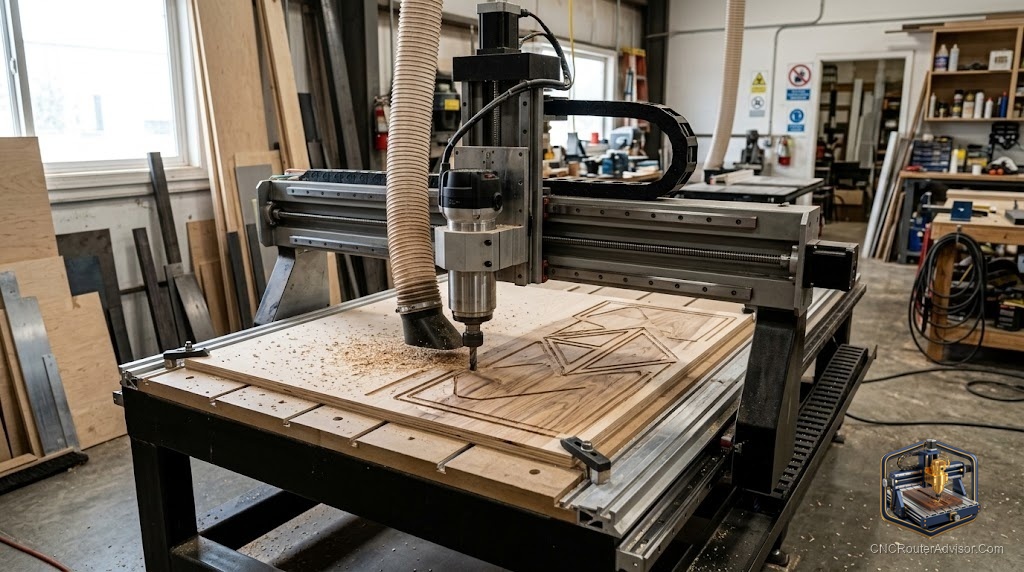
Most desktop CNC routers ask you to choose between “small and cheap” and “rigid and serious,” and the Laguna iQ was built to blur that line. It comes from Laguna Tools, a name shop owners already trust for bandsaws and dust collectors, and it aims squarely at the person who wants a benchtop machine that feels like real equipment rather than a toy. Whether that premium is worth it depends entirely on what you cut and how much you value a brand that will pick up the phone.
The Laguna iQ is a compact benchtop CNC router with roughly a 24 by 36 inch work envelope (about 610 by 914 mm in X and Y) and around 5 inches of Z clearance, built on a steel-reinforced frame and aimed at hobbyists and small shops who want name-brand build quality and support in a machine that fits on a bench. It sits above bargain desktop kits and below full-size production routers, both in capability and in price.
The short verdict: the iQ’s strengths are its rigidity for a benchtop machine, its generous work area for the footprint, and the backing of an established company with real support. Its weaknesses are a higher price than bare-bones kits and a work area that still cannot touch full sheet goods. It is a strong pick for a serious hobbyist or small shop that values reliability over saving every dollar, and the wrong pick for someone who just wants the cheapest way to try CNC.
What the iQ is built to do
The iQ’s pitch is “real machine, small footprint.” The roughly 24 by 36 inch work area is unusually generous for a benchtop router, enough for sizable signs, cabinet doors, layered art, and batches of smaller parts, while still fitting on a sturdy bench rather than demanding its own floor space. Around 5 inches of Z clearance means it can handle thicker stock and taller workholding than many desktop machines, which quietly expands what you can make.
Underneath, Laguna leans on a reinforced frame for rigidity, and that is the spec that separates the iQ from lighter kits. More rigidity means less flex under cutting force, which means cleaner edges and better repeatability. On a benchtop machine, that stiffness is the difference between a tool you trust for real work and one you baby through every cut.
The Laguna advantage: support and ecosystem
Here is where the iQ earns its premium, and it is the thing spec sheets undersell. Laguna Tools is an established company with a dealer and support presence, so when something goes wrong, there is an actual company behind the machine. For a first serious CNC purchase, that support layer has real value, because the hardest part of CNC is not the cutting, it is the troubleshooting, and a responsive manufacturer shortens that learning curve.
That said, be honest about what you are paying for. A big part of the iQ’s price over a generic import is the brand, the support, and the build consistency, not exotic hardware. If you are the kind of maker who enjoys troubleshooting a cheaper machine yourself and does not mind sourcing parts from forums, you may not value that premium, and that is a legitimate reason to look elsewhere.
The honest limits
Two drawbacks matter. First, price: the iQ costs meaningfully more than bare desktop kits offering similar nominal work areas, so if budget is the deciding factor, it will lose that comparison on paper. Second, size: even at 24 by 36 inches, it cannot process a full 4 by 8 foot sheet, so cabinet shops planning to break down full plywood will still need a bigger machine. The iQ is a benchtop router that punches up, not a production machine that shrank down, and buying it for full-sheet work would be a mismatch.
So the person who should skip the iQ is the pure bargain hunter or the shop that truly needs full-sheet capacity. The person who should buy it is the serious hobbyist or small maker who wants benchtop convenience, real rigidity, and a company standing behind the machine.
How it compares
Against bargain desktop kits, the iQ wins on rigidity, work area, and support, and loses on price. Against full-size production routers, it wins on footprint and cost and loses on sheet capacity and all-day throughput. Its sweet spot is the serious home shop or small business that has outgrown a tiny 3018-class machine but does not need, or cannot house, a full sheet router.
If you are weighing the iQ against machines a size up or down, our guide on how to choose a CNC router helps match work area and rigidity to the projects you actually plan to cut.
The takeaway: the Laguna iQ is what you buy when you want a benchtop CNC router to feel like proper shop equipment and you want a real company behind it. Pay the premium happily if reliability and support matter to you, and look at cheaper kits or bigger machines if your priorities are budget or full-sheet capacity. Match the machine to your work, and the iQ makes a lot of sense for the crowd it was built for.
Frequently asked questions
What is the work area of the Laguna iQ? Roughly 24 by 36 inches (about 610 by 914 mm) in X and Y, with around 5 inches of Z clearance, which is generous for a benchtop machine.
Is the Laguna iQ good for beginners? Yes, especially for beginners who value real support. Laguna is an established company, and its backing shortens the troubleshooting learning curve that trips up new CNC owners.
Can the Laguna iQ cut full sheets of plywood? No. Even at 24 by 36 inches it cannot process a full 4 by 8 foot sheet, so full-sheet cabinet work needs a larger machine.
Why does the iQ cost more than desktop kits? Much of the premium is Laguna’s build consistency, brand, and support rather than exotic hardware. You pay for reliability and a company standing behind the machine.
What materials can the Laguna iQ cut? Wood, plywood, MDF, acrylic and other plastics, and soft metals like aluminum with appropriate bits and conservative passes.
How rigid is the iQ compared to cheap machines? More rigid, thanks to a reinforced frame. That stiffness reduces flex under cutting force, giving cleaner edges and better repeatability than lighter kits.
References
- Laguna Tools, “CNC iQ” product page and specifications - https://lagunatools.com/cnc/iq-series/
- CNC Machines, Laguna iQ listings and specs - https://www.cncmachines.com/manufacturers/laguna
- Laguna Tools, iQ user manual and setup documentation - https://lagunatools.com/support/manuals/