IEHK CNC Router 3 x 2 Guide: Work Area, Machine Size, and Buying Factors
A 3 by 2 foot CNC router is the size most small shops actually need and rarely admit, big enough for real signs and cabinet parts, small enough to fit against a garage wall. IEHK sells one at a price that makes people look twice, and that low number is exactly why you should slow down and read the fine print before you buy. The machine has genuine strengths. It also has a support reputation you need to understand going in, because on an industrial-style router, service matters as much as steel.
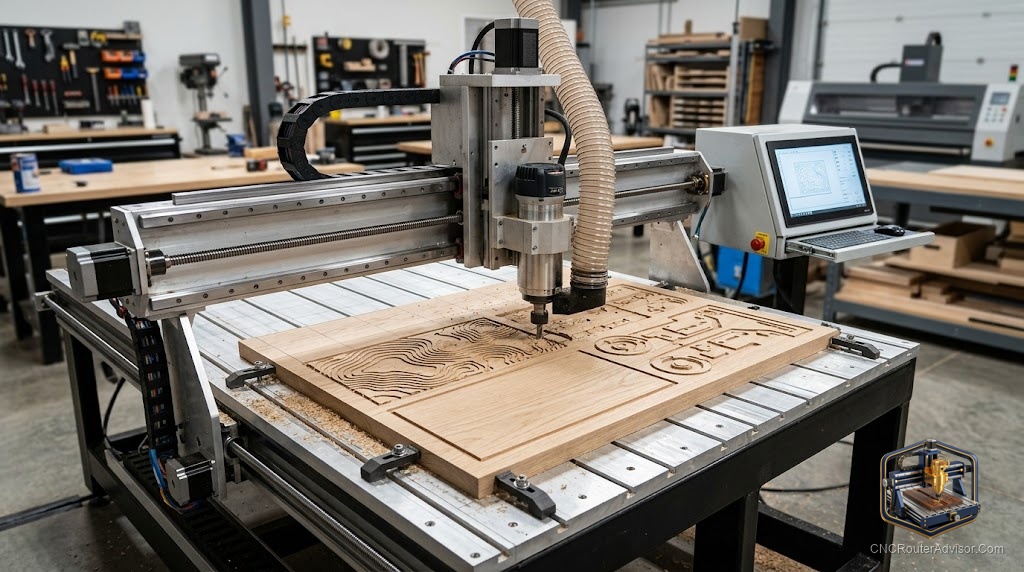
The IEHK 3’ x 2’ CNC router, sold as the IEC 6090, is a compact industrial-style machine with roughly a 600 by 900 mm work area, a welded steel frame, precision ball screws on the axes, and a water-cooled spindle in the low kilowatt range. It is aimed at woodworking, sign making, engraving, and light plastic or soft-metal work in a footprint that fits a single-car garage.
The short buying answer: the 6090 gives you ball screws, a T-slot aluminum table, and a real spindle at a price well under most name-brand desktop machines, which is the whole appeal. The catch is that IEHK is a direct importer, so you are trading brand-name support and hand-holding for value, and buyer reports on service are mixed. Judge it as a value machine you may need to tinker with, not a turnkey one.
What the 3’ x 2’ work area actually gets you
Work area is the number that decides which projects are possible, so start there. Roughly 600 by 900 mm (about 24 by 35 inches) handles most signs, address plaques, layered art, small cabinet doors, and engraving jobs without splitting the work into pieces. What it will not do is process a full 4 by 8 foot sheet, so if your plan involves cutting cabinet carcasses from full plywood, this is the wrong size and you should look at a 4 by 8 machine instead.
The Z-axis clearance matters just as much and gets ignored. Check how thick a workpiece you can fit and still have the bit reach it, because a generous X and Y means little if the gantry is too low for the material you cut.
The parts that make it cut well
Three features on the 6090 punch above its price. The ball screws on the axes give tighter accuracy and less backlash than the belt drives found on many cheaper desktop machines, which shows up as cleaner edges and better repeatability. The welded steel frame adds rigidity that a light aluminum-extrusion machine cannot match, so it holds its line under load. And the water-cooled spindle runs quieter and cooler than a trim router, with speed set electronically, which is a real upgrade for long jobs and detailed engraving.
Manufacturer figures put travel and feed speeds in a range that keeps non-cutting time low, which is a nice touch on a machine this size. Treat published accuracy numbers as best-case and verify with a test cut when yours arrives.
The honest drawback: support and quality control
Here is the part a glossy spec sheet will not tell you. Buyer feedback on IEHK is genuinely mixed, and the concerns cluster around service and quality control rather than the core design. One shop that bought multiple IEHK machines reported that every unit arrived with issues, including a heavy vacuum unit shipped resting on top of the machine, the kind of packing and QC problem that turns a bargain into a headache. That single account is not the whole picture, but it lines up with the general trade-off of buying direct: the price is low because the support layer is thin.
So the person who should skip the IEHK 6090 is the one who wants a machine that works perfectly out of the crate with a phone number to call when it does not. If that is you, a name-brand machine with a support team is worth the premium. The person who should consider it is the hands-on buyer who is comfortable inspecting, adjusting, and occasionally troubleshooting a machine, and who wants ball screws and a steel frame for less money than the alternatives.
How it compares to the usual desktop options
Against a belt-driven hobby desktop router, the IEHK 6090 wins on rigidity and accuracy because of the steel frame and ball screws, and it wins on cutting comfort because of the water-cooled spindle. Against a name-brand machine in the same size, it loses on support, documentation, and out-of-box polish, and it asks more of you as an owner. It sits in a specific niche: more machine than a hobby desktop, less baby-sitting service than a premium brand.
If you are weighing this size class against others, our guide on how to choose a CNC router helps match work area and rigidity to your projects before you spend.
The verdict is simple. The IEHK 3’ x 2’ is a lot of hardware for the money, and if you buy it with eyes open, prepared to inspect it carefully and adjust as needed, it can be a strong value. Buy it expecting a turnkey premium experience and you will be disappointed. Match your expectations to what a direct-import value machine actually is, and it earns its place.
Frequently asked questions
What is the work area of the IEHK 3’ x 2’ CNC router? Roughly 600 by 900 mm, about 24 by 35 inches, which suits signs, engraving, small cabinet doors, and layered art but not full 4 by 8 foot sheets.
What spindle does the IEHK 6090 use? A water-cooled spindle in the low kilowatt range, which runs quieter and cooler than a trim router and sets speed electronically.
Is the IEHK CNC router good for beginners? It can be, but it rewards a hands-on owner. Beginners who want turnkey support may prefer a name-brand machine with a strong service team.
Does it have ball screws? Yes. The axes use precision ball screws, which give tighter accuracy and less backlash than belt-driven hobby machines.
What materials can it cut? Wood, plywood, MDF, acrylic and other plastics, and soft metals with the right bit and conservative passes.
Is IEHK support reliable? Buyer feedback is mixed, with the common concern being quality control and service rather than the machine’s design. Inspect your unit carefully on arrival.
References
- IEHK, “IEC 6090 3’x2’ CNC Router” product page - https://iehk.com/product/iec-6090-cnc-router/
- IEHK, “CNC Router for Sale” range overview - https://iehk.com/our-products/cnc-routers/
- Reddit r/CNC, buyer discussion of IEHK/IEP machines - https://www.reddit.com/r/CNC/comments/k80mhr/anyone_have_any_realworld_experience_with_the_iep/