
Haas Router CNC Explained: Uses, Setup, and Key Considerations
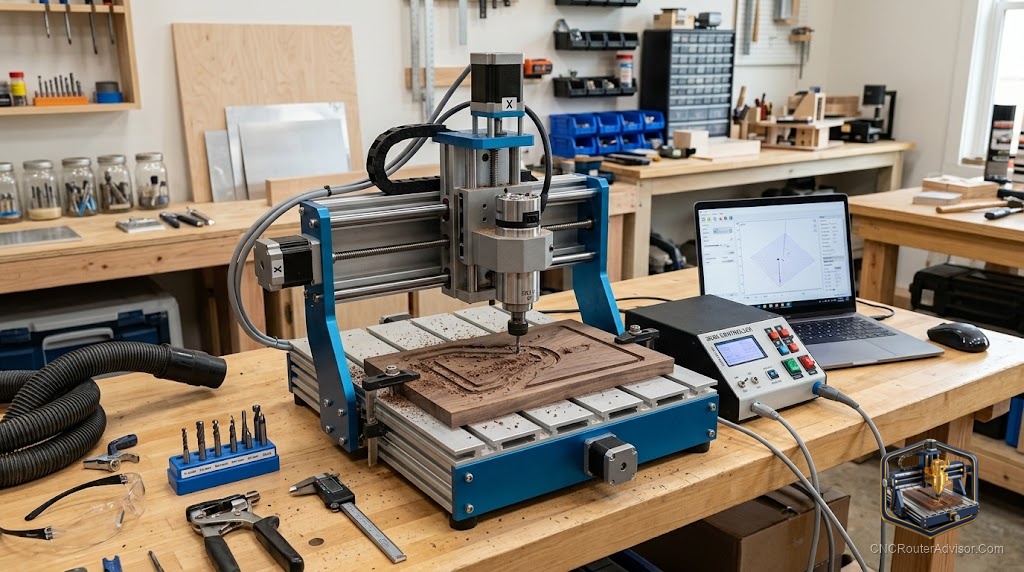
Haas is one of the most recognized names in CNC machining, so it is natural to search for a Haas router. It helps to start with an honest clarification, because Haas is best known for CNC mills and lathes, the machining centers that dominate metalworking shops, rather than the gantry-style routers used mainly for wood, plastics, and sheet goods. Understanding the difference between a CNC router and a CNC machining center is genuinely useful, and this guide explains it while covering what to consider for your work.
Router versus machining center
The first thing to understand is that a CNC router and a CNC mill or machining center are related but different tools. A CNC router typically uses a gantry design, moving a high-speed spindle over fixed material, and excels at wood, plastics, foam, sheet goods, and lighter materials across a large, flat work area. A CNC machining center, the kind Haas is famous for, is built for precision metal cutting, with a heavier, more rigid structure, a powerful lower-speed spindle, and smaller but extremely precise work volume. They overlap a little but are optimized for different jobs.
Why the distinction matters
Matching the tool to the material is what makes this distinction practical. If your work is signs, furniture parts, cabinetry, or large flat pieces in wood and plastic, a CNC router is the right tool, offering the large work area and high spindle speeds that suit those materials. If your work is precision metal parts, a machining center is built for it, with the rigidity and power that metal demands. Reaching for the wrong category means either a machine that struggles with your material or one that is far more than the job needs.
What a router does best
A CNC router is optimized for exactly the work most makers and sign or wood shops need:
- Large, flat work, across a generous work area.
- High spindle speeds, ideal for wood, plastics, and foam.
- Sheet goods and panels, cut efficiently on an open bed.
- Signs, carving, and furniture parts, the bread and butter of routing.
For these jobs, a router outperforms a machining center on cost, work area, and suitability, which is why routers exist as their own category.
When a machining center is the answer
If your work truly centers on precision metal, the qualities that define a machining center become essential: heavy rigidity, a powerful spindle tuned for metal, and tight precision in a contained work volume. This is the world where Haas machining centers earn their strong reputation. For a shop doing serious metalwork, that is the right category to look at, and understanding that need is what points you toward a mill rather than a router.
Choosing the right category for your work
The key takeaway is to choose by your material and parts. Be honest about what you will actually make. For wood, plastics, signs, and large flat pieces, a CNC router is the right and more affordable choice. For precision metal components, a machining center is built for the job. Getting this decision right at the category level saves far more grief than agonizing over individual models, because the two tools are optimized for genuinely different work.
Clearing up the Haas router question
Searching for a Haas router usually leads to a helpful realization: Haas is renowned for machining centers, while routers are a distinct category suited to wood, plastics, and large flat work. Rather than a drawback, this is clarifying, because it points you to the right tool for your material. Decide first whether your work calls for a router or a machining center, and that single choice will guide you to the machines actually built for what you want to make.