
CR Onsrud CNC Router: Models, Specifications, Support, and Buying Considerations
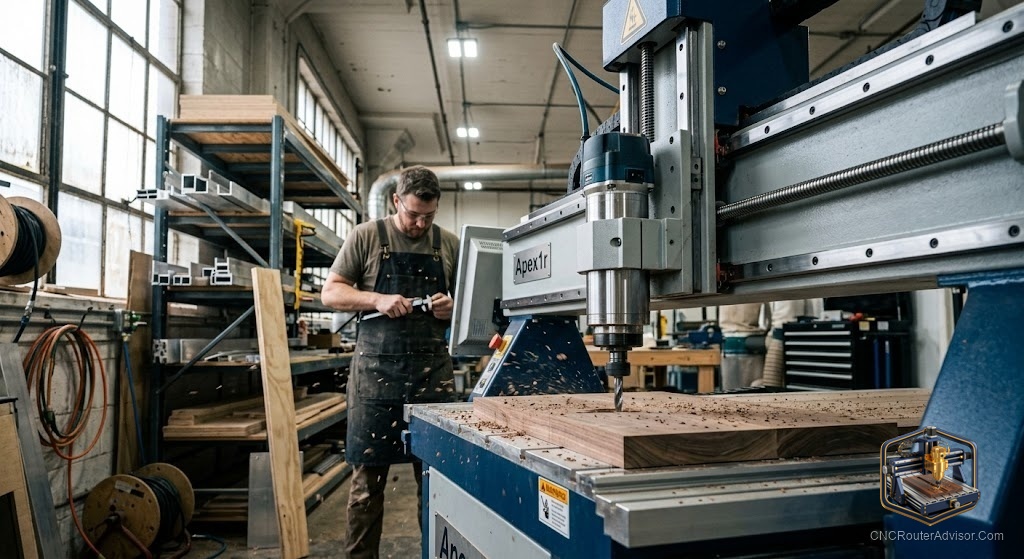
When a shop starts talking about serious, production-grade CNC routers, the name CR Onsrud tends to come up. It is an established American maker known for large, industrial machines used in real manufacturing environments, a world away from the desktop machines many hobbyists start with. If you are researching CR Onsrud, it helps to understand where these machines sit, what to weigh, and whether an industrial router is the right answer for your work. This guide offers an honest overview.
Where CR Onsrud sits
CR Onsrud is a manufacturer of industrial CNC routers, the kind of heavy, high-capacity machines found in production woodworking, plastics, aluminum, and composite shops. These are not hobby machines. They are built for throughput, accuracy under constant use, and years of hard service. Understanding that positioning is the first step, because it frames every other consideration. An industrial machine is a business investment, judged on productivity and support rather than hobby-friendly price.
What defines an industrial router like this
Rather than quoting specific numbers, which vary by model and change over time, it helps to know the traits that define machines in this class:
- Large work area, often handling full sheets and big parts.
- Heavy, rigid frame, built to hold accuracy under continuous production.
- Powerful spindle, sized for demanding materials and long runs.
- Advanced motion system, engineered for precision over thousands of hours.
- Automation options, such as tool changers and vacuum hold-down, that suit production.
For current model details and exact specifications, the manufacturer’s own resources are the authoritative source, since industrial lineups evolve and are configured to order.
Support and service
For an industrial machine, support is central rather than a bonus. When a production router goes down, downtime costs real money, so parts availability, service response, training, and documentation directly affect the value of the machine. An established maker with a service network is a significant part of what you are buying. When evaluating any industrial router, weigh the support behind it as heavily as the machine itself.
Buying considerations
An industrial CNC router is a major decision, so approach it as a business investment:
- Match capacity to production, choosing a machine sized to the volume and parts you actually make.
- Weigh automation by how much operator time it frees, not by novelty.
- Judge total cost of ownership, including tooling, maintenance, space, power, and downtime, not just the purchase price.
- Prioritize support and uptime, since these determine long-term value.
- See machines running in environments similar to yours where possible.
These are the questions that separate a productive investment from an expensive mismatch.
Is an industrial router right for you
A machine of this class makes sense for established production shops with the volume, space, power, and support needs to justify it. For hobbyists and small shops, it is almost certainly more machine than the work requires, and a desktop or mid-size router will serve better and cost far less. Being honest about your volume is the most important step, since an industrial machine only pays off when it runs hard.
Doing your homework
If CR Onsrud is on your list, treat the research the way you would any major capital purchase. Confirm current models and specifications directly from the manufacturer, evaluate the support and service network, and judge everything against your real production needs and total cost over years. An industrial router is a powerful tool for the right business, and careful diligence is what ensures it becomes an asset rather than an overreach.